Discover Ancient Tiryns, one of Greece's most impressive Bronze Age citadels with massive Cyclopean walls. This UNESCO World Heritage site near Nafplio offers a glimpse into Mycenaean civilization and legendary heroic tales.
Standing before the colossal walls of Ancient Tiryns, you'll understand why ancient Greeks believed only giants could have built them. This magnificent Bronze Age citadel, just 4 kilometers from modern Nafplio, represents one of the most impressive examples of Mycenaean military architecture in all of Greece.
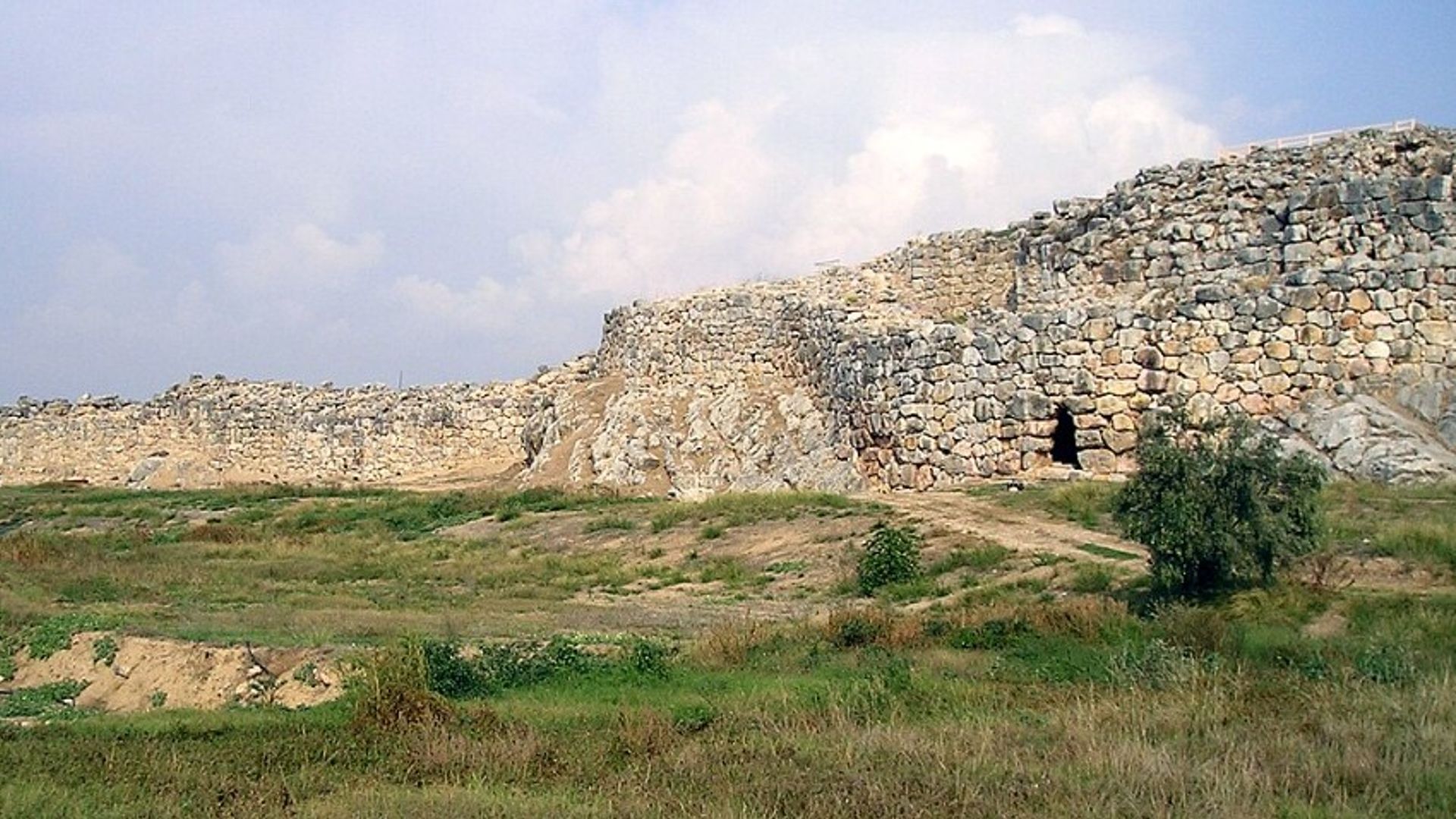
The fortress rises dramatically from the Argolic plain, its massive limestone blocks fitted together without mortar in a construction technique so impressive that it earned the name "Cyclopean" after the mythical one-eyed giants. Unlike its more famous neighbor Mycenae, Tiryns offers visitors an intimate encounter with ancient architecture, often with fewer crowds and more space to explore.
The Legendary History of Tiryns
Tiryns boasts a mythological pedigree as impressive as its physical remains. According to ancient Greek mythology, this was the birthplace of the hero Heracles (Hercules), who later performed his famous twelve labors.
The citadel's history stretches back to the Neolithic period, though its golden age came during the Late Bronze Age (1400-1200 BC). Archaeological evidence suggests that Tiryns was continuously inhabited from approximately 7000 BC until the classical period, making it one of the longest-occupied sites in Greece.
Key Historical Periods:
- Neolithic settlement (7000-3000 BC)
- Early Bronze Age expansion (3000-2000 BC)
- Middle Bronze Age development (2000-1600 BC)
- Late Bronze Age peak (1600-1200 BC)
- Classical and Hellenistic decline (1200 BC-146 BC)
- Roman occupation and gradual abandonment
The fortress reached its zenith during the 13th century BC when it served as one of the most important centers of Mycenaean civilization. Homer himself mentioned Tiryns in the Iliad, describing it as "mighty-walled Tiryns" and noting that it sent 80 ships to Troy under the command of Diomedes.
The Magnificent Cyclopean Walls
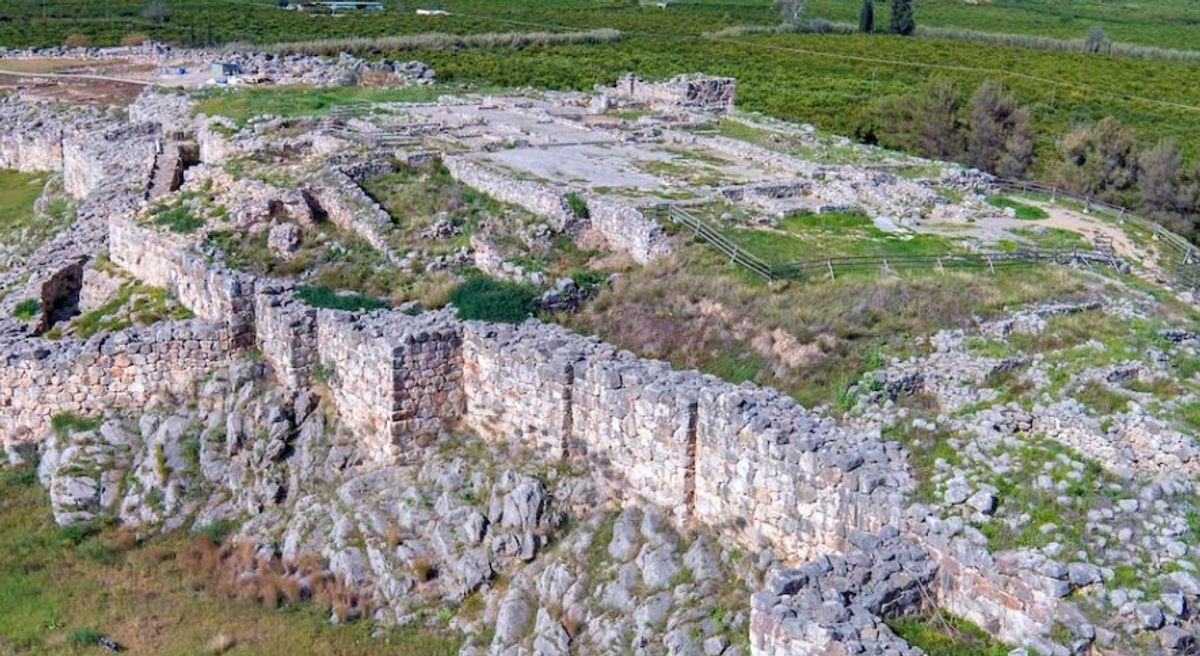
The defining feature of Tiryns is undoubtedly its spectacular fortification walls. These massive structures, some reaching 8 meters thick and 7.5 meters high, earned their "Cyclopean" designation from the ancient Greek traveler Pausanias, who visited in the 2nd century AD.
The limestone blocks used in construction weigh up to 13 tons each, carefully shaped to fit together without any binding material. The precision of this ancient engineering becomes even more impressive when you consider that these walls have withstood earthquakes, invasions, and millennia of weathering.
Wall Features:
- Thickness ranging from 4.5 to 8 meters
- Height up to 7.5 meters in preserved sections
- Individual stones weighing 5-13 tons
- Total circuit length of approximately 750 meters
- Three-tiered construction adapting to the natural hill
- Integrated galleries and chambers within the walls
The galleries built into the thickness of the walls represent one of Tiryns' most fascinating architectural achievements. These corbel-vaulted passages served both defensive and storage purposes, creating a network of protected spaces within the fortification itself.
Exploring the Palace Complex
The upper citadel housed the royal palace, a sophisticated complex that showcases the advanced architectural knowledge of Mycenaean builders. The palace followed the typical megaron plan, with a central great hall featuring a circular hearth and four columns supporting the roof.
As you walk through the palace ruins today, you can still trace the layout of the royal apartments, ceremonial halls, and administrative spaces. The propylon (monumental gateway) that once led to the palace demonstrates the ceremonial importance of this entrance, designed to impress visitors with the ruler's power.
Palace Highlights:
- Great Megaron with reconstructed column bases
- Smaller megaron for private royal quarters
- Courtyard with altar for religious ceremonies
- Bath chamber with preserved drainage system
- Storage magazines for wine, oil, and grain
- Workshops for craft production
The palace's bathroom deserves special mention, featuring one of the earliest known bathtubs in European history. This limestone tub, along with sophisticated drainage systems, reveals the Mycenaeans' advanced understanding of hydraulic engineering.
The Lower and Middle Citadels
While the upper citadel housed royalty, the middle and lower fortifications served different purposes. The middle citadel likely accommodated high-ranking officials, military commanders, and important craftsmen who served the palace.
The lower citadel, added during the final phase of construction around 1200 BC, expanded the fortress significantly. This extension suggests either population growth or increased military threats that required protecting more people within the fortified walls.
Lower Citadel Features:
- Extended defensive perimeter
- Additional residential quarters
- Emergency refuge areas for local population
- Secondary water storage facilities
- Defensive towers at strategic points
- Multiple access gates for controlled entry
Archaeologists believe the lower citadel could shelter the entire population of the surrounding area during times of danger. This defensive capability made Tiryns virtually impregnable during the Bronze Age, contributing to its legendary status.
Quick Facts About Ancient Tiryns
Essential Information:
- UNESCO Status: World Heritage Site (since 1999)
- Period: Primarily Late Bronze Age (1600-1200 BC)
- Distance from Nafplio: 4 kilometers northwest
- Wall Thickness: Up to 8 meters
- Elevation: 18 meters above the plain
- Site Area: Approximately 20,000 square meters
- Opening Hours: 8:00 AM - 8:00 PM (summer), 8:30 AM - 3:30 PM (winter)
- Admission: €6 (combined ticket with other Argolid sites available)
Archaeological Discoveries and Excavations
Systematic excavation of Tiryns began in 1876 under Heinrich Schliemann, the same archaeologist who excavated Troy and Mycenae. His work, continued by German archaeologists Wilhelm Dörpfeld and later the German Archaeological Institute, revealed the site's extraordinary importance.
The excavations uncovered remarkable artifacts including Linear B tablets, frescoes depicting hunting scenes and religious processions, and evidence of sophisticated administrative systems. Many of these finds now reside in the National Archaeological Museum in Athens and the Archaeological Museum of Nafplio.
Major Archaeological Finds:
- Linear B tablets documenting palace administration
- Fresco fragments showing boar hunts and processions
- Pottery indicating trade networks across the Mediterranean
- Bronze weapons and armor from warrior burials
- Seal stones with Mycenaean imagery
- Gold jewelry and ornaments from elite graves
Recent archaeological work has focused on understanding the site's broader landscape context and its relationship with nearby Mycenae. These studies reveal complex political and economic relationships between the major Mycenaean centers.
Tiryns in Mythology and Legend
Beyond its archaeological significance, Tiryns holds a special place in Greek mythology. The citadel was supposedly founded by Proetus, who enlisted the help of the Cyclopes to build its massive walls after being exiled from Argos by his twin brother.
The most famous mythological connection involves Heracles, who according to legend was born here and later served King Eurystheus of Tiryns. It was Eurystheus who assigned Heracles the famous Twelve Labors as penance for killing his own children in a fit of madness sent by Hera.
Mythological Connections:
- Birthplace of Heracles (Hercules)
- Home of King Proetus and the Cyclopes builders
- Court of King Eurystheus who assigned the Twelve Labors
- Mentioned by Homer in the Iliad's Catalogue of Ships
- Associated with Perseus and the founding of Mycenae
- Connected to various heroic genealogies
These myths weren't merely entertainment for ancient Greeks but represented a form of historical memory, encoding real political relationships and historical events in narrative form. The archaeological evidence increasingly supports the existence of powerful rulers at Tiryns who may have inspired these legendary tales.
Comparing Tiryns to Mycenae
Visitors to the Argolid often wonder whether to visit both Tiryns and Mycenae or choose between them. While both are UNESCO World Heritage Mycenaean citadels, they offer distinctly different experiences.
Mycenae is larger, more famous, and features the iconic Lion Gate and Treasury of Atreus. Tiryns, however, offers better-preserved fortification walls, more accessible palace remains, and typically fewer crowds allowing for more contemplative exploration.
Tiryns vs. Mycenae:
- Tiryns: Better-preserved walls and galleries
- Mycenae: More dramatic hilltop setting
- Tiryns: More intimate, less crowded experience
- Mycenae: Iconic monuments like the Lion Gate
- Tiryns: Superior palace layout visibility
- Mycenae: Impressive tholos tombs nearby
Ideally, visitors should explore both sites to gain a comprehensive understanding of Mycenaean civilization. A combined tour allows you to appreciate how these citadels functioned within a broader political and economic network.
The Collapse of Bronze Age Civilization
Around 1200 BC, Tiryns, like other Mycenaean centers, experienced dramatic changes. The palace was destroyed by fire, and while the site continued to be inhabited, it never regained its former glory.
This collapse coincided with the broader Late Bronze Age collapse that affected civilizations throughout the Eastern Mediterranean. Theories for this catastrophic period include climate change, invasions by the mysterious "Sea Peoples," internal conflicts, economic disruption, and systems collapse.
Evidence of Decline:
- Fire destruction layers in the palace
- Hasty repairs to fortification walls
- Abandonment of lower citadel areas
- Decline in luxury goods and imports
- Simplified pottery styles
- Loss of writing (Linear B script disappears)
Despite this collapse, Tiryns remained inhabited through the Classical period, though as a much-diminished settlement. Ancient sources mention it participating in the Persian Wars, sending troops to fight at the Battle of Plataea in 479 BC.
Visiting Tiryns: Practical Information
Tiryns makes an excellent addition to any Peloponnese itinerary, especially for those staying in nearby Nafplio. The site's compact nature means you can thoroughly explore it in 1-2 hours, making it perfect for combining with other attractions.
The citadel sits directly beside the modern village of Tiryns (also called Tirynthos), easily accessible by car or taxi from Nafplio. Public buses also run regularly between Nafplio and Argos, passing near the site.
Travel Tips:
- Visit early morning or late afternoon to avoid midday heat
- Wear sturdy shoes with good grip for climbing ancient stones
- Bring sun protection - limited shade available
- Allow 1.5-2 hours for thorough exploration
- Combine with Mycenae and Epidaurus for a full day
- Photography is permitted throughout the site
- Bring water - no facilities on site
- Download information beforehand - limited signage
Best Times to Visit
Tiryns can be visited year-round, but different seasons offer distinct advantages. Spring (April-May) brings wildflowers blooming across the ancient stones, while autumn (September-October) offers comfortable temperatures and excellent light for photography.
Summer visits are possible but require preparation for intense heat and sun exposure. Winter visits offer solitude and dramatic atmospheric conditions, though shorter opening hours apply and weather can be unpredictable.
Seasonal Considerations:
- Spring (April-May): Wildflowers, moderate temperatures, longer days
- Summer (June-August): Extended hours, intense heat, more visitors
- Autumn (September-October): Ideal weather, golden light, harvest season
- Winter (November-March): Solitude, dramatic skies, shorter hours
Consider checking the Greece weather in October if planning an autumn visit, as this represents one of the most pleasant times to explore archaeological sites.
Combining Tiryns with Other Attractions
The strategic location of Tiryns makes it ideal for combining with other significant sites in the Argolid. Most visitors base themselves in charming Nafplio and make day trips to surrounding archaeological sites.
A classic itinerary includes Tiryns, Mycenae, and the ancient theater of Epidaurus in a single day. This combination showcases different aspects of ancient Greek civilization - military power, religious healing, and theatrical performance.
Recommended Combinations:
- Morning at Tiryns, afternoon at Mycenae (30 minutes apart)
- Tiryns and Epidaurus with lunch in Nafplio
- Ancient Argos, Tiryns, and Nafplio in one day
- Tiryns, Mycenae, and Corinth archaeological site
- Combined with wine tasting in Nemea region
For those interested in exploring multiple sites efficiently, consider booking a comprehensive archaeological tour that includes expert guidance and transportation.
Photography at Ancient Tiryns
Tiryns offers exceptional photography opportunities, from the massive Cyclopean walls to panoramic views across the Argolic plain. The site's relatively compact nature and excellent preservation make it particularly photogenic.
The best light occurs during the golden hours - early morning and late afternoon - when the limestone blocks glow warmly and shadows emphasize the architectural details. The galleries within the walls create dramatic lighting contrasts perfect for atmospheric shots.
Photography Tips:
- Wide-angle lens essential for capturing the massive walls
- Detail shots of Cyclopean masonry joints
- Panoramas from the upper citadel showing the plain
- Gallery interiors with natural light streaming through
- Include people for scale in wall photographs
- Sunset shots with the fortress silhouetted
Understanding Mycenaean Civilization
Visiting Tiryns provides invaluable insights into Mycenaean civilization, which dominated mainland Greece from approximately 1600-1100 BC. This culture, named after its most famous site Mycenae, developed a sophisticated palace-based economy with extensive trade networks.
The Mycenaeans were the first Greek-speaking people in the region, and their Linear B script represents the earliest form of written Greek. They were skilled warriors, traders, and engineers who left an indelible mark on Greek culture and mythology.
Mycenaean Characteristics:
- Palace-centered economic and political organization
- Extensive fortification walls protecting elite centers
- Sophisticated administrative systems using Linear B script
- Warrior aristocracy with elaborate burial customs
- Long-distance trade networks across the Mediterranean
- Advanced engineering and architectural knowledge
- Religious practices centered on female deities
- Artistic traditions including frescoes and goldwork
The Mycenaean world provided the historical backdrop for Homer's epics, composed centuries later. Understanding sites like Tiryns helps contextualize the Trojan War legends and heroic tales that became foundational to Western literature.
The Site Museum and Interpretive Materials
While Tiryns itself doesn't have an on-site museum, the Archaeological Museum of Nafplio houses many important finds from the citadel. This museum, just a short drive away, provides essential context for understanding what you'll see at the ancient site.
The museum displays include pottery, weapons, jewelry, and fresco fragments that illustrate daily life, warfare, religious practices, and artistic achievements of the Mycenaean inhabitants. Visiting the museum either before or after exploring Tiryns significantly enhances the experience.
Museum Highlights from Tiryns:
- Bronze armor and weapons from warrior graves
- Fresco fragments showing hunting and religious scenes
- Pottery demonstrating trade connections
- Seal stones with Mycenaean imagery
- Architectural models showing palace reconstruction
- Linear B tablets documenting palace administration
Conservation Challenges and Efforts
Preserving Tiryns presents ongoing challenges despite its UNESCO World Heritage status. The massive Cyclopean walls, while remarkably durable, face threats from weathering, vegetation growth, and seismic activity in this earthquake-prone region.
The Greek Ministry of Culture, in collaboration with international partners, conducts regular conservation work. These efforts include stabilizing vulnerable wall sections, controlling vegetation that could damage stonework, and improving visitor infrastructure while minimizing impact on the ancient remains.
Conservation Priorities:
- Monitoring and stabilizing the fortification walls
- Controlling vegetation growth in wall joints
- Protecting exposed architectural elements
- Managing water drainage to prevent erosion
- Earthquake preparedness and damage assessment
- Balancing tourism access with preservation needs
Tiryns in Modern Culture and Research
Tiryns continues to fascinate scholars, artists, and writers drawn to its dramatic architecture and mythological associations. The site has inspired numerous artistic works and remains an active subject of archaeological research using cutting-edge techniques.
Recent studies employ technologies like ground-penetrating radar, 3D scanning, and archaeometric analysis to reveal new information about construction techniques, chronology, and the site's broader landscape context. These investigations continue to refine our understanding of Mycenaean civilization.
Modern Research Focus:
- Advanced dating techniques for construction phases
- Landscape archaeology and regional settlement patterns
- Paleoenvironmental studies of climate and agriculture
- Digital reconstruction of the palace and fortifications
- Comparative studies with other Mycenaean centers
- Analysis of trade networks through pottery studies
Accessibility and Visitor Facilities
While Tiryns offers an extraordinary historical experience, visitors should be aware of accessibility limitations. The ancient site involves uneven terrain, steep stone steps, and narrow passages that may challenge those with mobility issues.
The lower citadel and portions of the middle citadel are relatively accessible, allowing visitors to appreciate the Cyclopean walls even without climbing to the palace level. However, reaching the upper citadel and palace requires navigating ancient stone steps and ramps.
Accessibility Information:
- Limited wheelchair accessibility - lower areas only
- Steep ancient steps to upper citadel
- Uneven stone surfaces throughout
- No elevators or modern access ramps
- Benches available for rest stops
- No on-site restroom facilities
Local Services and Amenities
The modern village of Tiryns offers limited services, with most visitors preferring to base themselves in Nafplio. However, you'll find a few tavernas near the archaeological site where you can enjoy traditional Greek food after your visit.
Nafplio, just 10 minutes away, provides comprehensive tourist infrastructure including hotels, restaurants, shops, and additional cultural attractions. The town itself is one of Greece's most beautiful, making it an ideal base for exploring the Argolid region.
Nearby Services:
- Small cafés and tavernas in Tiryns village
- Full tourist services in Nafplio (4 km)
- Archaeological Museum of Nafplio
- Additional restaurants in nearby Argos
- Parking available at the site (free)
- Public buses connecting to Nafplio and Argos
Cultural Significance and UNESCO Recognition
Tiryns received UNESCO World Heritage designation in 1999 as part of the "Archaeological Sites of Mycenae and Tiryns" listing. This recognition acknowledges the sites' outstanding universal value as testimonies to Mycenaean civilization at its peak.
The UNESCO citation specifically notes Tiryns' exceptional fortification architecture and its importance in understanding the political, military, and architectural achievements of the Bronze Age Aegean. This designation brings international attention and support for conservation efforts.
UNESCO Criteria Met:
- Represents a masterpiece of human creative genius
- Exhibits important interchange of human values
- Bears exceptional testimony to a cultural tradition
- Outstanding example of architectural ensemble
- Associated with events of outstanding universal significance
Planning Your Tiryns Experience
To maximize your visit to Ancient Tiryns, advance planning helps ensure you don't miss important features. Consider hiring a licensed guide who can bring the stones to life with historical context, mythological stories, and archaeological insights.
Alternatively, prepare by reading about Mycenaean civilization and downloading information about the site's key features. Understanding the basic layout before arrival helps you navigate the ruins more effectively and appreciate the architectural sophistication.
Pre-Visit Preparation:
- Research Mycenaean history and mythology
- Download site maps and feature descriptions
- Check current opening hours and admission prices
- Plan combinations with nearby sites
- Consider booking a guided tour
- Prepare appropriate clothing and supplies
- Review photography guidelines
- Learn basic Greek phrases for interactions
Frequently Asked Questions
How long does it take to visit Ancient Tiryns?
Most visitors spend 1.5 to 2 hours exploring Tiryns thoroughly. This allows time to walk the fortification walls, explore the galleries, examine the palace remains, and enjoy the panoramic views from the upper citadel. If you're particularly interested in Mycenaean architecture or photography, you might want to allocate up to 3 hours.
Is Tiryns worth visiting if I'm already going to Mycenae?
Absolutely yes! While both are Mycenaean citadels, they offer different experiences. Tiryns features better-preserved fortification walls with accessible galleries built into their thickness, while Mycenae offers the iconic Lion Gate and more dramatic hilltop setting. Visiting both provides a comprehensive understanding of Mycenaean civilization. They're only 30 minutes apart, making it easy to see both in one day.
Can I visit Tiryns independently or do I need a guide?
You can definitely visit Tiryns independently, as the site is relatively compact and straightforward to navigate. However, hiring a guide or joining a tour significantly enhances the experience by providing historical context, mythological stories, and architectural explanations that bring the ruins to life. The site has limited interpretive signage, so background knowledge helps maximize your visit.
What's the best way to get to Tiryns from Nafplio?
Tiryns is just 4 kilometers northwest of Nafplio, making it easily accessible by car, taxi, or public bus. Driving takes about 10 minutes via the main road to Argos. Taxis from Nafplio cost approximately €10-15 each way. Local buses running between Nafplio and Argos pass near the site several times daily. Many visitors rent cars to explore multiple archaeological sites in the region independently.
Are there any facilities at the Tiryns archaeological site?
The archaeological site itself has minimal facilities - just a ticket booth and parking area. There are no restrooms, cafés, or shops at the site, so plan accordingly. Bring your own water, sun protection, and snacks. The nearby village of Tiryns has a few tavernas, and full tourist facilities are available in Nafplio just 10 minutes away. The Archaeological Museum of Nafplio provides context for the site and has better visitor amenities.
What should I wear and bring when visiting Tiryns?
Wear sturdy, closed-toe shoes with good grip as you'll be walking on ancient stones, climbing steps, and navigating uneven surfaces. Bring sun protection including a hat, sunscreen, and sunglasses, as there's very little shade on the site. Carry plenty of water, especially in summer months. Comfortable, lightweight clothing appropriate for the season works best. Consider bringing a small backpack for your supplies and a camera for the excellent photo opportunities.
Can Tiryns be combined with other attractions in a single day?
Yes, Tiryns works perfectly in combination itineraries. The most popular combination includes Tiryns, Mycenae, and Epidaurus in one day, showcasing military, palace, and theatrical aspects of ancient Greek civilization. Alternatively, combine Tiryns with the ancient theater of Epidaurus and lunch in Nafplio. The site's compact nature and proximity to other attractions make it ideal for multi-site tours.
When was Tiryns built and who lived there?
Tiryns was inhabited from approximately 7000 BC, but the impressive fortifications and palace you see today date primarily to the Late Bronze Age (1600-1200 BC). The site was home to Mycenaean Greeks, a warrior aristocracy who controlled the Argolic plain from this fortress. According to mythology, it was the birthplace of Heracles and home to King Eurystheus. The citadel reached its peak in the 13th century BC before being destroyed around 1200 BC during the Bronze Age collapse.
Conclusion: The Timeless Power of Tiryns
Standing atop the ancient citadel of Tiryns, gazing across the Argolic plain toward distant mountains, you connect directly with a civilization that flourished over 3,000 years ago. The massive Cyclopean walls surrounding you represent not just military engineering but human ambition, power, and the desire to create monuments that would outlast mortal lives.
Tiryns offers something increasingly rare in our crowded world - the opportunity to explore a UNESCO World Heritage site at your own pace, often in relative solitude. Unlike more famous archaeological destinations, you can still find moments of contemplation here, sitting on ancient stones and imagining the Bronze Age world that once thrived within these walls.
Whether you're fascinated by ancient architecture, captivated by Greek mythology, or simply seeking to understand the roots of Western civilization, Tiryns delivers an authentic and profound experience. The site's accessibility from beautiful Nafplio makes it an essential addition to any Peloponnese itinerary.
Don't just read about ancient Greece - walk through it at Tiryns, where every massive stone tells a story of human achievement. Book your archaeological adventure through the Argolid today and discover why these mighty walls have inspired awe for millennia.