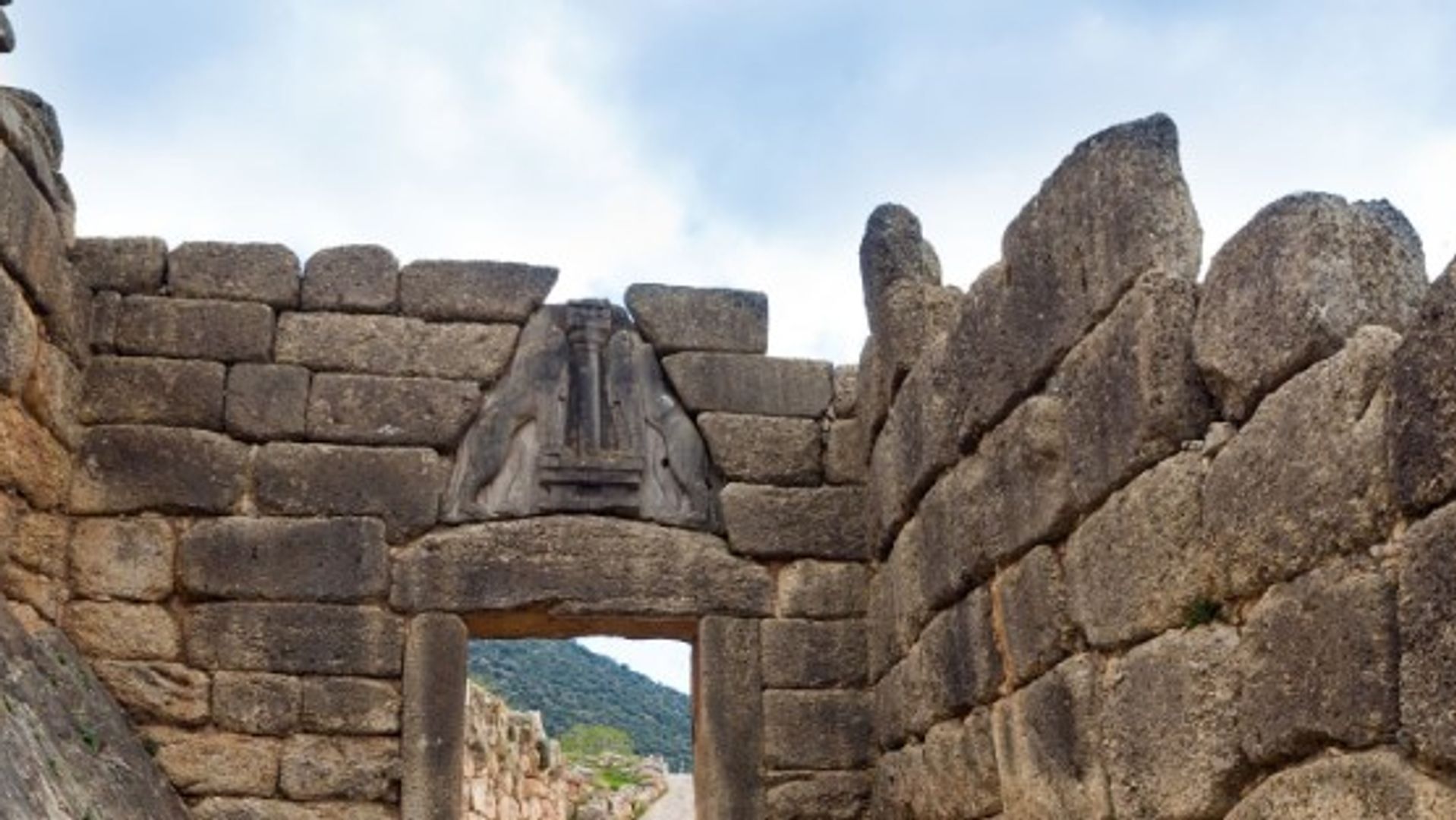
Discover Mycenae, the legendary kingdom of Agamemnon and birthplace of Greek civilization. Explore the Lion Gate, royal tombs, and palace ruins where Homer's epic heroes once walked.
Standing before the massive Lion Gate of Mycenae, you're facing the same entrance that warriors passed through over 3,000 years ago. This UNESCO World Heritage Site isn't just another collection of ancient ruins—it's the legendary kingdom that launched a thousand ships and inspired Homer's greatest epics.
The Archaeological Site of Mycenae represents the pinnacle of Bronze Age civilization in Greece, a time when mighty citadels dominated the landscape and kings accumulated wealth beyond imagination. Today, visitors walk the same paths as Agamemnon and his warriors, experiencing firsthand the power and grandeur of Greece's heroic age.
Quick Facts About Mycenae
Essential Information:
- Location: 90 km southwest of Athens in the Peloponnese region
- UNESCO Status: World Heritage Site since 1999
- Period: Late Bronze Age (1600-1100 BC)
- Opening Hours: Daily 8:00 AM - 8:00 PM (summer), 8:00 AM - 3:00 PM (winter)
- Entrance Fee: €12 (€6 reduced), combined ticket with Epidaurus available
- Visit Duration: 2-3 hours recommended
- Altitude: 278 meters above sea level
The History Behind the Legends
Mycenae flourished during the Late Bronze Age, becoming the most powerful kingdom in prehistoric Greece. The citadel reached its zenith between 1350 and 1200 BC, controlling trade routes and accumulating extraordinary wealth from commerce and conquest.
Heinrich Schliemann's 1876 excavations transformed Mycenae from mythological legend into archaeological reality. The German archaeologist discovered the famous golden death masks, royal shaft graves, and treasures that proved Homer's descriptions weren't mere fantasy but based on historical memory.
The civilization that built Mycenae gave its name to an entire era—the Mycenaean period—which influenced Greek culture for millennia. When the Bronze Age collapsed around 1100 BC, Mycenae was abandoned, but its legends lived on through oral tradition until Homer immortalized them in the Iliad and Odyssey.
The Magnificent Lion Gate
The Lion Gate stands as Europe's oldest monumental sculpture, greeting visitors exactly as it greeted ancient travelers. Constructed around 1250 BC, this massive entrance features two lionesses flanking a column in the distinctive relieving triangle above the lintel.
The engineering brilliance becomes apparent when you examine the enormous limestone blocks weighing several tons each. Mycenaean builders positioned these massive stones without mortar, creating a structure that has survived earthquakes and millennia of weathering.
The symbolic power of the lions represented royal authority and divine protection for the citadel. Walking through this gateway, you're literally following in the footsteps of Bronze Age royalty, merchants, and warriors who passed beneath these eternal guardians.
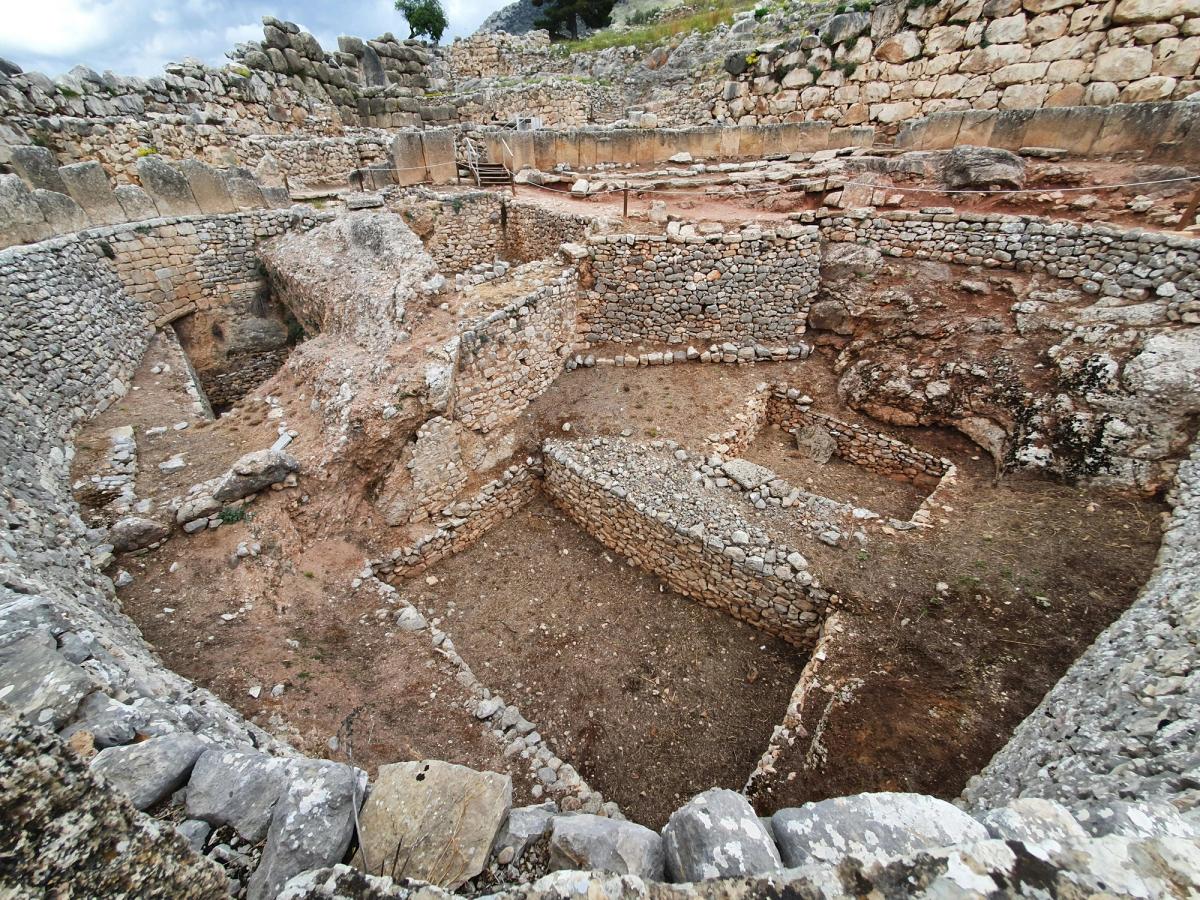
Exploring the Citadel and Palace
The palace complex crowns the acropolis, offering commanding views across the Argolid plain. Archaeological remains reveal a sophisticated megaron (great hall) where the king held court, conducted ceremonies, and hosted elaborate feasts.
The throne room featured a central hearth surrounded by four columns supporting the roof, with walls decorated in vibrant frescoes. Though only foundations remain today, the layout clearly shows the architectural sophistication and hierarchical organization of Mycenaean palace life.
Key Areas Within the Citadel:
- Megaron: The king's throne room and ceremonial center
- Royal Apartments: Private quarters with advanced drainage systems
- Artisan Workshops: Areas for metalworking and craft production
- Storage Magazines: Rooms for storing grain, oil, and precious goods
- Cult Center: Religious shrines and ceremonial spaces
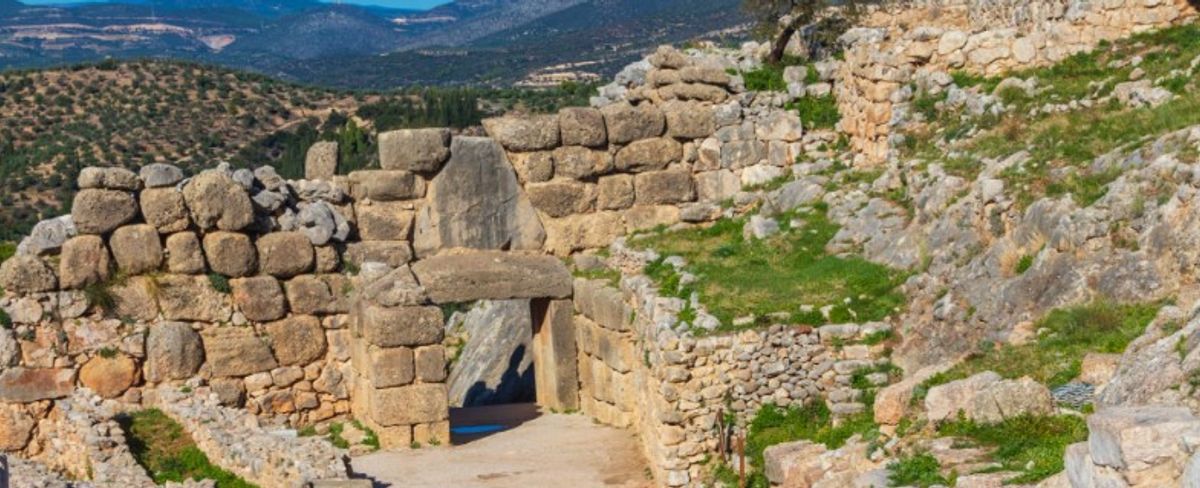
- Cyclopean Walls: Massive fortification walls up to 13 meters thick
The Treasury of Atreus: Engineering Marvel
Located 400 meters from the citadel, the Treasury of Atreus (also called Agamemnon's Tomb) represents the pinnacle of Mycenaean architecture. This tholos tomb, built around 1250 BC, features a beehive-shaped chamber that remained the world's largest dome for over a thousand years.
The entrance passage (dromos) stretches 36 meters, lined with perfectly fitted stone blocks leading to a doorway once adorned with bronze decorations. The main chamber soars 13.5 meters high, constructed with 33 courses of stone blocks carefully corbelled to create the dome.
The precision engineering astounds modern visitors—each stone was cut to fit perfectly without mortar, creating a structure that has survived intact for over three millennia. The acoustics inside the chamber create an eerie resonance that adds to the tomb's mysterious atmosphere.
The Royal Shaft Graves and Golden Treasures
Schliemann's discovery of Grave Circle A in 1876 revealed the wealth and artistry of Mycenaean civilization. Six shaft graves contained nineteen bodies adorned with golden masks, jewelry, weapons, and ceremonial objects totaling fifteen kilograms of gold.
The famous "Mask of Agamemnon," though predating the legendary king by centuries, demonstrates the extraordinary craftsmanship of Mycenaean goldsmiths. These death masks, created by hammering gold sheets over wooden forms, were placed over the faces of deceased royalty.
Today, these treasures reside in Athens' National Archaeological Museum, but their discovery site remains visible within the citadel. The circular wall that Schliemann found actually dates to a later period when the graves were monumentalized and incorporated into the expanded citadel.
Understanding Mycenaean Society
Linear B tablets discovered at Mycenae and other sites reveal a highly organized bureaucratic society. Palace scribes meticulously recorded everything from livestock inventories to religious offerings, providing detailed insights into Bronze Age economics and administration.
The social hierarchy placed the wanax (king) at the top, followed by the lawagetas (military leader), nobles, craftsmen, farmers, and slaves. This stratified society controlled surrounding territories through a network of smaller settlements and fortified outposts.
Aspects of Mycenaean Life:
- Economy: Agriculture, trade, bronze metallurgy, textile production
- Military: Chariot warfare, bronze weapons, organized armies
- Religion: Worship of gods later known as Zeus, Hera, Poseidon, Athena
- Art: Frescoes, pottery, goldwork, ivory carving
- Architecture: Cyclopean masonry, tholos tombs, megaron palaces
- Writing: Linear B script for administrative records
The Archaeological Museum of Mycenae
The on-site museum, located near the entrance, provides essential context before exploring the ruins. Modern displays showcase artifacts discovered during excavations, including pottery, tools, weapons, and architectural fragments.
The museum's collection helps visitors understand daily life in Bronze Age Mycenae beyond the monumental architecture. Reconstructions and models illustrate how the citadel appeared in its glory days, making the scattered ruins easier to comprehend.
Don't miss the replica of the Lion Gate relief and displays explaining Mycenaean burial customs. The museum also features excellent information about the site's excavation history and the various archaeological campaigns that uncovered its secrets.
Connecting Mycenae to Greek Mythology
Mycenae's connection to Greek mythology runs deep through the House of Atreus legends. According to myth, Perseus founded the citadel, while later rulers included Atreus, Agamemnon, and Orestes—figures central to Greek tragic drama.
The legendary Trojan War began when Agamemnon led the Greek forces to retrieve Helen from Troy. Homer's epics describe Mycenae as "rich in gold," a description vindicated by Schliemann's discoveries of golden treasures.
The curse of the House of Atreus—featuring murder, revenge, and divine retribution—inspired plays by Aeschylus, Sophocles, and Euripides. Standing in the actual palace where these legendary events supposedly occurred adds profound resonance to the ancient stories.
Exploring other historical sites to visit near Porto Heli reveals how interconnected these ancient Mycenaean centers were throughout the Peloponnese.
Visiting Nearby Archaeological Sites
Mycenae's location makes it perfect for combining with other major archaeological sites in the Argolid. The ancient theater of Epidaurus lies just 30 kilometers away, offering one of the best-preserved classical theaters in Greece.
The Asclepieion of Epidaurus served as antiquity's most famous healing sanctuary, where ancient Greeks sought cures through ritual and medicine. The combination of Mycenae and Epidaurus provides a comprehensive journey through Greek history from Bronze Age to Classical periods.
Nearby Sites Worth Visiting:
- Epidaurus: Ancient theater and healing sanctuary (30 km)
- Nafplio: Venetian fortress town and former Greek capital (25 km)
- Tiryns: Another Mycenaean citadel with impressive walls (20 km)
- Ancient Corinth: Major city-state with temple ruins (45 km)
- Nemea: Sanctuary of Zeus and ancient stadium (40 km)
Many visitors base themselves in charming Nafplio and explore these sites on day trips. The Greek restaurants in Nafplio provide perfect spots to discuss the day's archaeological discoveries over traditional cuisine.
Best Time to Visit Mycenae
Spring (April-May) and autumn (September-October) offer ideal conditions for exploring Mycenae's exposed hilltop ruins. Temperatures remain comfortable for climbing, and the landscape blooms with wildflowers or glows with autumn colors.
Summer brings intense heat with minimal shade across the archaeological site, making early morning visits essential. Arrive when gates open at 8:00 AM to explore before tour groups and midday heat arrive.
Winter visits provide solitude and dramatic lighting, though shorter days and occasional rain require flexibility. The Greece weather in October typically offers excellent conditions with fewer crowds than peak summer months.
Travel Tips for Your Mycenae Visit
Before You Go:
- Wear sturdy walking shoes with good grip—paths are uneven and rocky
- Bring sun protection (hat, sunscreen, sunglasses) as shade is minimal
- Carry plenty of water, especially during warmer months
- Allow 2-3 hours minimum to explore the site properly
- Download or purchase a guidebook for detailed historical context
- Arrive early morning or late afternoon for better lighting and fewer crowds
At the Site:
- Start with the museum to understand the site layout and history
- Visit the Treasury of Atreus first, then proceed to the citadel
- Take your time at the Lion Gate for photos without crowds
- Climb to the palace area for panoramic views
- Bring binoculars to appreciate architectural details
- Respect barriers—they protect both you and the ancient structures
Photography Tips:
- Morning light (8:00-10:00 AM) provides best conditions for the Lion Gate
- Late afternoon creates dramatic shadows across the citadel walls
- Use a wide-angle lens to capture the Treasury of Atreus interior
- Panoramic shots from the palace capture the strategic location
- Avoid midday harsh light that washes out stone details
Getting to Mycenae
Mycenae sits 90 kilometers southwest of Athens and 25 kilometers north of Nafplio. The site is well-signposted from the main highway connecting these cities.
Driving provides the most flexibility, with rental cars available from Athens or Nafplio. The modern village of Mycenae offers parking near the site entrance, with a short walk to the ticket office.
Transportation Options:
- Private Tour: Most convenient option with expert guides and flexible timing
- Rental Car: Drive from Athens (1.5 hours) or Nafplio (30 minutes)
- Public Bus: KTEL buses from Nafplio or Athens (limited schedule, requires planning)
- Taxi: Available from Nafplio for half-day excursions
- Organized Day Trip: Many companies offer Athens-based tours combining multiple sites
A Nafplio Mycenae Epidavros tour provides comprehensive coverage of the region's major archaeological sites with expert commentary.
Combining Mycenae with Other Peloponnese Highlights
The Peloponnese offers extraordinary diversity beyond Mycenae's Bronze Age ruins. Ancient Olympia, birthplace of the Olympic Games, lies two hours west and makes an excellent multi-day itinerary addition.
Medieval Mystras near Sparta showcases Byzantine glory with frescoed churches clinging to a mountainside. The contrast between Bronze Age Mycenae and Byzantine Mystras illustrates Greece's incredible historical continuity.
Recommended Multi-Day Itineraries:
- Day 1: Athens to Mycenae, Epidaurus, overnight Nafplio
- Day 2: Nafplio exploration, Ancient Corinth, return Athens
- Day 3: Sparta, Mystras, Monemvasia (add extra days)
Learning about facts about Sparta in ancient Greece adds context to understanding how different Greek city-states developed contrasting cultures.
The Mycenaean Legacy in Greek Culture
Mycenaean civilization laid foundations for classical Greek culture despite the Dark Ages that followed its collapse. The Greek language, religious practices, and mythological traditions all trace roots to Mycenaean times.
Linear B tablets reveal that Bronze Age Greeks already worshipped gods like Zeus, Hera, Poseidon, and Athena. These continuities suggest that classical Greek religion evolved directly from Mycenaean beliefs and practices.
The architectural legacy appears in later Greek temples and civic buildings that adapted Mycenaean principles. Even the concept of the Greek hero—brave, honor-bound, and often tragic—derives from Bronze Age warrior culture immortalized in Homeric epics.
Understanding Greek architecture reveals how ancient building techniques evolved from Mycenaean cyclopean masonry to classical perfection.
Archaeological Work Continues
Excavations at Mycenae continue revealing new insights about Bronze Age civilization. Recent work focuses on understanding the lower town, agricultural systems, and connections with other Mediterranean cultures.
Modern techniques like ground-penetrating radar and 3D modeling help archaeologists explore without disturbing fragile remains. These technologies reveal buried structures and help reconstruct how the ancient city functioned as a complete urban system.
Conservation efforts work to preserve Mycenae's monuments for future generations while making them accessible to visitors. The challenge lies in balancing tourism with protection of these irreplaceable 3,000-year-old structures.
Practical Information for Visitors
Site Facilities:
- Parking: Free parking available near entrance
- Restrooms: Located at entrance area and museum
- Café: Small café near parking area for refreshments
- Accessibility: Limited—steep paths and uneven terrain make wheelchair access difficult
- Guided Tours: Available in multiple languages (book in advance)
- Audio Guides: Available for rent at ticket office
Ticket Information:
- Full Price: €12 per person
- Reduced: €6 (students, seniors over 65 from EU)
- Free Entry: Children under 18, archaeology students, disabled visitors
- Combined Tickets: Available with Epidaurus and other Argolid sites
- Free Days: Specific national holidays and first Sunday November-March
Contact Details:
- Phone: +30 27510 76585
- Website: odysseus.culture.gr
- Address: Mycenae Archaeological Site, 212 00 Mykines, Greece
After exploring ancient ruins, consider experiencing modern Greek wellness at the Euphoria Retreat, which combines holistic therapies with stunning Peloponnese mountain views.
What to Bring and Wear
Comfortable, practical clothing makes all the difference when exploring Mycenae's rocky terrain. The site involves considerable walking and climbing on uneven ancient pathways.
Essential Items:
- Sturdy closed-toe shoes with good traction (hiking boots ideal)
- Wide-brimmed hat for sun protection
- High-SPF sunscreen (reapply frequently)
- Refillable water bottle (1-2 liters per person)
- Lightweight backpack for carrying supplies
- Camera with extra batteries
- Guidebook or downloaded information
- Light jacket (even in summer, mornings can be cool)
Optional But Helpful:
- Binoculars for viewing architectural details
- Portable phone charger for photos
- Snacks (no food available inside site)
- Small first-aid kit
- Notebook for jotting observations
- Portable shade umbrella for extreme heat
Cultural Etiquette and Site Rules
Respecting archaeological sites ensures their preservation for future generations. Mycenae's ancient stones have survived millennia but remain vulnerable to careless behavior.
Important Rules:
- Stay on designated paths—shortcuts damage archaeological features
- Don't climb on walls or structures unless specifically permitted
- Never remove stones, pottery fragments, or any artifacts
- Respect barrier ropes and closed areas
- No smoking within the archaeological site
- Keep voices moderate—this is an outdoor museum
- Dispose of trash properly in designated bins
- Drones prohibited without special permission
Photography is generally permitted for personal use, but commercial photography requires advance permission. Flash photography may be restricted in certain areas to protect fragile surfaces.
Extending Your Peloponnese Adventure
The Peloponnese rewards extended exploration with diverse landscapes, archaeological sites, and charming towns. Beyond Mycenae, the region offers Byzantine monasteries, Venetian fortresses, pristine beaches, and mountain villages.
The coastal town of Gytheio provides a relaxing seaside base for exploring the Mani Peninsula's wild beauty. Its colorful neoclassical buildings and waterfront tavernas offer perfect evening relaxation after days of archaeological exploration.
For spiritual seekers, the Greece monasteries scattered across the Peloponnese provide peaceful retreats with stunning frescoes and mountain settings. These medieval foundations continue ancient traditions of Orthodox monasticism.
Week-Long Peloponnese Highlights:
- Days 1-2: Nafplio, Mycenae, Epidaurus
- Day 3: Ancient Corinth, Nemea wine region
- Day 4: Sparta, Mystras, overnight Monemvasia
- Day 5: Monemvasia exploration, Gytheio
- Day 6: Mani Peninsula, Diros Caves
- Day 7: Ancient Olympia, return to Athens
A Nafplio Corinth Epidavros tour efficiently covers multiple major sites with expert interpretation.
Frequently Asked Questions
How long does it take to visit Mycenae?
Plan 2-3 hours minimum to properly explore Mycenae's main features including the museum, Lion Gate, citadel, palace area, and Treasury of Atreus. Archaeology enthusiasts or photographers may want 3-4 hours to fully appreciate the site. Arriving when gates open allows unhurried exploration before tour groups arrive, especially important during peak season.
Can you visit Mycenae and Epidaurus in one day?
Yes, visiting both sites in one day is entirely feasible and commonly done. Mycenae and Epidaurus lie only 30 kilometers apart, making them natural companions for a day trip. Start at Mycenae when it opens at 8:00 AM, spend 2-3 hours exploring, then drive to Epidaurus for the afternoon. Many visitors base themselves in Nafplio and visit both sites as a day excursion with time for lunch in between.
Is Mycenae suitable for children?
Mycenae can engage children, especially those interested in Greek mythology and ancient history. The dramatic setting, Lion Gate, and tomb chambers capture young imaginations better than typical ruins. However, the site involves considerable walking on uneven terrain with limited shade and no playgrounds or child-specific facilities. Children should be old enough to walk independently for 1-2 hours and follow safety rules about staying on paths. Bringing snacks, water, and framing the visit as a treasure hunt or adventure story helps maintain interest.
What's the difference between Mycenae and Tiryns?
Both Mycenae and Tiryns are Bronze Age citadels from the same Mycenaean civilization, located about 20 kilometers apart. Mycenae was the more powerful kingdom with greater wealth and political influence, evidenced by its golden treasures and monumental architecture. Tiryns features even more impressive cyclopean walls—some passages are intact enough to walk through—and better-preserved palace foundations. Mycenae offers more dramatic setting and historical significance, while Tiryns provides clearer understanding of Mycenaean architectural techniques. Serious archaeology enthusiasts should visit both.
Do you need a guide to visit Mycenae?
While you can explore Mycenae independently, a knowledgeable guide significantly enriches the experience. The scattered ruins require historical context and archaeological explanation to fully appreciate what you're seeing. Guides bring the stones to life with stories about Mycenaean society, building techniques, and mythological connections. Audio guides available at the entrance provide good basic information, but live guides can answer questions and adapt explanations to your interests. For first-time visitors, a guided tour is highly recommended.
What should I know about accessibility at Mycenae?
Mycenae presents significant accessibility challenges due to its hilltop location and ancient pathways. The site involves steep inclines, uneven stone surfaces, and steps without handrails. Wheelchair access is extremely limited—only the lower areas near the entrance and museum are partially accessible. Visitors with mobility issues should carefully assess their abilities before visiting. The Treasury of Atreus is more accessible than the citadel, with a relatively level approach. Consider hiring a private guide who can advise on which areas are most manageable for your specific situation.
Are there restaurants near Mycenae?
The modern village of Mycenae, located near the archaeological site, offers several tavernas and restaurants serving traditional Greek cuisine. These family-run establishments provide authentic local dishes perfect for lunch after exploring the ruins. Options range from simple grilled meats and salads to more elaborate regional specialties. However, most visitors prefer dining in nearby Nafplio, which offers superior restaurant variety and quality. The small café at the site entrance provides basic refreshments, coffee, and snacks but limited meal options.
Can you take photos inside the Treasury of Atreus?
Yes, photography for personal use is permitted throughout Mycenae including inside the Treasury of Atreus. The tomb's interior presents photographic challenges due to low light conditions—a camera that handles high ISO settings works best. Wide-angle lenses capture the impressive dome structure most effectively. Flash photography may be restricted to protect ancient surfaces, so check current rules. Tripods typically require special permission. The dramatic entrance passage and corbelled dome create stunning compositions, especially when other visitors aren't present for scale and atmosphere.
Conclusion: Walking With Heroes
Mycenae offers something rare in our modern world—a tangible connection to the heroic age that shaped Western civilization. Standing within these ancient walls, you're not just observing history but experiencing the very landscape that inspired humanity's greatest stories.
The golden treasures may reside in Athens museums, but Mycenae's true gold lies in its ability to transport visitors across millennia. Every stone in these cyclopean walls, every step through the Lion Gate, connects you directly to the Bronze Age world that Homer immortalized.
Whether you're a classical scholar, mythology enthusiast, or curious traveler, Mycenae rewards with profound insights into human achievement and ambition. The citadel that once controlled the Aegean now invites you to walk where Agamemnon's warriors marched, to stand where ancient kings surveyed their domain, and to touch stones that have witnessed 3,000 years of history.
Plan your visit carefully, bring your imagination, and prepare for an encounter with the legendary past that continues shaping our present. Mycenae isn't just an archaeological site—it's a journey to the very foundations of Greek civilization and the birthplace of European culture.