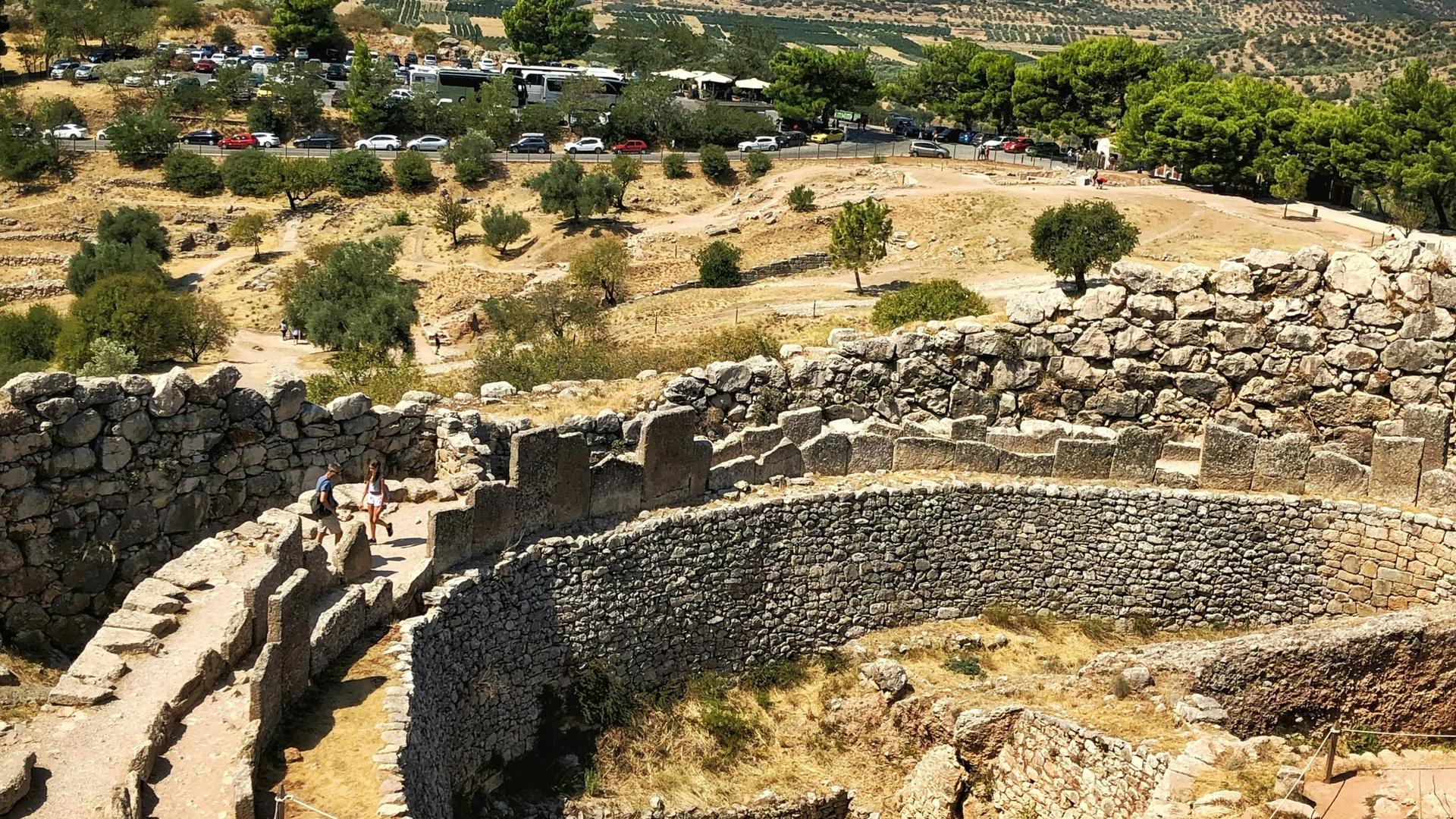
The Cyclopean Walls of Mycenae stand as one of ancient Greece's most impressive architectural achievements. These massive limestone fortifications, built over 3,300 years ago, showcase the engineering prowess of Bronze Age civilization and continue to captivate visitors from around the world.
Standing before the massive limestone blocks of Mycenae's fortifications, you can't help but wonder how ancient builders moved stones weighing several tons without modern machinery. These extraordinary walls earned their name from later Greeks who believed only the mythical Cyclopes possessed the strength to construct such monumental architecture.
The Cyclopean Walls represent the pinnacle of Bronze Age engineering, protecting one of the most powerful kingdoms in the ancient Mediterranean world. Today, these 3,300-year-old fortifications continue to inspire awe and serve as a testament to human ingenuity.
The Legend Behind the Name
Ancient Greeks who encountered these ruins centuries after Mycenae's fall couldn't fathom how humans built such massive structures. They attributed the construction to the Cyclopes, the one-eyed giants from Greek mythology who forged Zeus's thunderbolts.
This attribution wasn't merely poetic—it reflected genuine amazement at the engineering capabilities of their ancestors. The term "Cyclopean masonry" has since become the archaeological designation for this distinctive building technique found throughout the Bronze Age Mediterranean.
Architectural Magnificence
The walls of Mycenae stretch approximately 900 meters around the citadel's perimeter, enclosing an area of about 30,000 square meters. These fortifications reach heights of up to 12 meters in some sections, with thickness varying between 5 and 7 meters.
Construction Features:
- Massive limestone blocks weighing between 5 and 10 tons each
- Some individual stones exceeding 20 tons in weight
- Minimal use of mortar, relying on precise stone fitting
- Strategic placement on natural rock formations
- Multiple construction phases spanning over a century
The builders employed a technique where larger stones formed the outer faces while smaller stones and clay filled the interior gaps. This method created incredibly stable structures that have endured millennia of earthquakes, wars, and weathering.
The Famous Lion Gate
The Lion Gate serves as the main entrance to the citadel and ranks among the most iconic symbols of Greek architecture. Constructed around 1250 BCE, this monumental gateway showcases the sophistication of Mycenaean builders.
Two lionesses carved in relief stand on either side of a column, their front paws resting on altars in a heraldic pose. The 20-ton lintel stone above the entrance demonstrates remarkable engineering precision, while the relieving triangle above it reduces the weight bearing down on the gate.
Lion Gate Specifications:
- Height: approximately 3 meters
- Width: 2.95 meters at the base
- Lintel weight: approximately 20 tons
- Relief sculpture: 3 meters wide, 1 meter high
- Construction date: circa 1250 BCE
The missing heads of the lionesses likely faced forward and were crafted from different materials, possibly bronze or steatite. This entrance served both defensive and ceremonial purposes, impressing visitors with Mycenae's power while providing strategic military advantages.
Engineering Innovation
The Cyclopean Walls demonstrate sophisticated understanding of defensive architecture and structural engineering. The builders incorporated multiple innovative features that enhanced both strength and functionality.
The walls follow the natural contours of the hilltop, maximizing defensive advantages while minimizing construction effort. Strategic towers and bastions provided vantage points for defenders and created overlapping fields of fire against attackers.
Defensive Features:
- Sloping outer faces making scaling difficult
- Strategic placement of gates for controlled access
- Bastions flanking entrances for defensive coverage
- Underground cisterns ensuring water supply during sieges
- Secret passages for emergency escape routes
- Postern gates for surprise counterattacks
The famous underground cistern, accessed by a descending passage with 99 steps, ensured water supply during prolonged sieges. This remarkable feat of engineering extended deep into the hillside, reaching a natural spring that remained accessible even when enemies surrounded the citadel.
Historical Significance
Mycenae dominated the Peloponnese during the Late Bronze Age (1600-1100 BCE), serving as the center of a powerful kingdom. The fortification walls represent the height of Mycenaean power, built during the civilization's most prosperous period.
Heinrich Schliemann's excavations in 1876 brought Mycenae back into the world's consciousness, discovering the famous gold death masks and countless treasures. His work, though sometimes controversial in methodology, proved that Homer's epic tales contained historical kernels of truth about this ancient Greek city.
Construction Techniques
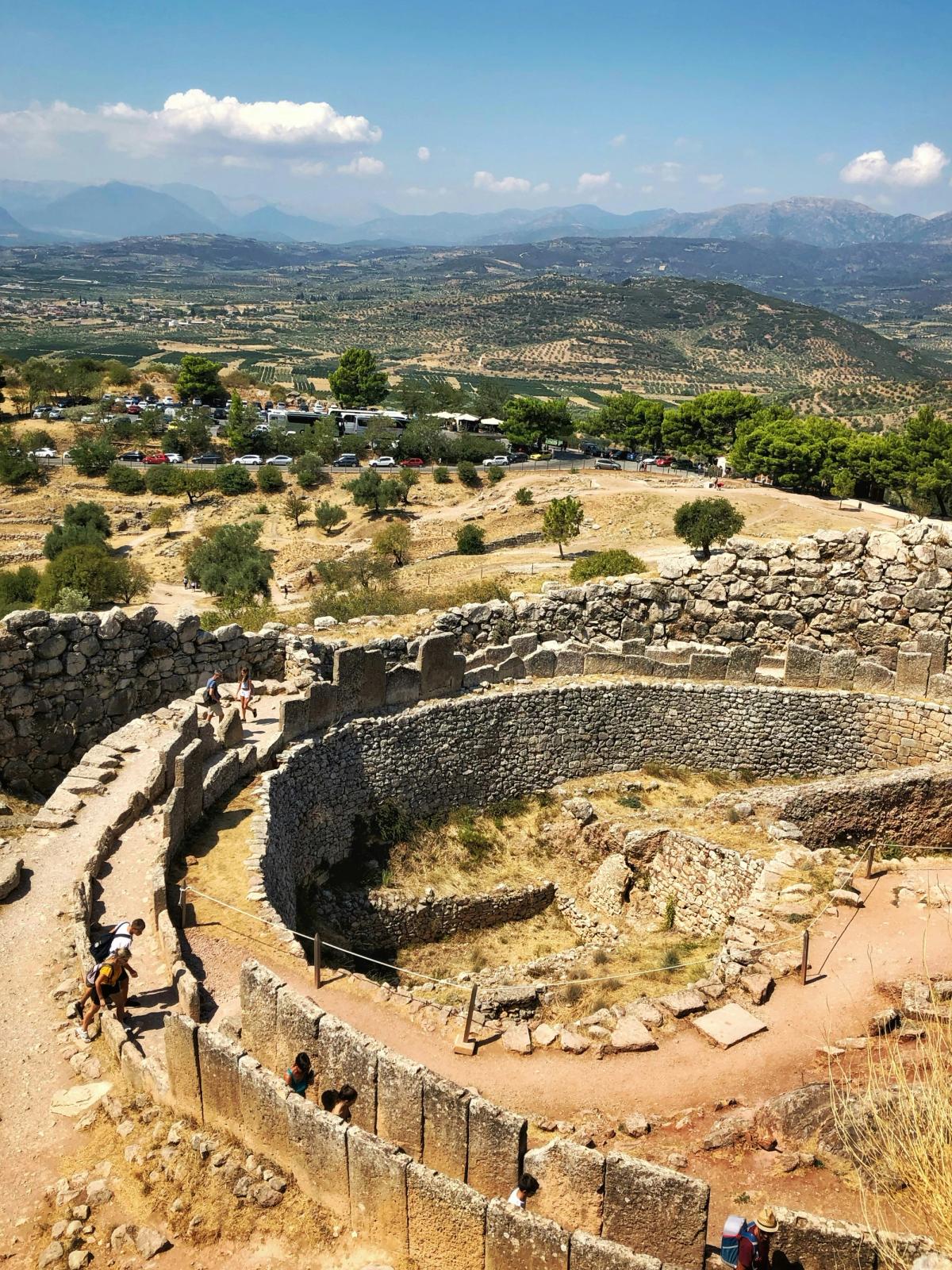
Archaeologists have identified three distinct construction phases in the Cyclopean Walls, each reflecting evolving architectural understanding and changing defensive needs. The earliest sections employed the largest stones with minimal shaping, while later additions showed more sophisticated stone dressing.
The builders likely used wooden levers, ropes, and earthen ramps to position the massive blocks. Evidence suggests they quarried stones locally, then transported them using wooden rollers and sledges pulled by teams of workers.
Construction Process:
- Selecting and quarrying appropriate limestone blocks
- Rough shaping of stones at the quarry site
- Transporting blocks using rollers and ramps
- Positioning stones with levers and human labor
- Fine-fitting edges for maximum stability
- Filling gaps with smaller stones and clay
The precision of stone fitting, achieved without modern tools, demonstrates remarkable craftsmanship. Many blocks interlock so perfectly that even today, inserting a knife blade between them proves impossible.
Quick Facts About the Cyclopean Walls
Essential Information:
- Age: Approximately 3,300 years old (13th century BCE)
- Total length: Approximately 900 meters
- Maximum height: Up to 12 meters
- Wall thickness: 5-7 meters
- Stone weight: Individual blocks 5-20+ tons
- UNESCO status: World Heritage Site since 1999
- Construction period: Multiple phases over 100+ years
- Primary material: Local limestone
The archaeological site of Mycenae, including the Cyclopean Walls, attracts over 300,000 visitors annually. The site's significance extends beyond Greek history, representing a crucial chapter in European civilization's development.
Visiting the Cyclopean Walls Today
Exploring Mycenae offers an unforgettable journey into Bronze Age Greece, where you can walk the same paths as legendary King Agamemnon. The site's dramatic hilltop setting provides spectacular views across the Argolid plain.
The best time to visit is during spring (April-May) or autumn (September-October) when temperatures remain comfortable and crowds are smaller. Summer visits require early morning arrival to avoid both heat and tour groups.
What to See at the Site:
- The Lion Gate entrance
- Grave Circle A with royal shaft graves
- The Palace complex ruins
- The underground cistern system
- The North Gate and postern gate
- The Treasury of Atreus (nearby)
- The Archaeological Museum of Mycenae
Allow at least 2-3 hours for a thorough exploration of the citadel and surrounding areas. Comfortable walking shoes are essential as the terrain is uneven and includes steep sections.
Combining Mycenae with Nearby Sites
The Peloponnese region surrounding Mycenae offers numerous archaeological treasures within easy reach. Epidaurus, famous for its remarkably preserved ancient theater, lies just 30 kilometers away and makes an excellent combination visit.
The charming town of Nafplio, Greece's first modern capital, provides an ideal base for exploring the region. Its Venetian fortresses, neoclassical architecture, and waterfront promenade offer pleasant contrasts to ancient sites.
Nearby Attractions:
- Ancient Epidaurus and its famous theater (30 km)
- Nafplio historic town (20 km)
- Ancient Corinth and Acrocorinth (45 km)
- Tiryns fortified palace (15 km)
- Argos archaeological sites (12 km)
- Nemea archaeological site and wineries (35 km)
Consider booking a comprehensive tour from Nafplio that combines Mycenae with Epidaurus for a full day of Bronze Age and Classical Greek exploration. Professional guides provide historical context that brings the ruins to life.
Travel Tips for Visiting Mycenae
Before You Go:
- Purchase tickets online to avoid queues (€12 full price)
- Bring sun protection—limited shade at the site
- Wear sturdy shoes with good grip
- Carry water, especially during summer months
- Download audio guides or hire on-site guides
- Allow 2-3 hours for thorough exploration
- Visit early morning or late afternoon in summer
- Check opening hours seasonally (8:00 AM-8:00 PM summer)
Photography Tips:
- Morning light best illuminates the Lion Gate
- Afternoon provides dramatic shadows on walls
- Wide-angle lens captures wall scale
- Visit Treasury of Atreus for interior shots
- Climb to palace area for panoramic views
- Golden hour creates magical atmosphere
The site includes a small museum displaying artifacts found during excavations, though the most spectacular treasures reside in Athens' National Archaeological Museum. The museum visit adds about 30 minutes to your tour.
The Walls in Modern Culture
The Cyclopean Walls have inspired countless artists, writers, and filmmakers throughout history. Henry Miller described them as "the most impressive ruins in Greece" in his travel memoir "The Colossus of Maroussi."
These fortifications appear in numerous historical documentaries and have served as filming locations for productions exploring ancient Greek civilization. Their imposing presence continues to symbolize Bronze Age power and architectural achievement.
Conservation Efforts
Ongoing conservation work ensures the Cyclopean Walls' preservation for future generations. The Greek Ministry of Culture, in collaboration with international organizations, monitors structural stability and implements necessary stabilization measures.
Recent projects have focused on documenting the walls using 3D scanning technology, creating detailed digital records that aid both conservation and research. These efforts help archaeologists understand construction techniques while planning preservation strategies.
Conservation Challenges:
- Natural weathering and erosion
- Vegetation growth between stones
- Visitor impact and foot traffic
- Seismic activity in the region
- Climate change effects
- Balancing access with preservation
Visitors can support conservation by staying on marked paths, not climbing on walls, and respecting site regulations. These simple actions help preserve this irreplaceable heritage.
Beyond the Walls: The Mycenaean Civilization
The Cyclopean Walls protected not just a fortress but the heart of a sophisticated civilization that influenced all subsequent Greek culture. Mycenaean Greeks developed Linear B script, created exquisite art and jewelry, and established trade networks spanning the Mediterranean.
Their culture influenced Homer's epic poems, composed centuries after Mycenae's decline. The legendary Trojan War, if historical, would have occurred during Mycenae's zenith, with King Agamemnon leading the Greek forces from behind these very walls.
Practical Information for Your Visit
Getting There:
- By car: 120 km from Athens (90 minutes)
- By bus: KTEL buses from Athens to Nafplio, then local bus
- By organized tour: Most convenient option from Athens or Nafplio
- Parking: Free parking available at site entrance
- Accessibility: Limited for wheelchair users due to terrain
Facilities:
- Visitor center with information and exhibits
- Restrooms at entrance area
- Small café for refreshments
- Gift shop with books and souvenirs
- Shaded rest areas near entrance
The nearby village of Mycenae offers tavernas serving traditional Greek cuisine, perfect for lunch after your site visit. Local specialties include dishes that have changed little since ancient times.
For a deeper exploration of the region's ancient wonders, consider a cultural tour combining multiple archaeological sites with expert commentary on their historical connections.
The Mycenaean Legacy
The engineering principles demonstrated in the Cyclopean Walls influenced subsequent Greek architecture, though later civilizations adopted different construction techniques. The walls' endurance proves the effectiveness of Mycenaean building methods.
These fortifications represent more than military architecture—they embody the ambition, organization, and technical skill of a Bronze Age superpower. Walking through the Lion Gate, you follow in the footsteps of warriors, kings, and traders who shaped Mediterranean history.
Frequently Asked Questions
Why are they called Cyclopean Walls?
Ancient Greeks believed only the mythical Cyclopes—one-eyed giants from Greek mythology—possessed the strength to move and position the massive stones used in construction. Later Greeks, encountering these ruins centuries after Mycenae's fall, couldn't imagine how humans could build such monumental structures without supernatural assistance, so they attributed the work to these legendary creatures.
How old are the Cyclopean Walls of Mycenae?
The walls date to approximately 1350-1200 BCE, making them over 3,300 years old. Construction occurred in multiple phases during the Late Bronze Age, with the Lion Gate added around 1250 BCE during the citadel's expansion to accommodate a growing population and increasing defensive needs.
How were the massive stones moved without modern equipment?
Archaeologists believe Mycenaean builders used wooden levers, ropes, rollers, and earthen ramps to position stones weighing up to 20 tons. They likely employed teams of workers pulling stones on wooden sledges, then used lever systems to fine-tune positioning, demonstrating remarkable engineering understanding despite lacking modern technology.
Can you walk on the Cyclopean Walls?
Visitors cannot walk directly on the walls to prevent damage and ensure safety, but you can walk through the Lion Gate and along paths that run beside and through the fortifications. The marked trails provide excellent views of the walls' construction and allow you to appreciate their massive scale from multiple perspectives.
What's the best time of day to visit Mycenae?
Early morning (8:00-10:00 AM) or late afternoon (after 4:00 PM) offer the best visiting conditions, especially during summer. These times provide cooler temperatures, better lighting for photography, and fewer crowds, allowing for a more contemplative experience of this ancient site.
How long does it take to explore the site?
A thorough exploration of Mycenae, including the Cyclopean Walls, Lion Gate, palace complex, grave circles, and museum, requires 2-3 hours. Visitors interested in detailed examination or photography may want to allow additional time, while those on tight schedules can see highlights in 90 minutes.
Is Mycenae suitable for children?
Yes, children generally find Mycenae fascinating, especially the Lion Gate and stories of ancient warriors. However, parents should supervise carefully as the site includes uneven terrain, steep drops, and ancient structures without modern safety barriers, making it unsuitable for very young children or strollers.
What should I bring when visiting the Cyclopean Walls?
Essential items include sturdy walking shoes with good grip, sun protection (hat, sunscreen, sunglasses), plenty of water, and a camera. Consider bringing a guidebook or downloading information beforehand, as on-site explanatory signage is limited, and hiring a guide greatly enhances the experience by providing historical context.
Final Thoughts
The Cyclopean Walls of Mycenae stand as enduring monuments to human ingenuity and ambition. These massive fortifications protected a civilization that shaped Western culture, leaving legacies in language, literature, and art that resonate today.
Visiting Mycenae offers more than viewing ancient ruins—it provides connection to our shared human heritage and the remarkable achievements of our ancestors. The walls remind us that great accomplishments require vision, skill, and determination, lessons as relevant today as 3,300 years ago.
Whether you're a history enthusiast, architecture admirer, or curious traveler, the Cyclopean Walls deliver an unforgettable experience. Standing before these monumental stones, you'll understand why they've captivated visitors for millennia and why they remain among Greece's most treasured archaeological sites.
Plan your visit to explore not just Mycenae but the surrounding region's rich archaeological heritage, discovering the fascinating facts about ancient Greece that continue to influence our modern world.