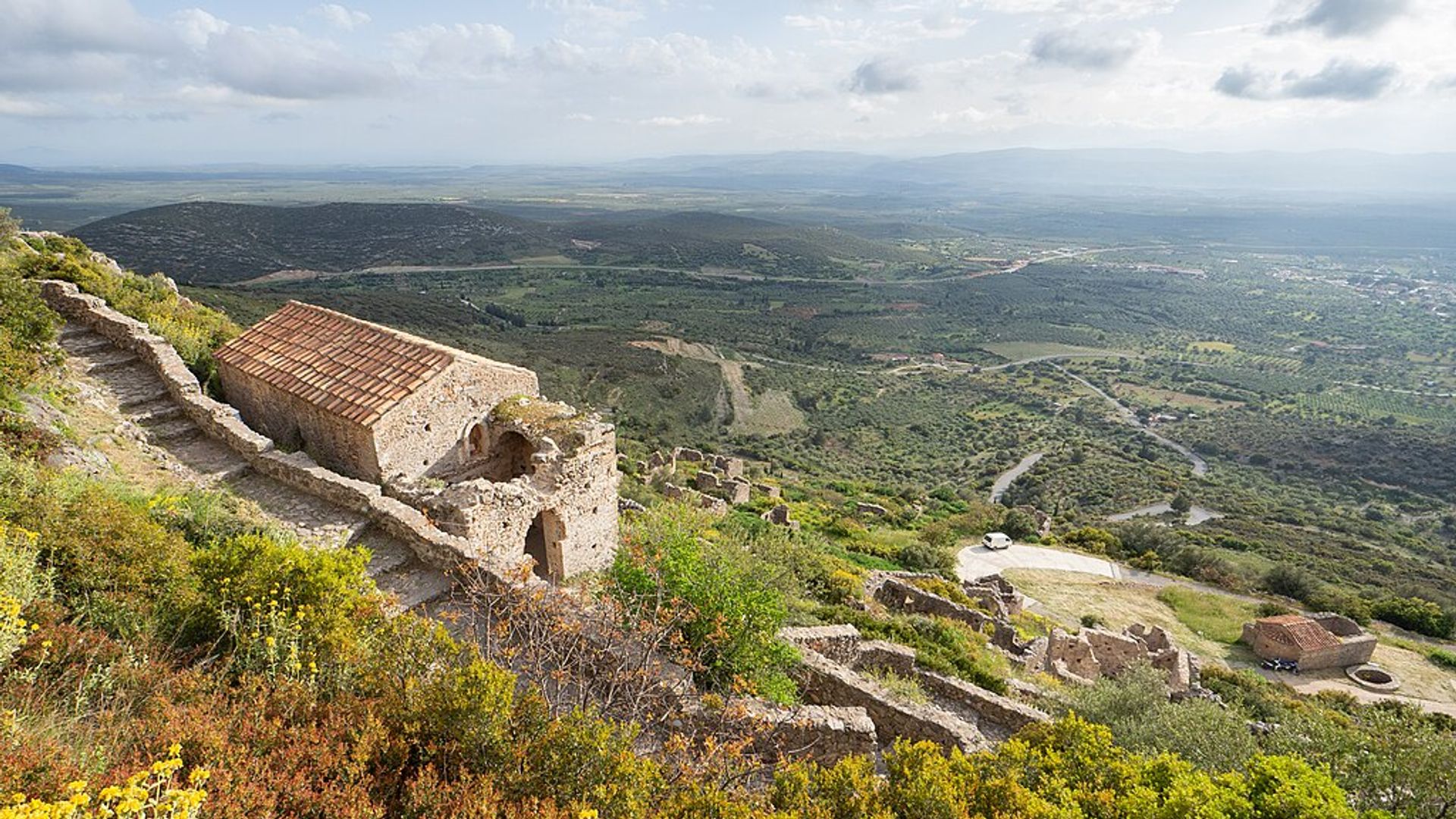
Discover Geraki Castle, a stunning Byzantine fortress perched above the Laconian plains. Explore medieval churches adorned with frescoes, wander through Frankish ruins, and experience one of the Peloponnese's best-kept secrets.
Perched dramatically on a rocky hilltop overlooking the Laconian plains, Geraki Castle stands as one of the Peloponnese's most captivating yet undervisited medieval treasures. This Byzantine fortress, crowned with crumbling Frankish towers and surrounded by exquisite churches adorned with centuries-old frescoes, offers travelers an authentic glimpse into Greece's layered medieval history.
Unlike the crowded ruins of more famous sites, Geraki rewards adventurous visitors with solitude, stunning panoramic views, and the rare opportunity to explore a remarkably preserved medieval settlement. The castle complex and its surrounding churches represent a unique fusion of Byzantine and Frankish architectural traditions, making it an essential stop for anyone exploring the rich heritage of southern Greece.
The Strategic Fortress of Laconia
Geraki's commanding position wasn't chosen by accident—it served as a crucial stronghold controlling the fertile valleys between Sparta and the coast. The fortress dates back to the 12th century when Byzantine lords recognized the defensive advantages of this natural acropolis rising 500 meters above the surrounding plains.
The castle's strategic importance only increased after the Fourth Crusade when Frankish crusaders conquered much of the Peloponnese in 1204. Under Frankish rule, Geraki became a barony within the Principality of Achaea, and the new lords expanded the fortifications with characteristic Western European military architecture that still dominates the hilltop today.
Byzantine Churches: Hidden Artistic Treasures
What truly distinguishes Geraki from other medieval fortresses is the extraordinary collection of Byzantine churches scattered across the hillside. More than thirty churches once served this prosperous medieval community, and several remain in remarkable condition with their original frescoes still visible.
The Church of Agios Georgios stands as the crown jewel of Geraki's ecclesiastical architecture. Built in the 13th century, this cross-in-square church features vibrant frescoes depicting biblical scenes with a distinctive artistic style that blends Byzantine traditions with Western influences, reflecting the cultural crossroads that Geraki represented during the Frankish occupation.
Notable Churches to Explore:
- Agios Georgios: Features exceptional 13th-century frescoes with vivid colors and expressive faces
- Agios Sozon: Contains well-preserved wall paintings from the late Byzantine period
- Agios Ioannis Chrysostomos: Showcases architectural elements typical of Mystras-school design
- Zoodochos Pigi: Offers fascinating examples of post-Byzantine artistic evolution
- Agia Paraskevi: Displays unique iconographic programs rarely seen elsewhere
The Frankish Castle Ruins
The summit of Geraki's acropolis is dominated by the remains of the Frankish castle, built by crusader knights who brought Western European castle-building techniques to the Greek landscape. The massive stone walls, though partially ruined, still convey the military might of the medieval barony.
Climbing through the castle's crumbling towers and defensive walls, you'll discover arrow slits, cisterns for water storage, and foundations of residential quarters where Frankish lords once lived. The architecture reflects the transition from Byzantine to Gothic styles, with pointed arches appearing alongside traditional Greek construction methods, similar to fortifications you might explore on a tour through the Peloponnese.
Quick Facts About Geraki Castle
Essential Information:
- Location: Geraki village, Laconia, approximately 40 km southeast of Sparta
- Era: Byzantine foundation (12th century), Frankish expansion (13th century)
- Altitude: 500 meters above sea level
- Number of Churches: Over 30 originally, with several well-preserved examples remaining
- Entrance Fee: Free access to most areas (some churches may require special arrangement)
- Best Visited: Spring (March-May) and autumn (September-November)
- Time Needed: 2-3 hours for thorough exploration
- Difficulty: Moderate hiking with steep sections and uneven terrain
The Medieval Settlement Below
While the castle and churches capture most attention, the lower medieval settlement of Geraki tells an equally compelling story. Stone houses, narrow lanes, and Byzantine chapels cascade down the hillside, creating an atmospheric townscape that has changed little over the centuries.
Walking through these ancient streets, you'll pass abandoned mansions with carved doorways, communal ovens where medieval families baked bread, and small chapels that served individual neighborhoods. This remarkably intact medieval urban fabric provides rare insight into how ordinary people lived during Byzantine and Frankish times, complementing what you might learn about ancient Sparta's history.
The Frankish-Byzantine Cultural Fusion
Geraki represents one of the Peloponnese's most fascinating examples of cultural blending between Orthodox Byzantine Greeks and Catholic Frankish crusaders. After the conquest of 1204, Frankish lords ruled over a predominantly Greek population, creating a unique society where Eastern and Western traditions intersected.
This cultural fusion is visible everywhere at Geraki—from church architecture that combines Byzantine domes with Gothic pointed arches, to frescoes that show Western artistic influences while maintaining Orthodox iconographic traditions. The castle itself embodies this duality, with Byzantine foundations supporting Frankish towers, much like the architectural evolution you can observe at Greece's various monasteries.
Hiking to the Summit
The climb to Geraki Castle's summit is an adventure in itself, following ancient pathways that medieval pilgrims and soldiers once trod. The trail begins in the modern village and winds upward through the old settlement, passing churches and ruined houses.
The ascent takes approximately 30-45 minutes at a moderate pace, with the path becoming steeper as you approach the castle walls. Wear sturdy footwear as the terrain includes loose stones, uneven steps, and occasionally overgrown sections that require careful navigation.
Hiking Essentials:
- Sturdy hiking boots with good ankle support and grip
- Sun protection including hat, sunglasses, and high-SPF sunscreen
- Plenty of water (at least 1-2 liters per person)
- Light snacks for energy during exploration
- Camera with extra battery for extensive photography opportunities
- Small flashlight for exploring darker church interiors
- Light jacket as summit can be windy even in warm weather
The Breathtaking Panoramic Views
Reaching the castle's highest point rewards climbers with spectacular 360-degree views across Laconia. To the west, the Taygetos Mountains rise dramatically, their peaks often snow-capped well into spring.
Eastward, the landscape rolls toward the Laconian Gulf, with olive groves and agricultural valleys spreading across the plains. On clear days, you can see all the way to the coast, understanding immediately why medieval lords valued this strategic vantage point for controlling the surrounding territory.
Geraki's Role in Medieval History
During the Frankish period, Geraki served as the seat of a barony under the de Bruyères family, who were among the most powerful crusader lords in the Morea (as the Franks called the Peloponnese). The barony controlled extensive territories and played a significant role in the complex political dynamics of 13th-century Greece.
When the Byzantine Greeks gradually reconquered the Peloponnese in the late 13th and 14th centuries, Geraki eventually returned to Byzantine control. The fortress and its churches continued to serve the local population through centuries of changing rulers, including periods of Ottoman domination, maintaining its importance as a regional center until modern times.
Photography Opportunities
Geraki Castle offers exceptional photography opportunities that change dramatically with the light and seasons. Early morning visits capture the fortress emerging from mist that often fills the valleys below, creating ethereal atmospheric conditions.
Late afternoon provides the warmest light, illuminating the honey-colored stones of the churches and castle walls while casting dramatic shadows across the ruins. The interplay of light through church windows and doorways creates natural spotlights that highlight architectural details and fresco fragments.
Best Photo Spots:
- Castle summit looking west toward Taygetos Mountains at sunset
- Agios Georgios church exterior with mountain backdrop
- Medieval street perspectives through the lower settlement
- Interior frescoes in churches (without flash to preserve artwork)
- Castle walls framing views of the Laconian plains
- Architectural details showing Byzantine-Frankish fusion elements
Visiting the Churches: Practical Considerations
While several churches at Geraki are accessible to visitors, some remain locked to protect their precious frescoes from damage and theft. The main churches near the parking area are typically open, but for access to others, you may need to inquire in the village.
Local residents often hold keys to specific churches and are usually happy to open them for interested visitors, especially if you show genuine appreciation for the historical and artistic significance. A small donation for church maintenance is always appreciated when someone takes time to unlock a church for you.
Travel Tips for Visiting Geraki Castle
Planning Your Visit:
- Visit during spring wildflower season (April-May) for spectacular botanical displays
- Avoid midday summer heat by starting early morning or late afternoon
- Check weather forecasts as exposed hilltop can be challenging in strong winds
- Bring cash for any donations or refreshments in the village
- Allow extra time beyond the climb for exploring multiple churches thoroughly
- Download offline maps as mobile signal can be unreliable on the hillside
- Respect church spaces by dressing modestly and speaking quietly
- Never touch frescoes or ancient surfaces as oils from skin cause damage
Combining Geraki with Nearby Attractions
Geraki's location makes it an excellent addition to a broader exploration of Laconia's historical sites. The fortress lies approximately 40 kilometers from Sparta, making it an easy day trip when combined with visits to other medieval and ancient sites in the region.
The UNESCO World Heritage site of Mystras, perhaps the most famous Byzantine fortress-city in Greece, is less than an hour's drive away. While Mystras attracts far more visitors, Geraki offers a more intimate and undisturbed experience of similar Byzantine architecture and art, providing interesting comparisons between the two sites.
Nearby Attractions Worth Visiting:
- Ancient Sparta archaeological site and museum (40 km)
- Mystras Byzantine fortress-city (45 km)
- Monemvasia castle town (70 km)
- Gytheio coastal town and Mani Peninsula gateway (60 km)
- Traditional mountain villages of Taygetos foothills
- Ancient theaters and sanctuaries throughout Laconia
The Village of Geraki Today
The modern village of Geraki spreads below the medieval settlement, maintaining its role as a local agricultural center. Walking through the village provides glimpses of traditional Peloponnesian life, with kafeneions where locals gather, small shops selling regional products, and family-run tavernas serving authentic Laconian cuisine.
The village celebrates its medieval heritage with occasional cultural events and maintains strong connections to the castle and churches that crown the hill above. Local pride in this historical legacy is evident, and residents are generally welcoming to visitors who show interest in their remarkable heritage.
Seasonal Considerations for Your Visit
Spring emerges as the ideal season for visiting Geraki Castle, when wildflowers carpet the hillsides and temperatures remain comfortable for hiking. The landscape transforms into a tapestry of colors, with poppies, daisies, and countless other species blooming among the ruins.
Autumn offers similar advantages with cooler temperatures and clear skies, though without the spectacular wildflower displays. Summer visits require early morning starts to avoid intense heat on the exposed hillside, while winter can bring occasional snow and ice that make the climb treacherous, though the snow-dusted castle presents dramatic photographic opportunities.
Geraki's Artistic Significance
Art historians consider Geraki's churches significant examples of late Byzantine painting, representing regional artistic schools that developed distinctive styles. The frescoes show influences from Constantinople while incorporating local traditions and, intriguingly, some Western European artistic elements introduced during Frankish rule.
The expressive faces, dynamic compositions, and relatively naturalistic rendering of figures in churches like Agios Georgios mark a departure from more rigid earlier Byzantine styles. These paintings provide valuable insights into the artistic evolution that occurred during the complex medieval period when Greek and Western European cultures intersected in the Peloponnese.
Getting to Geraki Castle
Reaching Geraki requires your own transportation as public transit options are extremely limited. From Sparta, take the road southeast toward Geraki village, following signs through agricultural countryside dotted with olive groves and small settlements.
The drive takes approximately 45 minutes, passing through typical Laconian landscapes of cultivated valleys backed by dramatic mountain ranges. Upon reaching Geraki village, follow signs toward the castle or ask locals for directions to the parking area near the base of the medieval settlement, which serves as the starting point for exploring the site on a journey through the Peloponnese's hidden treasures.
Driving Directions:
- From Sparta, head southeast on the main road toward Geraki
- Continue through agricultural areas for approximately 35 km
- Enter Geraki village and follow castle signs
- Park in designated area near the base of the medieval settlement
- Begin your exploration on foot from the parking area
What to Bring for Your Castle Exploration
Successful exploration of Geraki Castle requires more preparation than visiting easily accessible archaeological sites. The combination of hiking, church visits, and extended time outdoors means packing appropriately makes a significant difference in your experience.
Beyond the basics of water and sun protection, consider bringing binoculars for examining architectural details on higher walls and distant frescoes. A detailed guidebook or downloaded information helps identify specific churches and understand the historical context of what you're seeing, as on-site interpretation is minimal.
Essential Packing List:
- Daypack to carry supplies comfortably during the climb
- Refillable water bottles (minimum 1.5-2 liters per person)
- Energy snacks like nuts, dried fruit, or energy bars
- Sun hat with brim and high-SPF sunscreen
- Lightweight long pants for protection against thorny vegetation
- Sturdy closed-toe hiking shoes with good traction
- Camera with charged batteries and adequate storage
- Small first-aid kit with bandages and blister treatment
- Lightweight rain jacket (weather can change quickly in mountains)
- Modest clothing for entering churches (covered shoulders and knees)
The Conservation Challenge
Geraki's relative obscurity has been both blessing and curse for conservation. While fewer visitors means less wear on fragile frescoes and structures, it also means fewer resources available for systematic restoration and maintenance.
Several churches show signs of deterioration, with frescoes fading from moisture exposure and structural elements weakening over time. Greek archaeological authorities have conducted limited conservation work, but the sheer number of churches and the castle's remote location make comprehensive preservation challenging, similar to conservation issues faced at other historical sites throughout Greece.
Local Legends and Folklore
Like many medieval fortresses in Greece, Geraki has accumulated layers of folklore and legend over the centuries. Local traditions speak of hidden treasures buried within the castle walls, supposedly concealed by fleeing Frankish lords when Byzantine forces reconquered the region.
Other stories tell of secret tunnels connecting the castle to distant locations, though no archaeological evidence supports these romantic tales. These legends reflect the castle's importance in local memory and the enduring fascination with the dramatic medieval period when cultures clashed and blended on this strategic hilltop.
Respecting the Sacred and Historical Spaces
Visiting Geraki requires sensitivity to both the historical significance and ongoing religious importance of the site. Several churches remain active places of worship for the local community, even if services occur only occasionally.
Treat all spaces with appropriate respect—speak quietly in churches, never touch frescoes or ancient surfaces, and dress modestly when entering religious buildings. Photography is generally permitted, but avoid using flash as it can damage delicate pigments in centuries-old frescoes.
Why Geraki Deserves Your Time
In an era when major archaeological sites can feel overcrowded and commercialized, Geraki offers something increasingly rare—an authentic, unmediated encounter with Greece's medieval past. The absence of tour buses, gift shops, and crowds means you can explore at your own pace, discovering churches and viewpoints in solitude.
This fortress-town represents a crucial chapter in Greek history when Byzantine and Western European civilizations intersected, creating unique cultural and artistic expressions. For travelers willing to venture off the beaten path, Geraki rewards with beauty, history, and the satisfaction of discovering a place that remains genuinely undiscovered by mass tourism.
Frequently Asked Questions
How difficult is the climb to Geraki Castle?
The climb to Geraki Castle is moderately challenging, taking 30-45 minutes from the parking area to the summit. The path includes steep sections with uneven stone steps and loose rocks, requiring reasonable fitness and sturdy footwear. While not technically difficult, the exposed hillside can be hot in summer and slippery after rain, so timing and preparation are important for a comfortable visit.
Are the churches at Geraki open to visitors?
Several churches near the main path are typically accessible to visitors, particularly Agios Georgios which contains the most impressive frescoes. Other churches may be locked to protect their artwork, but locals in the village often hold keys and can sometimes open them for interested visitors, especially if you ask politely and show genuine interest in the historical and artistic significance.
What's the best time of year to visit Geraki Castle?
Spring (April-May) offers ideal conditions with comfortable temperatures, spectacular wildflowers, and clear skies for photography. Autumn (September-October) provides similar advantages without the flowers. Summer visits should begin early morning to avoid intense midday heat on the exposed hillside, while winter can bring occasional snow and ice that make the climb dangerous.
How long should I plan to spend at Geraki?
Allow 2-3 hours for a thorough exploration of Geraki Castle and its churches. This includes the 30-45 minute climb to the summit, time to explore the castle ruins and multiple churches, and the descent. Visitors with particular interest in Byzantine art or medieval architecture may want to budget additional time for detailed examination of frescoes and architectural features.
Can I visit Geraki Castle as a day trip from Sparta?
Yes, Geraki makes an excellent day trip from Sparta, located approximately 40 kilometers (45 minutes drive) to the southeast. Many visitors combine Geraki with nearby Mystras for a full day exploring Byzantine sites, or include it as part of a broader tour of Laconia's historical attractions. Having your own transportation is essential as public transit options are very limited.
Is there an entrance fee for Geraki Castle?
Most areas of Geraki Castle and the surrounding churches are free to access, making it an excellent value for budget-conscious travelers. However, if local residents open locked churches for you, a small donation for church maintenance is appropriate and appreciated. There are no official ticket offices or organized facilities at the site.
What should I know about photography at Geraki?
Photography is generally permitted throughout Geraki Castle and in the churches, but never use flash when photographing frescoes as it can damage the delicate pigments. The site offers exceptional photo opportunities, particularly in early morning or late afternoon light. Bring extra batteries as there are no facilities for recharging, and consider a tripod for interior shots in low-light church spaces.
Are there facilities or refreshments at Geraki Castle?
Geraki Castle has no visitor facilities, restrooms, or refreshment stands. Come fully prepared with water, snacks, and anything else you might need for several hours outdoors. The village of Geraki below has small shops and traditional kafeneions where you can get refreshments before or after your visit, but options are limited compared to larger tourist destinations.