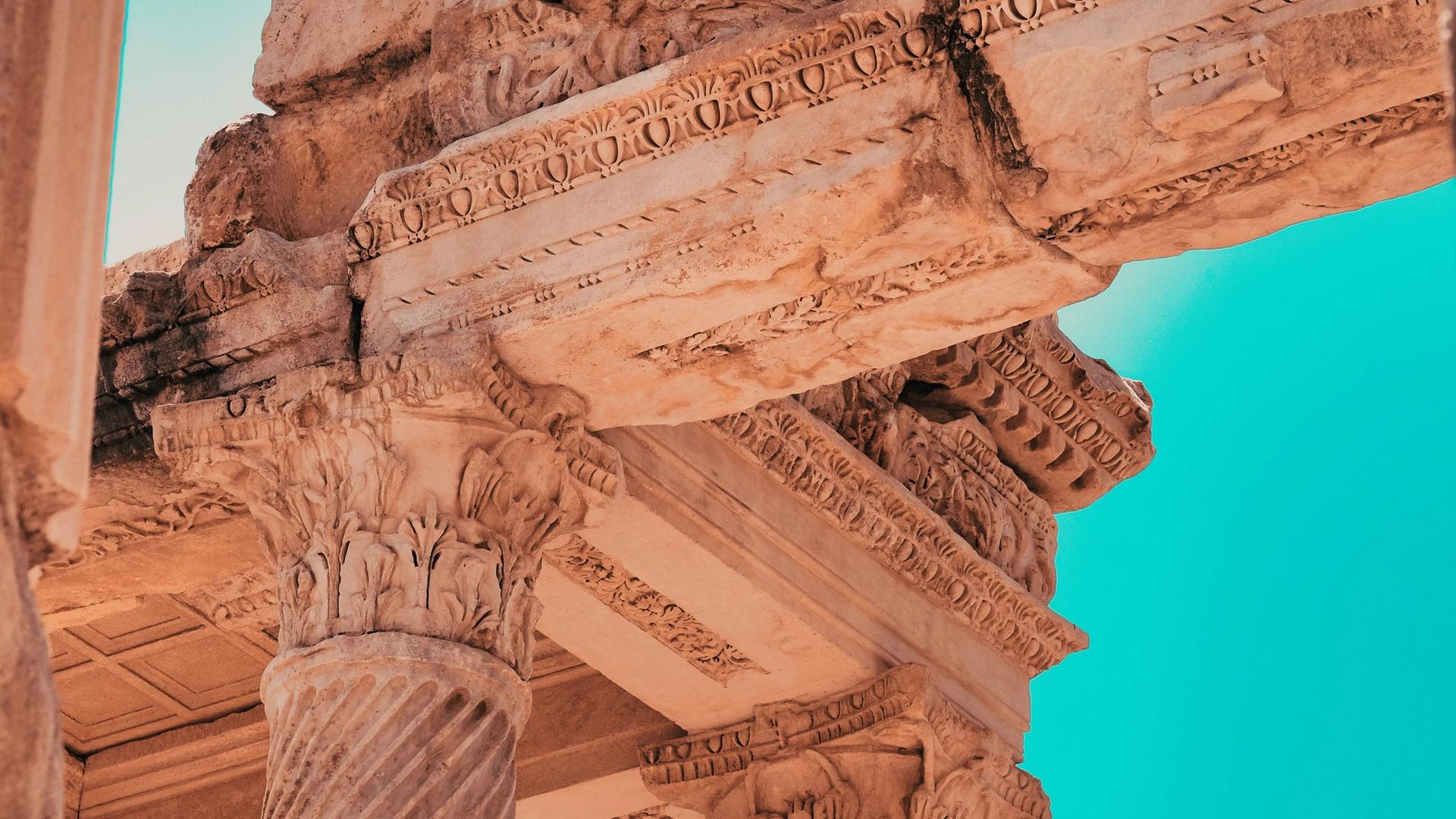
Discover the timeless beauty of Greek architecture, from ancient temples and theaters to Byzantine churches and island villages. Explore the architectural masterpieces that have influenced Western civilization for millennia.
The white marble columns of the Parthenon rise against the azure Athenian sky, standing as eternal testaments to architectural genius that emerged over two millennia ago. Greek architecture has shaped the built environment of Western civilization more profoundly than any other tradition, creating design principles that architects still follow today.
From the mathematical precision of ancient temples to the whitewashed simplicity of Cycladic villages, Greece offers an architectural journey through time itself. Every stone tells a story of innovation, beauty, and the human quest to create structures that inspire awe across generations.
The Golden Age of Ancient Greek Architecture
The classical period of Greek architecture, spanning roughly 500-300 BCE, produced some of humanity's most recognizable structures. These buildings weren't merely functional spaces but expressions of civic pride, religious devotion, and mathematical harmony.
The Greeks developed three distinct architectural orders that became the foundation of Western architecture: Doric, Ionic, and Corinthian. Each order possessed unique characteristics in column design, capital decoration, and proportional relationships that architects study to this day.
The Three Classical Orders
Doric Order Characteristics:
- Sturdy, fluted columns without bases
- Simple, cushion-like capitals
- Powerful, masculine aesthetic
- Found in mainland Greece and western colonies
- Exemplified by the Parthenon in Athens
Ionic Order Features:
- Slender columns with decorative bases
- Distinctive scroll-shaped capitals (volutes)
- More elegant and refined appearance
- Popular in Ionian settlements and Asia Minor
- Seen in the Erechtheion and Temple of Athena Nike
Corinthian Order Elements:
- Most ornate and decorative style
- Elaborate capitals with acanthus leaf motifs
- Tall, slender proportions
- Developed later in the classical period
- Became extremely popular in Roman architecture
Sacred Spaces: Greek Temples
Greek temples served as houses for the gods, not gathering places for worshippers like modern churches. The architectural design reflected this purpose, with the interior naos (inner chamber) housing the cult statue while religious ceremonies occurred outside.
The typical Greek temple followed a rectangular plan with columns surrounding the central structure. This peripteral design created a colonnade (peristyle) that cast dramatic shadows and provided shelter while emphasizing the building's monumental scale.
Essential Temple Components:
- Stylobate: The stepped platform supporting columns
- Cella (Naos): The inner sanctuary housing the deity's statue
- Pronaos: The entrance porch before the main chamber
- Opisthodomos: The rear porch, often used for treasury
- Pediment: The triangular gable filled with sculptural decoration
- Frieze: The decorative band running along the entablature
The Parthenon exemplifies architectural perfection through subtle optical refinements. Its columns lean slightly inward, horizontal lines curve imperceptibly upward, and corner columns are thicker—all corrections ensuring the building appears perfectly straight to human eyes.
Theaters: Architecture Meets Performance
The ancient Greeks invented theatrical architecture, designing spaces where drama became a civic and religious experience. These open-air theaters utilized natural hillside topography to create perfect acoustics and sightlines for thousands of spectators.
The Theater of Epidaurus, built in the 4th century BCE, remains the finest example of Greek theatrical architecture. Its acoustics are so perfect that a coin dropped in the orchestra can be heard in the highest seats, 55 rows away.
Theater Architectural Elements:
- Theatron: The semicircular seating area carved into hillsides
- Orchestra: The circular performance space at the center
- Skene: The building behind the orchestra serving as backdrop
- Parodoi: The side entrances for chorus and audience
- Diazoma: Horizontal walkways dividing seating sections
Experience the magic of ancient Greek theaters firsthand with our Nafplio, Corinth & Epidavros tour, where you can stand in the legendary theater and test its remarkable acoustics yourself.
Byzantine Architecture: The Second Golden Age
When Christianity became the dominant religion, Greek architecture evolved to serve new spiritual needs. Byzantine architecture emerged in the 4th century CE, combining Roman engineering with Eastern influences and Christian symbolism.
The cross-in-square church plan became the standard Byzantine design, featuring a central dome supported by four columns or piers. This architectural innovation created an interior space that symbolized heaven descending to earth, with Christ Pantocrator typically depicted in the dome's center.
Byzantine Architectural Features:
- Central domes on pendentives or squinches
- Rich interior decoration with mosaics and frescoes
- Brick and stone construction with decorative patterns
- Compact, vertical designs emphasizing height
- Multiple smaller domes surrounding the central dome
- Narthex (entrance hall) preceding the main nave
Greece's monasteries showcase Byzantine architectural brilliance, from the cliff-top complexes of Meteora to the fortress-monasteries of Mount Athos. These sacred spaces blend architectural innovation with dramatic natural settings, creating environments conducive to spiritual contemplation.
Venetian & Frankish Influences
The medieval period brought Western European architectural styles to Greece through Crusader conquests and Venetian colonization. Massive fortifications, Gothic churches, and Renaissance palaces appeared alongside Byzantine structures, creating unique architectural hybrids.
Nafplio, the first capital of modern Greece, exemplifies this architectural fusion. Venetian fortresses crown its hills, neoclassical mansions line its streets, and Ottoman fountains punctuate its squares—all testaments to the city's complex history.
Medieval Architectural Legacy:
- Palamidi Fortress: Venetian military architecture at its finest
- Monemvasia: Byzantine castle town with Venetian modifications
- Rhodes Old Town: Medieval fortified city with Gothic buildings
- Mystras: Late Byzantine city with palace and churches
- Corfu Old Town: Venetian urban planning and architecture
Discover the fascinating history of Sparta and Mystras through our specialized tours that explore both ancient Spartan sites and the Byzantine splendor of Mystras.
Cycladic Architecture: Whitewashed Perfection
The iconic image of Greece—white cubic houses with blue-domed churches cascading down hillsides—represents Cycladic vernacular architecture. This distinctive style evolved from practical responses to the islands' climate, materials, and topography.
The whitewashed walls reflect intense summer heat, while thick stone construction provides insulation. Flat roofs collect precious rainwater, and small windows minimize heat gain while offering protection from strong winds.
Cycladic Design Elements:
- Cubic volumes with flat or domed roofs
- Whitewashed walls with colored door and window frames
- Narrow, winding streets providing shade and wind protection
- Outdoor living spaces (courtyards and terraces)
- Integration with natural landscape contours
- Minimal ornamentation emphasizing pure forms
The blue and white color scheme that defines Greek island architecture actually became mandatory in 1967, though the tradition existed long before. These colors reflect Greek national identity while creating stunning visual harmony with sea and sky.
Neoclassical Revival: Modern Greece
When Greece gained independence in the 19th century, architects deliberately revived classical Greek architectural forms to assert national identity. Neoclassical architecture dominated public buildings, mansions, and urban planning throughout the new nation.
Athens transformed from a small town into a capital city designed around neoclassical principles. The "Architectural Trilogy"—the National Library, University of Athens, and Academy of Athens—exemplifies this revival, with columns, pediments, and classical proportions proclaiming Greece's connection to its ancient past.
Neoclassical Characteristics in Greece:
- Pediments and classical porticos on public buildings
- Symmetrical facades with balanced proportions
- Decorative elements borrowed from ancient temples
- Pastel-colored stucco over stone or brick
- Iron balconies with geometric or floral patterns
- High ceilings and large windows for light and ventilation
Many Greek cities preserve beautiful neoclassical neighborhoods where you can admire this architectural heritage. Nafplio, Ermoupoli, and Thessaloniki offer particularly rich examples of 19th-century Greek urban architecture.
Quick Facts About Greek Architecture
Ancient Period Highlights:
- The Parthenon required 13,400 stones and took 15 years to complete
- Greek temples used no mortar—stones fit together through precision cutting
- The golden ratio (1:1.618) appears throughout Greek architectural proportions
- Ancient Greek architects were also sculptors and mathematicians
- Temples were originally painted in bright colors, not white marble
Architectural Innovations:
- The column and post-and-lintel construction system
- Optical refinements to correct visual distortions
- The dome on pendentives (Byzantine innovation)
- Integration of sculpture as architectural decoration
- Mathematical proportions creating visual harmony
Modern Preservation:
- Over 100 archaeological sites protect ancient architecture
- UNESCO recognizes 18 Greek World Heritage Sites
- Traditional settlement protection laws preserve island architecture
- Ongoing restoration projects use ancient techniques
- Digital documentation preserves architectural knowledge
Travel Tips for Architecture Enthusiasts
Planning Your Architectural Tour:
- Visit major sites early morning or late afternoon for best lighting and fewer crowds
- Hire knowledgeable guides who can explain architectural details and historical context
- Bring binoculars for viewing sculptural details on high friezes and pediments
- Wear comfortable shoes—archaeological sites involve significant walking on uneven surfaces
- Check opening hours and days, as many sites close on specific weekdays
- Purchase combination tickets for multiple Athens sites to save money
Photography Considerations:
- Golden hour (sunrise/sunset) creates dramatic shadows highlighting architectural details
- Overcast days reduce harsh shadows for capturing overall structures
- Wide-angle lenses capture entire buildings in confined spaces
- Detail shots reveal craftsmanship and decorative elements
- Respect photography restrictions in museums and churches
Seasonal Timing:
- Spring (April-May): Ideal weather, wildflowers, moderate crowds
- Fall (September-October): Comfortable temperatures, excellent light quality
- Summer (June-August): Long days but intense heat and maximum crowds
- Winter (November-March): Minimal crowds, dramatic light, but shorter days
Learn more about the best times to visit in our guide to Greece weather in October, when conditions are perfect for architectural exploration.
Architectural Tours in the Peloponnese
The Peloponnese peninsula offers extraordinary architectural diversity within a compact region. Ancient temples, Byzantine churches, Venetian fortresses, and neoclassical towns create an architectural timeline spanning three millennia.
Our Nafplio to Ancient Olympia tour takes you to the birthplace of the Olympic Games, where you'll explore the Temple of Zeus, the Temple of Hera, and the remarkably preserved stadium—a complete ancient sanctuary showcasing classical Greek architecture at its finest.
Must-See Peloponnese Architecture:
- Mycenae: Cyclopean walls and the Treasury of Atreus tholos tomb
- Epidaurus: The perfectly preserved ancient theater and Asclepieion sanctuary
- Ancient Corinth: Temple of Apollo and extensive Roman architectural remains
- Mystras: Complete Byzantine city with palaces, churches, and monasteries
- Ancient Messene: Exceptionally well-preserved classical city with intact structures
Understanding Architectural Details
Appreciating Greek architecture requires understanding the subtle details that distinguish masterworks from ordinary buildings. Ancient architects employed sophisticated techniques to create visual perfection and structural stability.
Optical Refinements:
- Entasis: Slight convex curve in columns preventing optical illusion of concavity
- Stylobate curvature: Upward curve in platform preventing appearance of sagging
- Column inclination: Inward lean creating stability and correcting perspective
- Corner column adjustment: Thicker corner columns compensating for sky background
- Intercolumniation variation: Adjusted spacing creating harmonious rhythm
Decorative Elements:
- Metopes: Square panels between triglyphs, often carved with relief sculptures
- Triglyphs: Vertical grooved tablets in Doric friezes
- Dentils: Small rectangular blocks creating a tooth-like pattern
- Acroteria: Decorative elements at pediment corners and apex
- Antefixes: Ornamental tiles along roof edges
These architectural details reveal the Greeks' obsession with mathematical precision and visual perfection. Every element served both functional and aesthetic purposes, creating buildings that have inspired architects for over 2,000 years.
Byzantine Church Architecture
Byzantine churches represent a distinct architectural tradition that dominated Greek religious building for a millennium. The cross-in-square plan, developed in the 9th century, became the standard design replicated throughout the Orthodox world.
These churches create intimate, spiritually charged spaces through architectural manipulation of light, space, and decoration. The central dome represents heaven, while the square base symbolizes earth—the church itself becoming a microcosm of the universe.
Church Architectural Program:
- Narthex: Entrance area for catechumens and penitents
- Nave: Main worship space for the congregation
- Sanctuary (Bema): Elevated eastern area reserved for clergy
- Iconostasis: Screen separating sanctuary from nave
- Prothesis: Side chapel for preparing communion elements
- Diakonikon: Side chapel for vestments and sacred vessels
The Holy Monastery of Malevis exemplifies Byzantine monastic architecture, with its fortified walls, katholikon (main church), and cells arranged around a central courtyard—a design that served both spiritual and defensive purposes.
Vernacular Architecture Across Greece
Beyond monumental architecture, Greece's vernacular traditions reveal how ordinary people adapted building techniques to local conditions, materials, and cultural practices. Regional variations create distinctive architectural identities across the country.
Mountain villages feature stone houses with slate roofs, narrow windows, and defensive towers. Coastal settlements emphasize outdoor living with courtyards, terraces, and covered walkways. Island architecture varies from the cubic Cycladic style to the colorful neoclassical mansions of the Dodecanese.
Regional Architectural Styles:
- Mani Peninsula: Stone tower houses (pyrgoi) built for clan warfare
- Pelion: Slate-roofed mansions with overhanging upper floors
- Zagori: Stone bridges and villages harmonizing with mountain landscapes
- Santorini: Cave houses carved into volcanic cliffs
- Hydra: Stone mansions with tile roofs and marble-paved streets
Explore the fascinating historical sites near Porto Heli to discover how coastal Peloponnese architecture differs from island and mountain traditions.
Architectural Symbolism and Meaning
Greek architecture was never merely functional—every element carried symbolic meaning reflecting religious beliefs, political values, and philosophical concepts. Understanding this symbolism enriches appreciation of these magnificent structures.
Ancient temples oriented east-west, with the entrance facing east toward the rising sun. This orientation connected the building to cosmic order while ensuring dramatic lighting effects during religious ceremonies.
Symbolic Elements:
- Columns: Represent the connection between earth and heaven
- Pediments: Divine realm where gods and mythological scenes appear
- Steps: Gradual ascent from profane to sacred space
- Proportions: Mathematical harmony reflecting cosmic order
- Decoration: Narratives teaching moral lessons and cultural values
Byzantine churches employed even more complex symbolism, with every architectural element and decorative program following theological principles. The building itself became a sermon in stone, teaching doctrine through spatial arrangement and visual imagery.
Modern Greek Architecture
Contemporary Greek architecture struggles to balance modernist principles with traditional forms and heritage preservation. Leading architects seek to create buildings that respond to climate, landscape, and cultural identity while employing modern materials and technologies.
Some architects embrace minimalist aesthetics that echo Cycladic simplicity, using white concrete, clean lines, and integration with landscape. Others reinterpret traditional elements—courtyards, pergolas, thick walls—using contemporary materials and construction techniques.
Contemporary Architectural Trends:
- Sustainable design responding to Mediterranean climate
- Adaptive reuse of historic buildings for modern functions
- Minimalist aesthetics inspired by vernacular traditions
- Integration with natural and archaeological landscapes
- Use of local materials and traditional craftsmanship
Frequently Asked Questions
What are the three main types of Greek columns?
The three classical Greek column orders are Doric, Ionic, and Corinthian. Doric columns are sturdy and simple with plain capitals, Ionic columns are more slender with scroll-shaped capitals, and Corinthian columns are the most ornate with elaborate acanthus leaf decoration. Each order has distinct proportions, decorative elements, and aesthetic character that influenced Western architecture for millennia.
Why are Greek island houses painted white?
Greek island houses are painted white primarily for practical reasons related to climate. The white lime-based coating reflects intense summer heat, keeping interiors cooler, while also providing antibacterial properties in the pre-modern era. The tradition became mandatory in 1967 when the military government required all buildings to be painted white and blue to promote national unity, though the practice existed long before in many island communities.
How did ancient Greeks build temples without mortar?
Ancient Greek builders used an incredibly precise stone-cutting technique that allowed massive blocks to fit together perfectly without mortar. Stones were shaped with such accuracy that not even a knife blade could fit between them, and iron clamps and dowels set in lead secured the blocks together. This dry-stone construction method proved remarkably durable, with many temples surviving earthquakes and millennia of weathering.
What is the golden ratio in Greek architecture?
The golden ratio (approximately 1:1.618) is a mathematical proportion that appears throughout Greek architecture, creating aesthetically pleasing relationships between building elements. Ancient architects applied this ratio to determine relationships between column height and spacing, building width and length, and various decorative elements. This mathematical approach to beauty reflects the Greek belief that the universe operated according to rational, harmonious principles.
Can you visit the Parthenon interior?
Visitors cannot enter the Parthenon interior due to ongoing restoration work and structural preservation concerns. However, you can walk around the entire building on the Acropolis, viewing it from all angles and appreciating its architectural details, sculptural decoration, and commanding position overlooking Athens. The Acropolis Museum displays many original sculptures and architectural elements from the Parthenon, providing insight into its original appearance.
What makes the Theater of Epidaurus acoustically perfect?
The Theater of Epidaurus achieves remarkable acoustics through its precise semicircular geometry, limestone seat material, and carefully calculated slope. Recent research suggests the limestone seats filter out low-frequency background noise while amplifying higher frequencies of human speech. The theater's design creates conditions where sound waves reflect and reinforce each other, allowing even whispered words in the orchestra to be heard clearly in the highest seats.
How long did it take to build ancient Greek temples?
Construction times varied significantly depending on the temple's size, complexity, and available resources. The Parthenon took approximately 15 years to complete (447-432 BCE), though decoration continued longer. Smaller temples might be completed in 5-10 years, while larger projects could span decades or even be left unfinished. Construction depended on quarrying capacity, transportation logistics, skilled craftsmen availability, and continuous funding.
What is Byzantine architecture's most distinctive feature?
The central dome supported on pendentives represents Byzantine architecture's most distinctive innovation. This structural system allowed architects to place a circular dome over a square base, creating soaring interior spaces filled with light from windows around the dome's base. The dome symbolized heaven, with Christ Pantocrator typically depicted at its center, making the building's architecture inseparable from its theological meaning and spiritual function.
Conclusion: Architecture as Living Heritage
Greek architecture represents humanity's enduring quest to create beauty, express beliefs, and build structures that transcend their own time. From ancient temples to island villages, these buildings continue to inspire, educate, and move people who encounter them.
Visiting Greece's architectural treasures offers more than aesthetic appreciation—it provides connection to the foundations of Western civilization and insight into how humans have shaped their built environment across millennia. Each column, dome, and whitewashed wall tells stories of innovation, faith, and cultural identity.
Experience the full spectrum of Greek architectural heritage through our carefully designed tours that bring these magnificent structures to life. Whether you're standing in an ancient theater testing its acoustics or exploring a Byzantine monastery's sacred spaces, you'll discover why Greek architecture continues to captivate and inspire the world.
For more fascinating insights into Greek culture and history, explore our collection of fun facts about Greece and start planning your architectural journey through this extraordinary land.