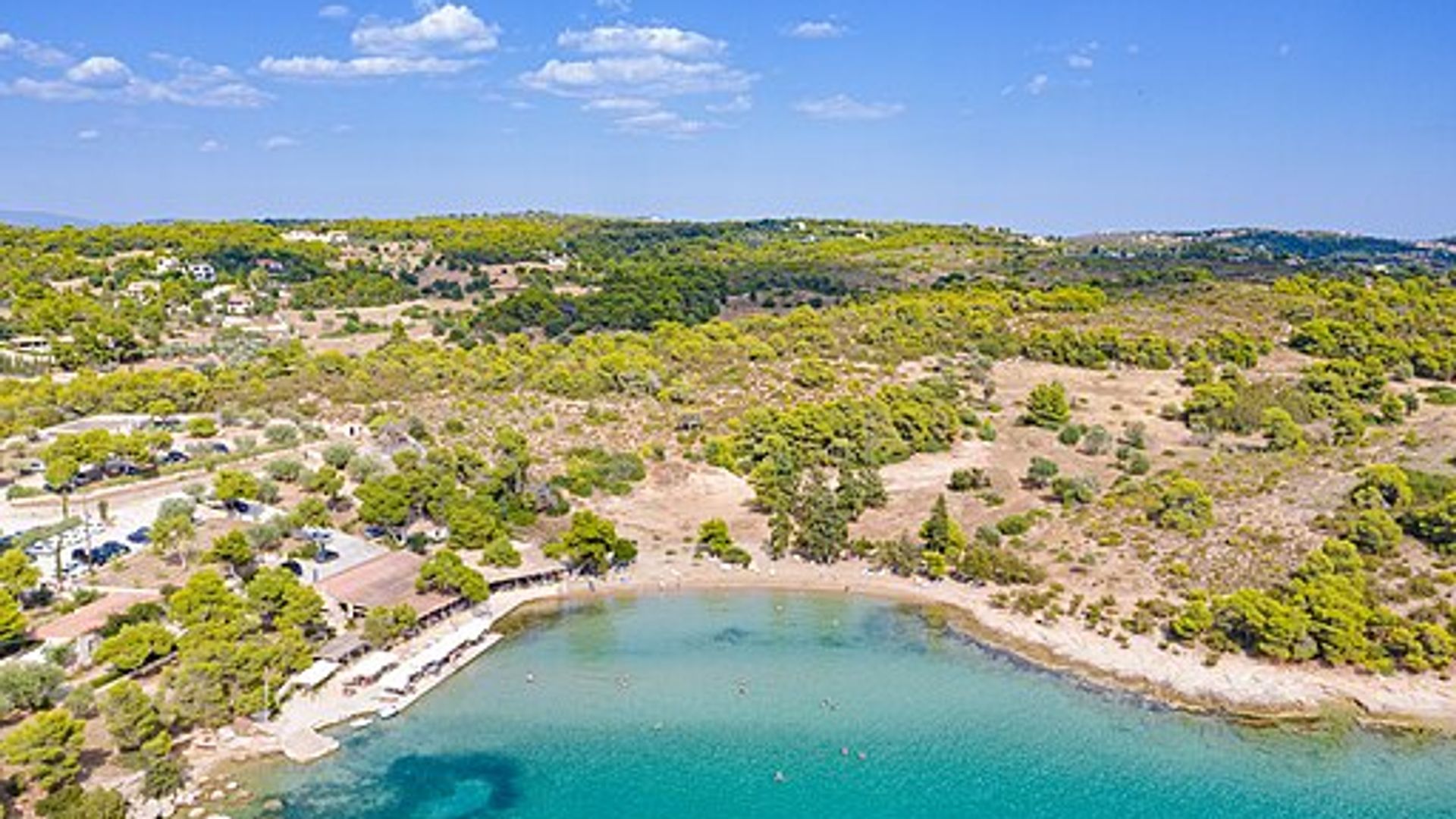
Discover the magnificent historical sites surrounding Porto Heli, from the legendary ancient theater of Epidaurus to the mighty ruins of Mycenae. This guide reveals the Peloponnese's most captivating archaeological treasures within easy reach of this coastal paradise.
The sparkling coastal town of Porto Heli serves as your perfect gateway to some of Greece's most spectacular historical treasures. Within a short drive from this elegant resort destination, you'll find yourself walking through ancient theaters, exploring Bronze Age citadels, and discovering ruins that have captivated travelers for centuries.
The Peloponnese peninsula surrounding Porto Heli holds an extraordinary concentration of archaeological wonders that span millennia of Greek civilization. From the legendary kingdoms of Mycenaean warriors to the healing sanctuaries of ancient gods, these sites offer an unforgettable journey through time that complements your coastal retreat perfectly.
Quick Facts About Historical Sites Near Porto Heli
Essential Information:
- Distance to Epidaurus: 45 km (approximately 50 minutes)
- Distance to Mycenae: 75 km (approximately 1 hour 15 minutes)
- Distance to Ancient Troezen: 25 km (approximately 30 minutes)
- Distance to Nafplio: 60 km (approximately 1 hour)
- Best visiting season: April-June and September-October
- Combined ticket options available for major sites
- Most sites open daily from 8:00 AM to sunset
The Ancient Theater of Epidaurus: Acoustic Marvel
The ancient theater of Epidaurus stands as the crown jewel of archaeological sites near Porto Heli. This 4th-century BC masterpiece remains the best-preserved ancient theater in Greece, renowned worldwide for its perfect acoustics and stunning symmetry.
Seating 14,000 spectators across 55 tiers, the theater still hosts performances during the annual Epidaurus Festival. Drop a coin at the center of the orchestra, and listeners in the highest seats will hear it ring clearly—a testament to ancient engineering genius that modern architects still study today.
What Makes Epidaurus Special:
- Perfect acoustic design that requires no amplification
- Exceptional preservation spanning 2,300 years
- Active performance venue for classical Greek drama
- Part of the larger Sanctuary of Asclepius healing complex
- UNESCO World Heritage Site designation
The Sanctuary of Asclepius: Ancient Healing Center
Beyond the famous theater lies the extensive sanctuary complex dedicated to Asclepius, the god of healing. This was ancient Greece's most important medical center, where patients came from across the Mediterranean seeking cures for their ailments.
The ruins include the tholos (a mysterious circular building), the abaton (where patients slept hoping for healing dreams), and the stadium where athletic competitions were part of the therapeutic regimen. Walking through these remains reveals how the ancient Greeks integrated physical, spiritual, and mental health centuries before modern holistic medicine.
Key Structures to Explore:
- The Tholos: Circular building with intricate floor patterns
- The Abaton: Sacred dormitory for healing sleep
- Ancient Stadium: 181-meter track for athletic therapy
- Propylaea: Monumental entrance gateway
- Museum displaying surgical instruments and votive offerings
Mycenae: Kingdom of Agamemnon
The legendary citadel of Mycenae rises dramatically from the Argolid plain, its massive walls testifying to the power of Bronze Age civilization. This was the realm of King Agamemnon, leader of the Greek forces in Homer's Iliad, and the center of a culture that gave its name to an entire era.
Entering through the iconic Lion Gate—Europe's oldest monumental sculpture—transports you to a world of warrior kings and golden treasures. The archaeological discoveries here, including the famous gold death mask once attributed to Agamemnon, revolutionized our understanding of prehistoric Greece.
Must-See Features:
- The Lion Gate: Massive entrance with carved lions
- Grave Circle A: Royal burial ground with rich treasures
- Treasury of Atreus: Spectacular beehive tomb
- Palace complex: Throne room and royal quarters
- Cyclopean Walls: Enormous limestone blocks fitted without mortar
Exploring these archaeological sites reveals the sophistication of Bronze Age civilization. The engineering required to construct these monuments without modern tools demonstrates remarkable technical knowledge and organizational capability.
Ancient Troezen: Hidden Coastal Treasure
Just across the water from Porto Heli lies ancient Troezen, the legendary birthplace of the hero Theseus. This often-overlooked site offers a more intimate archaeological experience away from the crowds that gather at larger monuments.
The ruins spread across a beautiful landscape of olive groves and pine forests, with the sea glittering in the distance. Here you'll find the remains of the ancient agora, the Devil's Bridge (a natural rock formation), and the Tower of Theseus perched on a nearby hilltop.
Troezen Highlights:
- Sanctuary of Hippolytus: Dedicated to Theseus's tragic son
- Ancient Agora: Marketplace and civic center
- Episcopal Basilica: Early Christian church ruins
- Tower of Theseus: Medieval watchtower on ancient foundations
- Devil's Bridge: Natural limestone arch
Nafplio: Living History
The elegant town of Nafplio serves as both a historical destination and an excellent base for exploring the region. Greece's first capital after independence, Nafplio combines Venetian fortresses, Ottoman mosques, and neoclassical mansions in a remarkably harmonious whole.
The Palamidi Fortress crowns the city with 999 steps leading to spectacular views across the Argolic Gulf. Below, the smaller Bourtzi fortress sits on an island guarding the harbor, while the old town's narrow streets reveal architectural layers from multiple civilizations.
Nafplio's Historical Attractions:
- Palamidi Fortress: Venetian military masterpiece
- Bourtzi Castle: Island fortress in the harbor
- Archaeological Museum: Mycenaean and classical artifacts
- Acronauplia: Ancient acropolis with layered fortifications
- Ottoman fountains and mosques throughout old town
Ancient Asine: Seaside Settlement
The coastal site of Ancient Asine offers a unique combination of archaeology and natural beauty. Mentioned in Homer's Iliad, this settlement spans from Mycenaean times through the Byzantine period, with ruins scattered across a promontory jutting into the sea.
The site's relative obscurity means you might have these evocative ruins to yourself, with waves lapping at ancient walls and wildflowers growing among the stones. The small Venetian fortress at the summit provides panoramic views worth the short climb.
Asine Features:
- Mycenaean settlement remains
- Classical and Hellenistic houses
- Venetian fortress tower
- Byzantine church foundations
- Stunning coastal setting
The Heraion of Argos: Sanctuary of Hera
This important sanctuary dedicated to Hera, queen of the gods, occupies terraces on the slopes of Mount Euboea. Though less visited than other sites, the Heraion was one of ancient Greece's most significant religious centers, hosting the Heraia games exclusively for women.
The site includes remains of multiple temple phases, a monumental stairway, and a classical temple whose architectural elements now help us understand ancient construction techniques. The peaceful setting and sweeping views make this an especially contemplative visit.
Heraion Highlights:
- Archaic temple foundations
- Classical temple remains
- Ancient stairway system
- Gymnasium and bath complex
- Panoramic views across the Argolid
Lerna: Mythological Battleground
The site of Lerna holds a special place in Greek mythology as the lair of the Lernaean Hydra, the multi-headed serpent slain by Heracles as one of his twelve labors. Archaeological excavations have revealed a fascinating prehistoric settlement with one of Greece's earliest monumental buildings.
The mysterious House of Tiles, dating to the Early Bronze Age, represents sophisticated architecture from around 2500 BC. The site also features ancient springs that still flow, connecting the mythological past with the living present.
Lerna's Archaeological Treasures:
- House of Tiles: Early Bronze Age mansion
- Prehistoric fortification walls
- Ancient springs and water channels
- Mycenaean settlement layers
- Neolithic occupation evidence
Planning Your Historical Journey
Exploring these sites requires thoughtful planning to maximize your experience while respecting the summer heat and site opening hours. Most archaeological sites open at 8:00 AM, making early morning visits ideal for avoiding crowds and enjoying cooler temperatures.
Combining sites strategically allows you to experience multiple locations in a single day. For example, Mycenae and Epidaurus pair naturally, while Troezen and Nafplio make an excellent coastal circuit from Porto Heli.
Strategic Touring Tips:
- Start early to avoid heat and tour groups
- Combine nearby sites in single-day itineraries
- Purchase combined tickets when available for savings
- Bring plenty of water and sun protection
- Wear sturdy walking shoes with good grip
- Allow extra time for museum visits
- Check seasonal opening hours in advance
- Consider guided tours for deeper historical context
Consider booking a comprehensive tour that handles logistics while providing expert archaeological insights. Professional guides bring these ancient stones to life with stories and historical context that independent visits often miss.
Best Times to Visit
Seasonal timing dramatically affects your archaeological experience. Spring (April-June) offers perfect weather, wildflowers blooming among the ruins, and manageable crowds at most sites.
Autumn (September-October) provides similarly excellent conditions with the added benefit of pleasant weather and harvest season in surrounding villages. Summer visits require early morning starts to avoid intense midday heat, though the extended daylight hours allow more flexible scheduling.
Seasonal Considerations:
- Spring: Wildflowers, moderate temperatures, Easter crowds
- Summer: Long days, intense heat, peak tourist season
- Autumn: Harvest festivals, comfortable weather, fewer visitors
- Winter: Reduced hours, rain possible, almost no crowds
Transportation and Logistics
Renting a car provides maximum flexibility for exploring multiple sites at your own pace. The roads connecting Porto Heli to major archaeological sites are well-maintained, and parking is available at all locations.
Alternatively, organized tours eliminate navigation concerns and parking hassles while adding expert commentary. Many visitors find that a combination approach works best—guided tours for major sites like Epidaurus and Mycenae, independent exploration for smaller locations like Troezen.
Transportation Options:
- Rental car: Maximum flexibility and independence
- Organized tours: Expert guides and no parking worries
- Private driver: Comfort without navigation stress
- Public buses: Budget-friendly but limited schedules
- Taxi services: Convenient for single-site visits
What to Bring
Proper preparation ensures comfortable exploration of these outdoor archaeological sites. Greek summer sun can be intense, and many sites offer limited shade, making sun protection essential.
Most sites have minimal facilities, so bringing supplies prevents interrupting your visit. The uneven terrain at ancient ruins requires appropriate footwear—save the sandals for beach days and wear proper walking shoes.
Essential Items Checklist:
- Sturdy walking shoes with ankle support
- Wide-brimmed hat and sunglasses
- High SPF sunscreen and reapply regularly
- Refillable water bottle (at least 1 liter)
- Light, breathable long-sleeved shirt
- Camera with charged batteries
- Small backpack for hands-free exploring
- Snacks for energy between sites
Combining History with Coastal Relaxation
One of Porto Heli's greatest advantages is allowing you to balance cultural exploration with beach relaxation. After morning visits to ancient sites, return to your coastal base for afternoon swimming and seaside dining.
This rhythm prevents archaeological fatigue while letting you experience the full richness of the Peloponnese. The contrast between ancient stones and azure waters creates a travel experience that engages both mind and senses.
Ideal Daily Schedule:
- Early departure for archaeological sites (7:00-8:00 AM)
- Explore major ruins during cool morning hours
- Museum visit during midday heat
- Return to Porto Heli by early afternoon
- Beach time and swimming
- Sunset drinks at waterfront taverna
- Dinner featuring local specialties
Cultural Context and Ancient Greek Life
Understanding the historical context enriches your archaeological visits immeasurably. These weren't just buildings—they were living centers of worship, healing, politics, and daily life for thousands of years.
The theater at Epidaurus hosted religious festivals where drama served as both entertainment and spiritual education. Mycenae's massive fortifications protected not just a palace but an entire civilization's administrative and religious heart, while the Sanctuary of Asclepius pioneered medical practices that influenced healing traditions for millennia.
Historical Periods Represented:
- Bronze Age (3000-1100 BC): Mycenae's golden age
- Archaic Period (800-480 BC): Early temple construction
- Classical Era (480-323 BC): Theater and sanctuary peak
- Hellenistic Period (323-31 BC): Expansion and refinement
- Roman Times (31 BC-330 AD): Continued use and modification
- Byzantine Era (330-1453 AD): Christian transformations
Photography Tips for Ancient Sites
Capturing the majesty of these historical sites requires some photographic strategy. Early morning and late afternoon light dramatically enhances stone textures and creates compelling shadows that reveal architectural details.
The golden hour before sunset particularly transforms limestone ruins into glowing monuments. Avoid midday visits when harsh overhead light flattens features and creates unflattering shadows.
Photography Recommendations:
- Shoot during golden hours for warm tones
- Use wide-angle lenses for architectural context
- Include people for scale in vast spaces
- Focus on details: carvings, inscriptions, stonework
- Capture views from multiple elevations
- Respect photography restrictions in museums
- Consider black and white for dramatic effect
Extending Your Historical Exploration
The region surrounding Porto Heli contains far more archaeological riches than a single visit can encompass. Ancient sites throughout the Peloponnese offer opportunities for extended exploration, from the Byzantine monasteries to Sparta's austere ruins.
Consider planning a multi-day archaeological journey that ventures deeper into the peninsula. Sparta and Mystras make an excellent extension, combining ancient Spartan history with stunning Byzantine architecture, while Ancient Olympia offers the birthplace of the Olympic Games.
A comprehensive tour connecting multiple sites provides the most efficient way to experience the Peloponnese's historical depth. Expert guides illuminate connections between sites that independent visitors often miss, creating a coherent narrative from scattered ruins.
Local Expertise and Guided Experiences
While independent exploration has its merits, guided tours unlock layers of meaning invisible to casual observers. Professional archaeologists and historians point out architectural details, explain construction techniques, and share recent discoveries that bring ancient stones to life.
Local guides also provide cultural context that connects ancient practices to modern Greek traditions. Understanding how ancient festivals evolved into contemporary celebrations, or how ancient architectural principles influenced Greek architecture through the centuries, creates a richer appreciation of cultural continuity.
Benefits of Professional Guides:
- Expert historical and archaeological knowledge
- Access to recent research and discoveries
- Cultural context connecting past and present
- Efficient routing and timing strategies
- Answers to questions as they arise
- Skip-the-line access at some locations
- Transportation and logistics handled
- Small group discussions and interactions
Respecting Archaeological Heritage
These ancient sites represent irreplaceable cultural heritage requiring respectful visitor behavior. Never climb on ruins unless designated paths permit it, as erosion from millions of footsteps gradually damages ancient stone.
Removing even small stones or pottery fragments is both illegal and unethical, depriving future archaeologists of context needed for research. These sites have survived millennia—our responsibility is ensuring they survive for future generations.
Responsible Visiting Practices:
- Stay on marked paths and designated areas
- Never remove artifacts, even small stones
- Avoid touching ancient carvings and frescoes
- Respect barriers and restricted zones
- Follow photography rules in museums
- Dispose of trash properly (pack it out)
- Keep voices moderate in sacred spaces
- Support site preservation through admission fees
Travel Tips for Historical Site Visits
Practical Advice:
- Purchase combined tickets at first site for multiple-day savings
- Arrive when sites open to avoid crowds and heat
- Download offline maps before visiting remote locations
- Bring exact change for small site shops
- Check for holiday closures before planning visits
- Allow more time than estimated—sites are captivating
- Visit museums after outdoor sites to escape midday heat
- Learn basic Greek phrases for enhanced interactions
Frequently Asked Questions
How much time should I allocate for visiting Epidaurus?
Allow at least 2-3 hours to properly explore both the ancient theater and the Sanctuary of Asclepius complex. The theater itself requires 45 minutes to fully appreciate, while the sanctuary ruins and museum deserve another 1-2 hours. If attending an evening performance during festival season, plan for a full evening experience.
Can I visit multiple sites in one day from Porto Heli?
Yes, strategic planning allows visiting 2-3 sites in a single day. Epidaurus and Mycenae pair well together as they're along the same route, requiring about 5-6 hours total including travel. Alternatively, combine Troezen with Nafplio for a coastal circuit. Starting early (7:00-8:00 AM) maximizes your time while avoiding afternoon heat.
Are the historical sites accessible for visitors with mobility limitations?
Accessibility varies significantly between sites. Epidaurus theater has wheelchair access to lower seating areas, and the museum is fully accessible. Mycenae's steep terrain and uneven surfaces present challenges, though the Lion Gate area is reachable. Nafplio's Palamidi requires climbing 999 steps, but Bourtzi and the old town offer easier alternatives. Contact sites directly for specific accessibility information.
What's the best way to learn about the sites before visiting?
Read background materials about Greek mythology and Bronze Age civilization to provide context for what you'll see. The official archaeological site websites offer detailed information, while documentaries about Mycenaean civilization and ancient Greek theater enhance understanding. Consider hiring a licensed guide for your first major site visit—their expertise provides foundation for independent exploration later.
Should I visit sites independently or book an organized tour?
Both approaches have merits depending on your priorities. Independent visits offer flexibility and personal pacing, ideal for photography enthusiasts or those who prefer solitary contemplation. Organized tours provide expert historical context, efficient logistics, and social interaction with fellow travelers. Many visitors find a hybrid approach optimal—guided tours for complex sites like Mycenae and Epidaurus, independent exploration for smaller locations.
What should I do if visiting during peak summer heat?
Start extremely early, arriving when sites open at 8:00 AM to explore during cooler morning hours. Bring at least 1 liter of water per person and refill at every opportunity. Wear light-colored, loose-fitting clothing with long sleeves for sun protection. Take breaks in shaded areas, and consider visiting museums during the hottest midday hours (1:00-4:00 PM). Some visitors prefer splitting their day—morning site visits, afternoon beach time, then evening activities.
Are there dining options near the archaeological sites?
Most major sites have cafeterias offering basic refreshments, though quality and selection vary. Nafplio offers excellent restaurants throughout the old town, making it ideal for lunch breaks. Small villages near Epidaurus and Mycenae have traditional tavernas serving local specialties. For the best experience, pack snacks and water for the sites themselves, then enjoy leisurely meals in nearby towns.
How do these sites compare to Athens's archaeological attractions?
While Athens offers the Acropolis and world-class museums, the Peloponnese sites provide a different experience—less crowded, more varied, and often more dramatically situated. Epidaurus's acoustics surpass anything in Athens, while Mycenae's Bronze Age ruins predate classical Athens by centuries. The combination of multiple sites in scenic settings, without Athens's urban density, creates a more immersive archaeological journey.
Conclusion: Timeless Treasures Await
The historical sites surrounding Porto Heli offer an extraordinary journey through Greek civilization's greatest achievements. From Epidaurus's acoustic perfection to Mycenae's warrior kingdom, these monuments connect us directly with the ancient world that shaped Western culture.
Your coastal retreat in Porto Heli becomes infinitely richer when combined with these archaeological adventures. The contrast between ancient stones and modern comforts, between historical contemplation and seaside relaxation, creates a perfectly balanced Greek experience that engages both mind and spirit in ways that pure beach vacations never achieve.