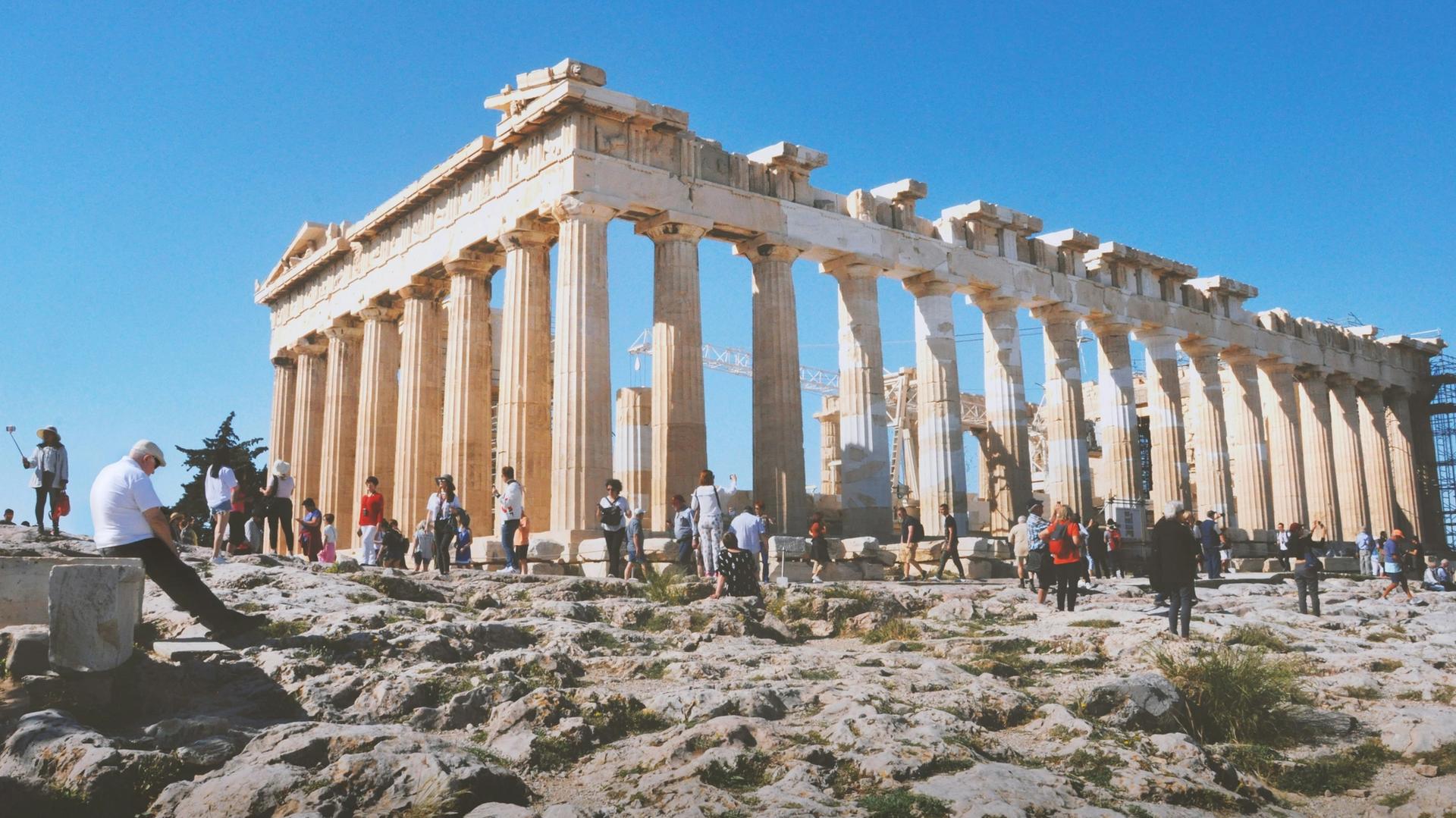
Discover Greece's incredible historical heritage through expertly guided tours. From ancient theaters and temples to Byzantine monasteries and Venetian fortresses, explore millennia of civilization across the Peloponnese and beyond.
Stepping onto Greek soil means walking through thousands of years of human achievement. Every stone tells a story, every ruin whispers secrets of gods and heroes, and every archaeological site reveals layers of civilization that shaped Western culture.
Historical tours in Greece offer more than just sightseeing—they provide time travel through ancient Greek, Roman, Byzantine, and Venetian eras. With expert guides who bring these ancient stones to life, you'll understand the context, significance, and fascinating details that make Greek history so captivating.
Why Greece is a Historical Paradise
Greece boasts more archaeological sites per square kilometer than almost any country on Earth. The Peloponnese alone contains some of the most significant historical locations in Western civilization, from the birthplace of the Olympic Games to the legendary city of Sparta.
Unlike museum exhibits behind glass, Greek historical sites let you stand where Socrates debated, walk through theaters where ancient dramas premiered, and touch columns that supported temples dedicated to Zeus. This tangible connection to the past creates unforgettable experiences that photographs simply cannot capture.
The Peloponnese: Heart of Ancient Greece
The Peloponnese peninsula serves as an open-air museum of Greek history. This region witnessed the rise and fall of mighty civilizations, hosted the ancient Olympic Games, and produced some of history's greatest warriors and thinkers.
From Nafplio's Venetian fortresses to Mycenae's legendary Lion Gate, the Peloponnese offers concentrated historical wealth within manageable distances. A week of touring here provides more historical immersion than months spent elsewhere.
Mycenae: Kingdom of Agamemnon
The archaeological site of Mycenae stands as one of Greece's most important Bronze Age locations. Walking through the Lion Gate, you enter the legendary kingdom that launched a thousand ships toward Troy.
The Treasury of Atreus showcases engineering brilliance from 3,300 years ago, while the royal tombs reveal golden funeral masks and precious artifacts. Heinrich Schliemann's excavations here proved that Homer's epics contained historical truth, forever changing our understanding of ancient Greece.
Epidaurus: Ancient Healing and Drama
The ancient theater at Epidaurus represents the pinnacle of classical Greek architecture. Its perfect acoustics allow a whisper from the stage to reach the highest seats, demonstrating engineering knowledge that modern architects still study.
Beyond the theater, the Asclepieion sanctuary served as antiquity's most famous healing center. Pilgrims traveled from across the Mediterranean seeking cures through a combination of medicine, ritual, and dream interpretation—ancient holistic healthcare that predated modern medicine by millennia.
Ancient Olympia: Birthplace of the Olympics
Olympia hosted the ancient Olympic Games for over a thousand years, creating a tradition of athletic competition and peaceful gathering that continues today. The original stadium, where naked athletes competed for olive wreaths rather than gold medals, still resonates with competitive spirit.
The archaeological museum houses some of Greece's finest classical sculptures, including the Hermes of Praxiteles and the Nike of Paionios. Walking through the sanctuary where the Olympic flame still ignites before each modern Olympics creates a powerful connection between ancient and contemporary worlds.
[Experience Ancient Olympia with our expert-guided tour from Nafplio](https://www.uniquegreektours.com/tours/nafplio/nafplio-ancient-olympia-tour), where you'll explore the birthplace of the Olympic Games and understand its lasting impact on global culture.
Sparta and Mystras: Warriors and Byzantines
Ancient Sparta produced history's most feared warriors, though ironically little remains of their city. The Spartans built no grand monuments, focusing instead on military excellence and austere living—their legacy lives in history books rather than stone ruins.
Nearby Mystras offers a complete contrast: a Byzantine ghost city clinging to a mountainside. This UNESCO World Heritage site preserves medieval frescoes, churches, and palaces that showcase Byzantine civilization at its height, making it essential for understanding Greece's medieval monasteries and religious heritage.
Quick Facts About Sparta:
- Ancient Sparta controlled much of the Peloponnese from the 7th to 4th centuries BCE
- Spartan warriors trained from age seven in the brutal agoge system
- The Battle of Thermopylae (480 BCE) made 300 Spartans legendary
- Modern Sparta was rebuilt in 1834, far from the ancient site
- Fascinating facts about ancient Sparta reveal a society radically different from Athens
Nafplio: Venetian Elegance Meets Greek History
Nafplio served as Greece's first capital after independence and showcases layers of history from Mycenaean times through Venetian and Ottoman occupation. The town's three fortresses—Palamidi, Akronafplia, and Bourtzi—tell stories of conquest, resistance, and strategic importance.
Walking Nafplio's Old Town reveals Greek architecture spanning centuries: neoclassical mansions, Venetian arcades, Ottoman fountains, and Byzantine churches. This architectural diversity makes Nafplio the perfect base for exploring Peloponnese historical sites.
Argos: Greece's Oldest Continuously Inhabited City
Ancient Argos claims over 7,000 years of continuous habitation, making it one of Europe's oldest cities. The ancient theater, larger than Epidaurus, could seat 20,000 spectators for dramatic performances and political assemblies.
The Larissa fortress crowning the hill above modern Argos provides panoramic views across the Argolic plain. Climbing to this ancient acropolis reveals why this location attracted settlers from Neolithic times through the Byzantine era.
Corinth: Crossroads of the Ancient World
Ancient Corinth controlled the narrow isthmus connecting mainland Greece to the Peloponnese, making it one of the wealthiest and most powerful city-states. The city's strategic position allowed it to tax all overland trade and maintain harbors on both the Aegean and Ionian seas.
The Temple of Apollo, with seven surviving columns, dates to the 6th century BCE and represents some of Greece's oldest standing architecture. The Roman forum, rebuilt after Julius Caesar refounded the city in 44 BCE, showcases the transition from Greek to Roman civilization.
Acrocorinth, the fortress mountain towering above ancient Corinth, served as one of Greece's most important strategic positions. Whoever controlled this natural citadel controlled the Peloponnese—a fact recognized by Greeks, Romans, Byzantines, Franks, Venetians, and Ottomans throughout history.
[Explore Corinth and Epidaurus on our comprehensive historical tour](https://www.uniquegreektours.com/tours/nafplio/nafplio-corinth-epidavros-tour), combining archaeological wonders with expert interpretation of ancient Greek civilization.
Monemvasia: The Medieval Gibraltar
Monemvasia rises from the sea like a stone ship, a fortified Byzantine town built on a massive rock connected to the mainland by a single causeway. Walking through the tunnel entrance transports you to medieval times, where car-free cobblestone streets wind past Byzantine churches and Venetian mansions.
The upper town, reached by a steep path, contains the ruined fortress and the Church of Hagia Sophia perched dramatically on the cliff edge. The views across the Myrtoan Sea explain why this location remained unconquered during centuries of invasion—it's simply impregnable when properly defended.
Ancient Messini: The Best-Preserved Classical City
Ancient Messini ranks among Greece's most impressive archaeological sites yet remains surprisingly uncrowded. Founded in 369 BCE after Sparta's defeat, the city showcases Hellenistic urban planning at its finest, with intact fortification walls, a stadium, theater, agora, and sanctuary.
The Asklepieion (healing sanctuary) rivals Epidaurus in importance, while the stadium hosted athletic competitions for centuries. Unlike many archaeological sites reduced to foundation stones, Messini preserves columns, architraves, and even some roofing—giving visitors a genuine sense of ancient city life.
Regional Historical Gems Worth Discovering
Beyond the famous sites, the Peloponnese hides numerous historical treasures that reward curious travelers. Geraki Castle combines Byzantine churches with Frankish fortifications, while Gytheio offers Roman mosaics and connections to the Helen of Troy legend.
The historical sites near Porto Heli include underwater ancient cities and important sanctuaries that most guidebooks overlook. These lesser-known locations provide intimate historical experiences without the crowds.
Hidden Historical Sites to Explore:
- Lerna Archaeological Site: Where Hercules slew the Hydra
- Tiryns: Mycenaean citadel with massive cyclopean walls
- Tegea: Temple of Athena Alea with museum of exceptional sculptures
- Mantineia: Ancient city-state with well-preserved theater
- Bassae: Remote mountain temple of Apollo, a UNESCO World Heritage site
Planning Your Historical Tour of Greece
Successful historical touring requires balancing ambition with realistic expectations. Greece contains so many important sites that attempting to see everything leads to exhaustion and diminished appreciation.
Focusing on one region—like the Peloponnese—allows deeper engagement with historical narratives. You'll understand how sites connect historically, geographically, and culturally, creating a coherent picture of Greek civilization rather than a jumble of disconnected ruins.
Best Time for Historical Tours
Spring (April-May) and autumn (September-October) provide ideal conditions for archaeological site visits. Temperatures remain comfortable for walking, crowds thin out compared to peak summer, and the light creates perfect photography conditions.
October weather in Greece particularly suits historical touring, with warm days, cool evenings, and minimal rainfall. Summer heat can make exposed archaeological sites uncomfortable, while winter brings shorter days and occasional site closures.
Choosing Between Group and Private Tours
Group historical tours offer cost-effectiveness and social interaction with fellow history enthusiasts. Shared experiences create camaraderie, and hearing others' questions often reveals perspectives you hadn't considered.
Private tours provide flexibility, personalized pacing, and the ability to dive deeper into topics that fascinate you. Expert guides can adjust commentary to your knowledge level and interests, making complex historical periods accessible and engaging.
Benefits of Expert-Guided Historical Tours:
- Context and interpretation that brings ruins to life
- Access to current archaeological research and discoveries
- Efficient routing that maximizes your time
- Stories and details you won't find in guidebooks
- Answers to your specific questions from knowledgeable historians
- Skip-the-line access at major sites during peak season
What to Bring on Historical Tours
Proper preparation enhances your historical touring experience significantly. Archaeological sites often lack shade, facilities, and services, so self-sufficiency matters.
Comfortable walking shoes with good ankle support prove essential—ancient paving stones, marble steps, and uneven terrain challenge inappropriate footwear. Many sites involve significant walking and climbing, making fitness levels an important consideration when planning your itinerary.
Essential Items for Historical Site Visits:
- Sun protection: hat, sunglasses, high-SPF sunscreen
- Water bottle (1-2 liters per person)
- Comfortable walking shoes with grip
- Light layers for variable temperatures
- Camera with extra batteries/memory cards
- Small backpack for carrying supplies
- Cash for entrance fees and refreshments
- Binoculars for viewing architectural details
Combining History with Greek Culture
The best historical tours integrate ancient sites with contemporary Greek culture. After exploring ruins, enjoy traditional meals in family tavernas, visit local markets, or attend cultural performances.
The Epidaurus Festival presents ancient Greek dramas in the original theater setting—an unforgettable way to experience classical literature as the ancients did. Combining archaeological visits with such cultural events creates richer, more memorable experiences.
Greek Hospitality and Historical Tourism
Greek hospitality (philoxenia) transforms historical touring from educational to deeply personal. Local guides share family stories connected to historical events, restaurant owners explain how ancient recipes evolved, and chance encounters lead to unexpected insights.
Learning a few essential Greek phrases enhances these interactions significantly. Even basic greetings demonstrate respect for local culture and often result in warmer welcomes and richer experiences.
Understanding Greek Historical Periods
Greek history spans over 4,000 years of documented civilization, divided into distinct periods with different characteristics, achievements, and architectural styles. Understanding these periods helps contextualize what you're seeing at archaeological sites.
The Bronze Age (3000-1100 BCE) produced the Minoan and Mycenaean civilizations, characterized by palace complexes, Linear B script, and the legendary Trojan War. The Dark Ages (1100-800 BCE) saw population decline and lost literacy, followed by the Archaic Period (800-480 BCE) when city-states emerged and Greek culture flourished.
Major Greek Historical Periods:
- Bronze Age (3000-1100 BCE): Minoan and Mycenaean palaces, early writing systems
- Dark Ages (1100-800 BCE): Population decline, lost literacy, Homer's epics composed
- Archaic Period (800-480 BCE): City-states emerge, colonization, early temples
- Classical Period (480-323 BCE): Democracy, philosophy, drama, Parthenon built
- Hellenistic Period (323-31 BCE): Alexander's empire, cultural diffusion, grand architecture
- Roman Period (31 BCE-330 CE): Greece becomes Roman province, cities rebuilt
- Byzantine Period (330-1453 CE): Christian empire, monasteries, icon painting
- Venetian/Ottoman Period (1453-1821 CE): Foreign occupation, fortresses, mixed culture
Archaeological Museums: Indoor Historical Treasures
Greece's archaeological museums preserve artifacts too delicate or valuable for outdoor display. These institutions provide climate-controlled environments where you can examine intricate jewelry, painted pottery, bronze sculptures, and ancient texts up close.
The National Archaeological Museum in Athens houses the world's finest collection of Greek antiquities, while regional museums in Nafplio, Olympia, Delphi, and elsewhere showcase local discoveries. Visiting site museums immediately after exploring ruins helps connect artifacts with their original contexts.
Interpreting Ancient Artifacts
Understanding what you're viewing in museums enhances appreciation significantly. Pottery styles indicate dates and origins, sculptural poses reveal artistic periods, and inscription languages show cultural influences.
Expert guides excel at making these connections clear, explaining how a simple clay pot reveals trade networks, religious practices, or daily life details. This interpretive layer transforms museum visits from passive viewing to active historical detective work.
Sustainable Historical Tourism
Popular archaeological sites face pressure from millions of annual visitors. Responsible tourism practices help preserve these irreplaceable treasures for future generations while supporting local communities.
Respecting site rules, staying on marked paths, never touching ancient surfaces, and avoiding climbing on ruins prevents cumulative damage. Supporting local businesses, hiring local guides, and visiting lesser-known sites distributes tourism benefits more equitably.
Responsible Historical Tourism Practices:
- Follow all site regulations and posted restrictions
- Never remove artifacts, stones, or pottery fragments
- Avoid touching frescoes, mosaics, or carved surfaces
- Stay on designated paths to prevent erosion
- Support site preservation through entrance fees
- Hire licensed local guides who support communities
- Visit off-peak hours when possible to reduce crowding
- Respect any photography restrictions at sensitive sites
Beyond the Peloponnese: Other Historical Regions
While the Peloponnese offers concentrated historical wealth, other Greek regions provide equally compelling ancient sites. Delphi, perched on Mount Parnassus, served as the ancient world's most important oracle, where priestesses channeled Apollo's prophecies that influenced political decisions across the Mediterranean.
Crete preserves Minoan palaces at Knossos and Phaistos, showcasing Europe's first advanced civilization. Thessaloniki's Byzantine churches and Roman rotunda reveal the empire's eastern capital, while the Dodecanese islands contain Crusader castles and ancient Greek cities.
The Role of Mythology in Historical Sites
Greek mythology and history intertwine inseparably at archaeological sites. The ancients made no distinction between mythological and historical truth—both informed their understanding of the world and their place in it.
Mycenae connects to the Trojan War legends, Olympia to Hercules' labors, and countless springs and caves to nymph worship. Understanding these mythological associations enriches historical site visits, revealing how ancient Greeks perceived their landscape as divinely inhabited and historically significant.
Gods, Heroes, and Historical Reality
Modern archaeology increasingly reveals historical kernels within mythological stories. The Trojan War likely reflects Bronze Age conflicts, Theseus may represent Mycenaean expansion into Crete, and flood myths preserve memories of actual catastrophic events.
Expert guides navigate these intersections skillfully, explaining what archaeology confirms, what remains speculative, and how mythology shaped ancient Greek identity and culture. This nuanced approach respects both scientific evidence and cultural significance.
Practical Travel Tips for Historical Tours
Successful historical touring requires logistical planning beyond simply choosing which sites to visit. Accommodation location, transportation options, and daily scheduling significantly impact your experience quality.
Basing yourself in Nafplio provides access to most major Peloponnese sites within an hour's drive, while offering charming accommodations and excellent restaurants. Alternatively, mobile touring with different overnight stops maximizes site access but requires more packing and unpacking.
Travel Logistics for Historical Tours:
- Book accommodations near major sites or in central locations
- Arrange transportation (rental car, driver, or organized tours)
- Purchase site tickets online when possible to skip lines
- Start early to avoid crowds and heat at popular locations
- Allow flexibility for spontaneous discoveries and rest days
- Download offline maps and site information for areas with poor connectivity
- Confirm site hours and closure days before traveling
- Consider combination tickets that cover multiple sites
Culinary History: Tasting Ancient Greece
Greek cuisine preserves recipes and ingredients used for millennia. Olive oil, wine, honey, and grain formed the ancient Mediterranean diet, supplemented with fish, legumes, and seasonal vegetables.
Modern tavernas still prepare dishes recognizable to ancient Greeks: grilled fish with olive oil and herbs, lentil soup, honey-sweetened desserts, and wine diluted with water. Exploring Greek restaurants in Nafplio or trying traditional Greek alcohol and Greek liquor connects you to culinary traditions spanning centuries.
Photography at Historical Sites
Capturing archaeological sites photographically presents unique challenges and opportunities. The interplay of ancient stone, Mediterranean light, and dramatic landscapes creates stunning compositions, but harsh midday sun and tourist crowds complicate matters.
Early morning and late afternoon provide the best light, longer shadows that emphasize architectural details, and fewer visitors. Wide-angle lenses capture entire structures, while telephoto lenses isolate architectural elements and bring distant details closer.
Photography Tips for Archaeological Sites:
- Visit during golden hours (sunrise/sunset) for optimal light
- Use a polarizing filter to enhance blue skies and reduce glare
- Include people for scale in architectural shots
- Focus on details: carved stones, column capitals, mosaic patterns
- Respect photography restrictions at museums and sensitive sites
- Shoot from multiple angles to find the most compelling compositions
- Capture context: surrounding landscapes and modern villages
- Bracket exposures for high-contrast scenes
Family-Friendly Historical Tours
Introducing children to Greek history creates lasting educational impact and family memories. The key lies in making ancient sites engaging through storytelling, hands-on activities, and age-appropriate pacing.
Myth-based narratives captivate young imaginations: Hercules' labors at Nemea, Theseus and the Minotaur at Mycenae, or Olympic athletic competitions at ancient Olympia. Interactive elements like climbing to fortress viewpoints, exploring ancient tunnels, or trying on replica armor maintain interest.
Making Historical Sites Fun for Children:
- Tell mythological stories connected to each location
- Create scavenger hunts for specific architectural features
- Allow climbing and exploration where permitted
- Take frequent breaks with snacks and rest
- Visit interactive museums with hands-on exhibits
- Keep daily itineraries shorter and less ambitious
- Reward site visits with beach time or ice cream
- Encourage photography and journal keeping
Accessibility at Greek Historical Sites
Ancient sites present accessibility challenges due to uneven terrain, steps, and lack of modern infrastructure. However, many major locations have improved accessibility with paved paths, ramps, and wheelchair-accessible routes to key areas.
Epidaurus theater, Ancient Olympia, and parts of Mycenae offer partial wheelchair access, though not all areas remain reachable. Contacting sites in advance or working with specialized tour operators ensures realistic expectations and optimal routing for mobility-limited visitors.
Frequently Asked Questions
How many days do I need for a historical tour of Greece?
A comprehensive Peloponnese historical tour requires 5-7 days minimum, covering major sites like Mycenae, Epidaurus, Olympia, Sparta, and Mystras with time to absorb each location properly. Adding Athens and Delphi extends this to 10-14 days, while a thorough exploration of multiple regions needs 3-4 weeks. Quality trumps quantity—seeing fewer sites thoroughly beats rushing through many superficially.
Do I need a guide for historical sites in Greece?
While you can visit sites independently, expert guides dramatically enhance understanding and appreciation. They provide historical context, point out easily missed details, explain architectural significance, and answer questions that arise. Self-guided visits work for those with strong classical education backgrounds, but most visitors gain far more from professional interpretation that brings ancient stones to life.
What's the best base for Peloponnese historical touring?
Nafplio serves as the ideal base, offering charming accommodations, excellent restaurants, and central location within an hour of Mycenae, Epidaurus, Tiryns, and Argos. Its own Venetian fortresses and neoclassical architecture provide historical interest, while the seaside setting offers relaxation after site visits. Alternatively, mobile touring with stops in Olympia, Sparta, and Monemvasia maximizes site access but requires more logistics.
Are historical sites in Greece crowded?
Major sites like Mycenae and Epidaurus experience crowds during peak summer months (June-August), especially mid-morning to mid-afternoon when tour buses arrive. Visiting early morning, late afternoon, or during shoulder seasons (April-May, September-October) significantly reduces crowds. Lesser-known sites like Ancient Messini, Tegea, and Mantineia rarely feel crowded even in peak season.
Can I visit multiple historical sites in one day?
Yes, but quality suffers when overscheduling. A realistic daily itinerary includes one major site (2-3 hours) plus one minor site or museum, with travel time, meals, and rest. For example, combining Mycenae and Nafplio works well, as does Epidaurus with a coastal lunch. Attempting three or more significant sites in one day leads to exhaustion and diminished appreciation—ancient Greece deserves your full attention.
What should I wear when visiting archaeological sites?
Wear comfortable, broken-in walking shoes with good traction for uneven ancient paving stones and marble steps. Lightweight, breathable clothing in layers works best, with sun protection including a wide-brimmed hat and sunglasses. Many sites lack shade, so sun-protective clothing matters. Modest dress shows respect at religious sites and monasteries. Avoid sandals or flip-flops—ankle support prevents injuries on irregular terrain.
Are historical sites open year-round?
Most major archaeological sites remain open year-round, though hours shorten during winter months (November-March). Some smaller sites close entirely in winter or open limited days. National holidays, especially Greek Orthodox Easter, may affect schedules. Always verify current hours and closure days before traveling, as maintenance work or archaeological excavations occasionally close sites temporarily.
How much do historical site tickets cost?
Individual site tickets range from €6-12 for most archaeological sites, with museums typically €4-8. Combination tickets offering access to multiple sites provide better value—for example, a multi-site Argolis ticket covers Mycenae, Epidaurus, Tiryns, and more. EU students, seniors over 65, and children often receive discounts or free entry. Some sites offer free admission on specific dates, particularly the first Sunday of certain months during off-season.
Conclusion: Your Greek Historical Adventure Awaits
Greece's historical treasures offer transformative travel experiences that educate, inspire, and create lasting memories. Walking where Socrates philosophized, standing in theaters where Sophocles' plays premiered, and touching stones placed by Mycenaean builders connects you tangibly to the foundations of Western civilization.
The Peloponnese concentrates these experiences in a manageable region with excellent infrastructure, charming accommodations, and authentic Greek culture. Whether you're a serious history enthusiast or simply curious about ancient worlds, expertly guided historical tours reveal layers of meaning that independent visits cannot match.
Start planning your Greek historical adventure today—the ancient world awaits your discovery, and its stories deserve to be heard, understood, and shared with future generations. These archaeological treasures survived millennia to teach us about human achievement, creativity, and resilience; experiencing them firsthand changes how you understand history, culture, and humanity itself.