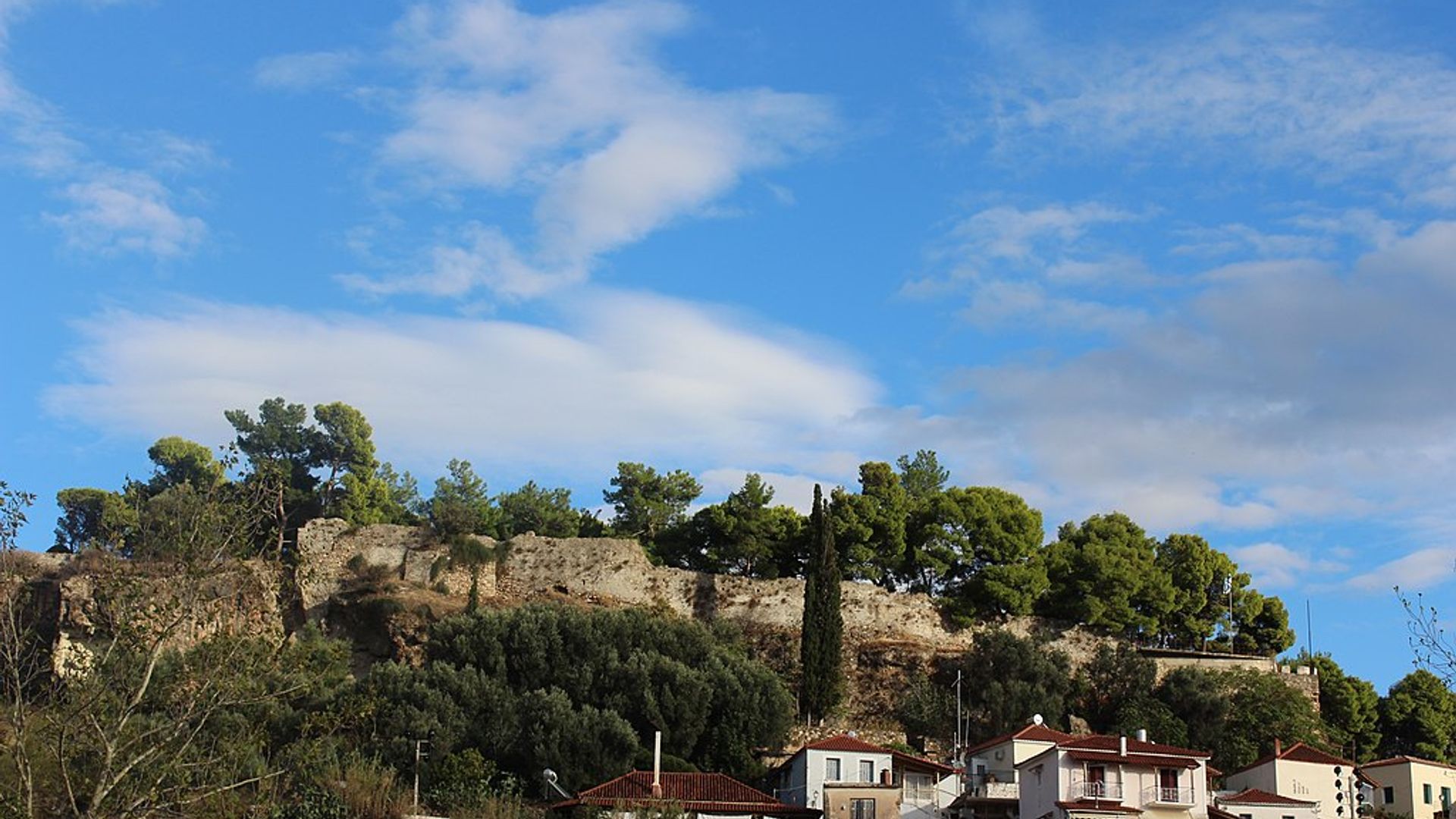
Kalamata Castle stands as a powerful reminder of medieval Greece, overlooking the vibrant coastal city below. This Frankish fortress offers panoramic views, fascinating history, and a peaceful escape from the bustling streets of modern Kalamata.
Perched on a rocky hill above the bustling city of Kalamata, the medieval castle stands as a silent guardian of centuries past. The stone walls and commanding towers have witnessed Frankish knights, Byzantine emperors, Ottoman conquerors, and Greek revolutionaries—each leaving their mark on this remarkable fortress.
Whether you're a history enthusiast, photography lover, or simply seeking the best sunset views in Kalamata, this castle delivers an unforgettable experience. The climb to the top rewards visitors with sweeping panoramas of the Messinian Gulf, Mount Taygetos, and the olive groves that stretch endlessly across the landscape.
The History of Kalamata Castle
The fortress was originally constructed by Frankish crusaders in the 13th century, specifically by Geoffrey I de Villehardouin around 1208. These Western European knights had conquered much of the Peloponnese following the Fourth Crusade, establishing the Principality of Achaea and building castles throughout the region.
The Byzantines recaptured the castle in 1428, strengthening its defenses and incorporating it into their network of fortifications. Under Byzantine rule, the castle served as both a military stronghold and administrative center for the surrounding region.
The Ottoman conquest in 1460 brought new rulers and architectural modifications to the fortress. The Turks maintained the castle for nearly four centuries, using it as a garrison and administrative seat until the Greek War of Independence.
Kalamata holds special significance in Greek history as one of the first cities liberated during the 1821 revolution. The castle witnessed the pivotal Battle of Kalamata on March 23, 1821, when Greek forces successfully expelled the Ottoman garrison, making it one of the earliest victories of the independence struggle.
Architecture and Layout
The castle follows a typical medieval fortress design with an irregular polygonal shape adapted to the natural terrain. Massive stone walls, some reaching heights of 10 meters, encircle the entire complex, creating an imposing defensive perimeter.
The main entrance features a reinforced gate with remnants of the drawbridge mechanism still visible. Once inside, visitors discover a surprisingly spacious interior courtyard where soldiers once trained and residents went about their daily lives.
Key Architectural Features:
- The keep (main tower) offering the highest vantage point
- Byzantine cisterns for water storage during sieges
- Frankish chapel ruins with Gothic arches
- Ottoman-era additions including a small mosque
- Medieval ramparts with defensive battlements
- Underground storage chambers and dungeons
The castle's strategic position on the hill provided defenders with clear sightlines across the coastal plain. Any approaching army would be spotted from miles away, giving ample time to prepare defenses.
Recent restoration work has stabilized the walls and made the site safer for visitors while preserving its authentic medieval character. Walking through the ancient gates, you can almost hear the echoes of armored knights and the clash of swords from centuries past.
What to See Inside the Castle
The interior courtyard serves as the heart of the castle complex, now hosting cultural events and open-air performances during summer months. The space that once housed barracks, stables, and workshops now provides a atmospheric venue for concerts and theatrical productions.
The Byzantine church of Agioi Apostoloi (Holy Apostles) stands remarkably preserved within the castle walls. This small chapel features beautiful stonework and traces of frescoes that hint at its former glory, making it a peaceful spot for contemplation.
Notable Sites Within the Walls:
- The main keep with panoramic observation deck
- Byzantine church of Agioi Apostoloi
- Ancient cisterns demonstrating medieval engineering
- Information panels explaining the castle's history
- Restored rampart walkways for spectacular views
- Archaeological finds displayed in protected alcoves
The western walls offer the most dramatic views, especially during sunset when the Messinian Gulf transforms into liquid gold. Photographers particularly love the contrast between ancient stone battlements and modern Kalamata sprawling below.
Exploring the defensive towers reveals clever medieval military architecture, including arrow slits positioned for maximum coverage and murder holes above gateways. These features remind visitors that this was a working fortress designed for serious combat.
The Panoramic Views
The castle's elevated position provides some of the finest views in the entire Peloponnese region. From the highest point, the entire city of Kalamata unfolds like a map, with its grid streets, harbor, and beaches clearly visible.
To the north, the imposing peaks of Mount Taygetos rise dramatically, often snow-capped even in spring. These are the same mountains that sheltered Spartan warriors and later served as refuges for Greek revolutionaries during the Ottoman period.
What You'll See from the Castle:
- The Messinian Gulf stretching to the horizon
- Kalamata's modern marina and fishing harbor
- Endless olive groves covering the coastal plain
- Mount Taygetos and the Mani Peninsula
- The historic old town directly below
- Sunset views over the Ionian Sea
The eastern views encompass the fertile Messinian plain, one of Greece's most productive agricultural regions. The silvery-green olive trees that made Kalamata famous worldwide create a mesmerizing pattern across the landscape.
Many visitors time their ascent to arrive about an hour before sunset, allowing time to explore the castle before settling in for the spectacular light show. The golden hour transforms the ancient stones and creates perfect conditions for photography.
Quick Facts About Kalamata Castle
Essential Information:
- Built: 1208 (Frankish period)
- Location: Hill above Kalamata old town
- Elevation: Approximately 150 meters above sea level
- Original Purpose: Military fortress and administrative center
- Current Status: Archaeological site and cultural venue
- Entry Fee: Free admission
- Best Time: Late afternoon for sunset views
- Average Visit: 1-2 hours
Getting to Kalamata Castle
The castle sits within easy walking distance from Kalamata's city center and old town. Most visitors approach from the historic Ypapanti neighborhood, following the well-marked stone pathway that winds up the hill.
The walk takes approximately 15-20 minutes from the old town square, though the final section involves climbing stairs. The path is paved and generally in good condition, but comfortable walking shoes are essential.
Access Options:
- Walking from the old town (most popular)
- Taxi to the base of the castle hill
- Driving with parking near the entrance
- As part of organized city tours
For those with mobility challenges, taxis can drop passengers closer to the entrance, reducing the walking distance significantly. However, exploring the castle interior still involves uneven surfaces and some stairs.
The approach through the old town offers its own rewards, with traditional tavernas, historic churches, and charming neighborhoods lining the route. This makes the journey to the castle an integral part of the experience rather than just a means to an end.
Best Time to Visit
Spring (April-May) and autumn (September-October) provide ideal conditions for castle exploration. Temperatures remain comfortable for climbing, wildflowers bloom among the ruins, and the light is perfect for photography.
Summer visits are certainly possible but require planning around the heat. Early morning (before 10 AM) or late afternoon (after 5 PM) are the most comfortable times during July and August.
Seasonal Considerations:
- Spring: Wildflowers, mild weather, fewer crowds
- Summer: Cultural events, extended daylight, hot midday temperatures
- Autumn: Perfect light, comfortable temperatures, grape harvest season
- Winter: Fewer visitors, dramatic storm clouds, occasional rain
The castle hosts various cultural events during summer, including concerts, theatrical performances, and art exhibitions. Check local listings if you're interested in combining historical exploration with live entertainment.
Sunset visits have become increasingly popular, with both locals and tourists gathering on the ramparts to watch the sun sink into the Messinian Gulf. Arriving about 90 minutes before sunset gives you time to explore before claiming your viewing spot.
Combining Your Visit with Other Attractions
Kalamata Castle pairs perfectly with exploring the old town below, where traditional architecture and authentic tavernas create a charming atmosphere. The historic center features neoclassical buildings, small museums, and the beautiful Church of the Holy Apostles.
The city's archaeological museum houses artifacts spanning from prehistoric to Byzantine times, providing valuable context for understanding the castle's history. The museum is located just a short walk from the old town.
Nearby Attractions:
- Kalamata Old Town and historic center
- Municipal Railway Park and museum
- Kalamata Archaeological Museum
- Benakeion Archaeological Museum
- Traditional olive oil mills and tasting rooms
- Beautiful beaches along the Messinian Gulf
For those interested in exploring more of the region's medieval heritage, Geraki Castle offers another fascinating fortress experience about an hour's drive away. The Peloponnese is rich with castles, each telling its own story of crusaders, Byzantines, and revolutionaries.
If you're based in nearby regions, consider exploring the ancient sites around Porto Heli or venturing to ancient Sparta to understand the broader historical context of the Peloponnese.
Cultural Events at the Castle
The castle courtyard has been transformed into a unique open-air venue for summer cultural programming. The ancient stone walls provide extraordinary acoustics and atmosphere for concerts ranging from traditional Greek music to classical performances.
Theater productions take advantage of the dramatic setting, with the illuminated castle walls creating a magical backdrop. These events typically run from June through September, with performances starting after sunset when temperatures become more comfortable.
Cultural Programming:
- Classical music concerts
- Traditional Greek music performances
- Contemporary theater productions
- Art exhibitions in the courtyard
- Cultural festivals celebrating local heritage
- Educational programs for children
Attending an evening performance at the castle offers a completely different perspective on the space. The strategic lighting highlights architectural features invisible during daylight, while the stars overhead complete the enchanting atmosphere.
Local authorities have worked carefully to balance cultural use with preservation, ensuring that events don't damage the historic structures. This thoughtful approach allows the castle to remain a living part of Kalamata's cultural life rather than just a tourist attraction.
Photography Tips
The castle offers endless photographic opportunities, from architectural details to sweeping landscape vistas. The golden hour (the hour before sunset) provides the most flattering light, casting warm tones across the ancient stones.
Wide-angle lenses capture the dramatic relationship between the castle and surrounding landscape, while telephoto lenses isolate architectural details and compress the layers of mountains beyond. Both perspectives tell important parts of the castle's story.
Photography Recommendations:
- Arrive 90 minutes before sunset for optimal light
- Bring wide-angle lens for panoramic views
- Capture details of stonework and architectural features
- Include Mount Taygetos in background compositions
- Photograph the city lights from ramparts after dark
- Visit during spring for wildflowers among ruins
The view northward toward Mount Taygetos creates dramatic compositions, especially when clouds catch the sunset colors. This perspective emphasizes the castle's strategic position commanding both mountains and sea.
For those interested in night photography, the illuminated castle creates stunning long-exposure opportunities. The contrast between the lit fortress and star-filled sky above produces memorable images, though a tripod is essential.
Travel Tips for Visiting Kalamata Castle
Comfortable walking shoes are absolutely essential, as the approach involves stairs and the castle interior features uneven stone surfaces. Sandals or flip-flops are not recommended for safe exploration.
Bring water, especially during warmer months, as no facilities exist within the castle grounds. The climb and exploration can be more strenuous than expected, particularly in summer heat.
Practical Visitor Tips:
- Wear sturdy, comfortable walking shoes
- Bring water and sun protection
- Allow 1-2 hours for thorough exploration
- Visit late afternoon for best light and cooler temperatures
- Check for evening cultural events before your visit
- Bring a flashlight if staying past sunset
- Respect the archaeological site—don't climb on fragile walls
- Combine with old town exploration below
The castle grounds are free to enter and accessible during daylight hours, though specific closing times vary by season. No formal ticket office exists, making it a wonderfully accessible attraction for all visitors.
While the site is generally safe, parents should supervise children carefully, especially near walls and drop-offs. The castle was designed for defense, meaning some areas feature significant heights without modern barriers.
Exploring the Wider Peloponnese Region
Kalamata serves as an excellent base for exploring the southern Peloponnese, with numerous historical sites, beaches, and traditional villages within easy reach. The region's diverse attractions range from ancient ruins to pristine coastlines.
The ancient city of Messini, one of the best-preserved classical Greek sites, lies just 30 minutes north. This remarkable archaeological site rivals more famous destinations but receives far fewer visitors, allowing for peaceful exploration.
Regional Highlights:
- Ancient Messini archaeological site
- Mystras Byzantine fortress city
- Mani Peninsula traditional tower villages
- Polylimnio waterfalls and natural pools
- Koroni and Methoni Venetian castles
- Beautiful beaches of Messinian Gulf
For those seeking spiritual experiences, Greece's monasteries offer profound insights into Byzantine and Orthodox traditions. The region features several important monastic sites nestled in dramatic mountain settings.
Consider booking a comprehensive tour from Kalamata to experience multiple highlights efficiently. Professional guides provide historical context and local knowledge that enriches every site you visit.
Local Cuisine and Dining
After exploring the castle, the old town below offers excellent tavernas serving authentic Messinian cuisine. The region is famous for its Kalamata olives, extra virgin olive oil, and fresh seafood from the Gulf.
Traditional dishes like pastitsio (baked pasta), moussaka, and fresh grilled fish pair perfectly with local wines from nearby vineyards. Many tavernas feature outdoor seating with views toward the illuminated castle after dark.
Must-Try Local Specialties:
- Kalamata olives and olive oil
- Fresh seafood from the Messinian Gulf
- Syglino (smoked pork preserved in olive oil)
- Local cheeses from mountain villages
- Diples (honey-drizzled pastries)
- Regional wines from Messinia
The area around the castle features several traditional kafeneions (coffee houses) where locals gather for Greek coffee and conversation. These authentic establishments provide glimpses into daily Greek life beyond the tourist experience.
For those interested in Greek culinary traditions and beverages, learning about Greek alcohol and Greek liquor adds another dimension to your cultural understanding. The Peloponnese produces excellent wines, tsipouro, and other traditional spirits.
The Castle's Role in Greek Independence
Kalamata's liberation on March 23, 1821, marked a crucial early victory in the Greek War of Independence. The successful capture of the castle and city provided the revolutionaries with a strategic port and boosted morale throughout the Peloponnese.
The battle demonstrated that organized Greek forces could defeat Ottoman garrisons, inspiring other regions to rise in rebellion. Within weeks, much of the Peloponnese had joined the revolution, with Kalamata serving as an important base of operations.
Historical Significance:
- First major city liberated in 1821
- Strategic port for revolutionary forces
- Symbol of successful Greek resistance
- Base for organizing further military campaigns
- Site where revolutionary government was established
The castle walls witnessed the raising of the Greek flag for the first time in centuries, a moment commemorated annually with celebrations. This historical importance adds emotional resonance to visiting the fortress today.
Understanding the castle's role in Greek independence provides deeper appreciation for the site beyond its medieval architecture. The stones witnessed not just medieval warfare but also the birth of modern Greece.
Practical Information Summary
Kalamata Castle remains one of the most accessible and rewarding historical sites in the southern Peloponnese. Its combination of historical significance, architectural interest, and spectacular views creates an experience that appeals to diverse interests.
The free admission and central location make it an easy addition to any Kalamata itinerary. Whether you have 30 minutes or two hours, the castle rewards visitors with memorable experiences and photographs.
Essential Details:
- Location: Old town hill, Kalamata
- Admission: Free
- Hours: Daylight hours (dawn to dusk)
- Duration: 1-2 hours recommended
- Accessibility: Moderate walking, stairs required
- Facilities: None on-site (plan accordingly)
- Best Season: Spring and autumn
- Parking: Limited street parking nearby
Frequently Asked Questions
How long does it take to visit Kalamata Castle?
Most visitors spend 1-2 hours exploring the castle, including the walk up from the old town. If you're planning to stay for sunset or attend an evening event, allow 2-3 hours total. The actual walking time from the old town to the castle entrance is about 15-20 minutes.
Is Kalamata Castle suitable for children?
Yes, children generally enjoy exploring the castle, but close supervision is essential. The site features walls, towers, and uneven surfaces without modern safety barriers, as it's an authentic medieval fortress. Active children who enjoy climbing and exploring will find it exciting, though very young children might find the walk challenging.
Can you visit Kalamata Castle at night?
The castle grounds are officially open only during daylight hours, though many visitors stay to watch the sunset and linger into early evening. For safety reasons, exploring after dark is not recommended without proper lighting. However, cultural events during summer include evening performances with appropriate lighting and safety measures.
What's the best time of day to visit the castle?
Late afternoon, approximately 1-2 hours before sunset, offers the best combination of comfortable temperatures, excellent lighting for photography, and spectacular views. This timing allows you to explore during daylight and then enjoy the sunset from the ramparts. Early morning visits provide cooler temperatures and fewer crowds but miss the dramatic sunset colors.
Is there an entrance fee for Kalamata Castle?
No, Kalamata Castle has free admission and no ticket office. The site is maintained as a public archaeological park accessible to all visitors during daylight hours. This makes it an excellent budget-friendly attraction that offers tremendous value for history enthusiasts and casual visitors alike.
How difficult is the walk to the castle?
The walk from Kalamata's old town to the castle entrance involves a steady uphill climb with stairs in the final section. Most reasonably fit visitors complete it comfortably in 15-20 minutes, though those with mobility challenges may find it strenuous. Taxis can drop passengers closer to reduce walking distance, and there's limited parking near the base of the castle hill.
What should I bring when visiting the castle?
Essential items include comfortable walking shoes with good grip, water (especially in warm weather), sun protection (hat, sunscreen, sunglasses), and a camera for the spectacular views. If visiting near sunset, bring a light jacket as temperatures drop quickly, and consider a flashlight for the descent. No facilities exist at the castle, so plan accordingly.
Can you see other historical sites from Kalamata Castle?
While you can't see specific ancient sites from the castle, the panoramic views encompass the broader historical landscape of Messinia. Mount Taygetos to the north sheltered ancient Sparta, while the Messinian Gulf below was crossed by countless historical fleets. The castle's position helps visitors understand the strategic geography that shaped regional history for millennia.
Planning Your Peloponnese Adventure
Kalamata Castle represents just one highlight in a region overflowing with historical treasures, natural beauty, and authentic Greek culture. The southern Peloponnese rewards travelers who venture beyond the most famous sites to discover lesser-known gems.
From Byzantine fortress cities to pristine beaches, ancient theaters to mountain monasteries, this corner of Greece offers incredible diversity within compact distances. Each site reveals another chapter in the region's extraordinarily rich history.
For those wanting to maximize their Peloponnese experience with expert guidance, consider booking a comprehensive tour that combines multiple highlights. Professional guides bring the history alive while handling logistics, allowing you to focus on enjoying each remarkable destination.
The castle's stones have witnessed empires rise and fall, wars fought and won, and the birth of modern Greece. Standing on those ancient ramparts at sunset, with the Messinian Gulf glowing below and Mount Taygetos rising majestically to the north, you'll understand why this fortress has captivated visitors for centuries.