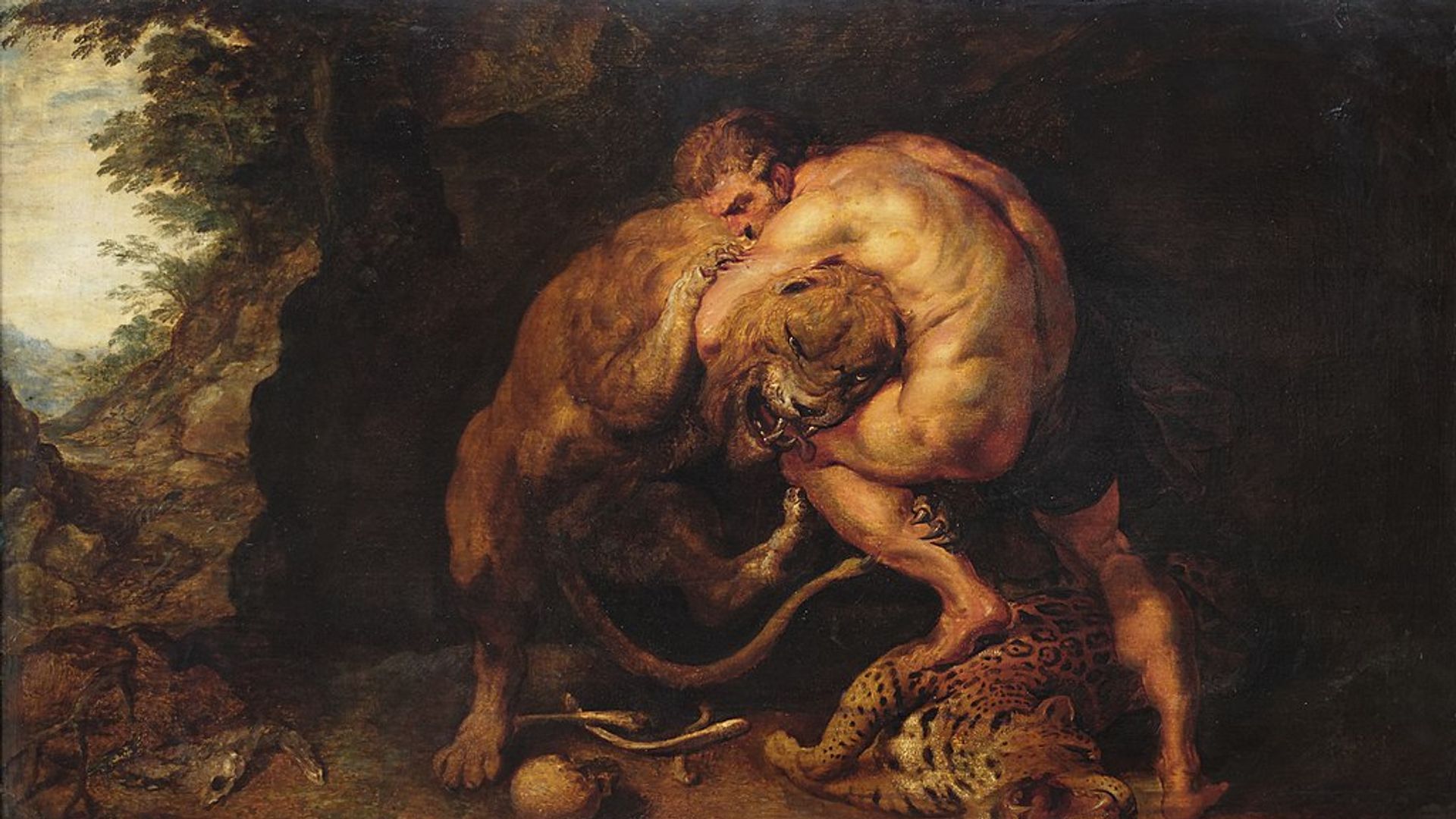
Discover the legendary Lion of Nemea, the fearsome beast slain by Heracles in his first labor. Explore the ancient site of Nemea, its archaeological treasures, and how to visit this mythological landmark in the Peloponnese.
The Mythical Beast That Launched a Hero's Journey
The Lion of Nemea stands as one of Greek mythology's most fearsome creatures, a beast so terrifying that it became the first of Heracles' legendary Twelve Labors. This wasn't just any lion—ancient sources describe it as an invincible monster with golden fur impervious to any weapon, terrorizing the valley of Nemea and devouring anyone who dared cross its path.
Today, the valley of Nemea in the northeastern Peloponnese offers travelers a unique opportunity to walk in the footsteps of Greece's greatest hero while exploring remarkable archaeological remains. The site combines mythological significance with historical importance, making it an essential stop for anyone interested in ancient Greek culture and heroic legends.
The Legend of the Nemean Lion
According to ancient mythology, the Nemean Lion was born from the monstrous union of Typhon and Echidna, making it sibling to other legendary beasts like the Hydra and Cerberus. Some versions claim the goddess Hera herself raised the lion in a cave near Nemea specifically to challenge Heracles, whom she despised as a reminder of Zeus's infidelity.
The beast's impenetrable hide made it seemingly invincible, as arrows bounced off its golden fur and swords shattered against its skin. For years, the lion terrorized the region, making the roads unsafe and forcing villagers to live in constant fear.
Heracles' First Labor
When King Eurystheus assigned Heracles his Twelve Labors as penance, slaying the Nemean Lion became the hero's first impossible task. The challenge seemed insurmountable—how do you kill a creature that cannot be wounded by any weapon?
Heracles tracked the lion to its lair, a cave with two entrances on Mount Tretos. After discovering that his arrows were useless, he blocked one entrance and confronted the beast with his bare hands, ultimately strangling it to death in a legendary wrestling match that lasted for hours.
The Lion's Lasting Legacy
After slaying the beast, Heracles skinned it using the lion's own razor-sharp claws, as no blade could penetrate the hide. He wore the impenetrable pelt as armor for the rest of his labors, with the lion's head serving as a helmet—an iconic image that appears in countless ancient artworks and sculptures.
Zeus honored the Nemean Lion by placing it among the stars as the constellation Leo, ensuring the creature's immortality in the night sky. This celestial tribute reminds us that even in defeat, the lion achieved a form of eternal glory.
Quick Facts About the Lion of Nemea
Mythological Details:
- Parents: Typhon and Echidna (most common version)
- Special ability: Impenetrable golden hide immune to all weapons
- Location: Valley of Nemea, northeastern Peloponnese
- Slayer: Heracles (Hercules in Roman mythology)
- Method of death: Strangulation by Heracles' bare hands
- Constellation: Leo, placed in the sky by Zeus
- Symbol: Represents invincibility, strength, and the triumph of courage over brute force
Historical Context:
- Labor number: First of Heracles' Twelve Labors
- Cultural impact: Featured in ancient art, pottery, coins, and literature
- Modern location: Archaeological site near modern Nemea village
- Related sites: Temple of Zeus, ancient stadium, archaeological museum
The Archaeological Site of Nemea
The ancient sanctuary of Nemea offers visitors far more than mythological connections—it's one of the four Panhellenic sanctuaries where ancient Greeks gathered for athletic competitions. The site rivals Epidaurus in historical significance and architectural beauty.
The valley where Heracles supposedly battled the legendary lion became a sacred space dedicated to Zeus, with magnificent temples and sporting facilities that hosted the Nemean Games every two years. Walking through these ruins, you can almost hear the roar of ancient crowds cheering for their athletic heroes.
Temple of Zeus
The Temple of Zeus at Nemea stands as the site's centerpiece, with three magnificent Doric columns rising dramatically from the valley floor. Built around 330 BCE, this temple replaced an earlier 6th-century structure destroyed by fire.
The standing columns, re-erected through careful archaeological work, reach approximately 10 meters high and give visitors a sense of the temple's original grandeur. The temple's foundations and scattered architectural elements help archaeologists reconstruct its original appearance, which would have rivaled other great temples of ancient Greece.
The Ancient Stadium
Nemea's stadium represents one of the best-preserved athletic facilities from ancient Greece, offering a tangible connection to the competitive spirit that defined Greek culture. The tunnel entrance, still intact after more than 2,000 years, allowed athletes to make dramatic entrances into the arena.
The track measures approximately 178 meters long, slightly shorter than the stadium at Olympia but equally impressive in its construction. Stone starting blocks remain in place, marked with grooves where ancient athletes positioned their feet before racing.
Archaeological Museum of Nemea
The on-site museum houses extraordinary artifacts discovered during excavations, including athletic equipment, votive offerings, and architectural fragments. The collection provides context for understanding both the mythological and historical significance of Nemea.
Particularly fascinating are the exhibits explaining the Nemean Games, including displays of ancient athletic equipment and explanations of different sporting events. The museum also explores the Heracles myth through ancient artwork depicting the hero's battle with the lion.
Visiting Ancient Nemea Today
Modern Nemea sits in a picturesque valley surrounded by vineyards, combining ancient history with contemporary wine culture. The region produces some of Greece's finest wines, particularly from the indigenous Agiorgitiko grape variety, adding another dimension to your visit.
The archaeological site remains relatively uncrowded compared to major attractions like Mycenae or Sparta, offering a more contemplative experience. You can explore the ruins at your own pace, imagining ancient athletes competing for glory or Heracles wrestling the legendary lion in nearby caves.
How to Reach Nemea
Nemea is located approximately 35 kilometers southwest of Corinth and 110 kilometers from Athens, making it accessible as a day trip or part of a broader Peloponnese itinerary. The site sits conveniently between major archaeological destinations, perfect for combining with visits to other ancient sites.
Transportation Options:
- By car: Most convenient option, allowing flexibility to explore surrounding wine country
- Organized tours: Professional guides provide historical context and mythological stories
- Public bus: Available from Corinth, though less frequent than private options
- Private transfer: Comfortable option for small groups from Athens or Nafplio
- Combined tours: Often paired with Corinth, Mycenae, or wine tasting experiences
Book our Nafplio to Corinth and Epidavros tour which can include a stop at Nemea for mythology enthusiasts.
Best Time to Visit
The archaeological site of Nemea welcomes visitors year-round, though different seasons offer distinct advantages. Spring and autumn provide ideal conditions for exploring outdoor ruins without extreme heat.
Seasonal Considerations:
- Spring (March-May): Wildflowers bloom across the valley, temperatures perfect for walking
- Summer (June-August): Hot but vibrant, with possible evening cultural events
- Autumn (September-November): Grape harvest season, ideal for combining archaeology with wine tourism
- Winter (December-February): Fewer crowds, dramatic atmosphere, occasional rain
The Nemean Games Revival
Since 1996, the Society for the Revival of the Nemean Games has organized modern athletic competitions at the ancient stadium, allowing participants to experience ancient Greek athletics firsthand. These events occur every four years, maintaining the traditional Olympic cycle.
Participants wear ancient-style tunics and run barefoot on the same track used 2,300 years ago, emerging through the original stone tunnel. The experience connects modern athletes with their ancient predecessors in a uniquely authentic way.
Participating in the Games
The Nemean Games welcome participants of all ages and abilities, from serious athletes to families seeking a memorable cultural experience. Unlike the ancient games, which excluded women, the modern revival embraces inclusive participation.
Event Details:
- Frequency: Every four years (check official schedule)
- Main event: 90-meter sprint on ancient track
- Dress code: Traditional white tunics provided
- Participants: All ages, abilities, and nationalities welcome
- Registration: Advance booking recommended during game years
- Experience: Includes tunnel entrance, ancient starting positions, olive wreath prizes
Nemea Wine Country
The valley of Nemea has produced wine since ancient times, with the region's signature Agiorgitiko grape creating rich, complex red wines. Modern wineries combine traditional techniques with contemporary innovation, producing internationally acclaimed wines.
Many visitors combine archaeological exploration with wine tasting, creating a perfect blend of cultural and culinary experiences. The contrast between ancient ruins and modern vineyards illustrates Greece's remarkable continuity of culture across millennia.
Notable Wineries
Nemea's wine route features dozens of wineries, from family-operated estates to larger commercial producers. Most offer tastings and tours, with some providing stunning views across the valley toward the ancient site.
Wine Tourism Highlights:
- Agiorgitiko variety: Indigenous red grape producing full-bodied wines
- Tasting rooms: Most wineries welcome visitors with advance notice
- Wine museum: Dedicated facility explaining Nemea's viticultural history
- Harvest season: Late August through September offers special experiences
- Food pairings: Local cuisine complements regional wines perfectly
Connecting Nemea to Other Peloponnese Sites
Nemea's central location makes it an excellent addition to broader Peloponnese itineraries exploring Greek cities and archaeological wonders. The site works particularly well when combined with nearby attractions within an hour's drive.
Consider spending several days exploring the northeastern Peloponnese, using Nafplio as a base for day trips to multiple ancient sites. This approach allows you to experience the region's incredible concentration of historical and mythological landmarks.
Nearby Archaeological Sites
Within 30-60 Minutes:
- Ancient Corinth: Powerful city-state with impressive ruins and Acrocorinth fortress
- Mycenae: Bronze Age palace complex and legendary home of Agamemnon
- Epidaurus: Spectacular ancient theater with perfect acoustics
- Tiryns: Massive Mycenaean citadel with cyclopean walls
- Argos: One of Greece's oldest continuously inhabited cities
Explore our Nafplio to Mycenae and Epidavros tour for a comprehensive archaeological experience.
Travel Tips for Visiting Nemea
Planning Your Visit:
- Allocate 2-3 hours for the archaeological site and museum
- Wear comfortable walking shoes for uneven ancient paths
- Bring sun protection—limited shade at the ruins
- Visit early morning or late afternoon during summer months
- Combine archaeology with wine tasting for a full-day experience
- Check museum hours in advance, especially during off-season
- Photography permitted throughout the site
- Bring water, especially in warm weather
What to Bring:
- Sun hat and sunscreen for exposed archaeological areas
- Camera for capturing dramatic column perspectives
- Comfortable walking shoes with good grip
- Water bottle (refill at museum facilities)
- Light jacket for museum air conditioning
- Guidebook or downloaded information about the Twelve Labors
Practical Information:
- Entrance fee: Modest charge (reduced rates for students, seniors)
- Opening hours: Typically 8:00 AM - 8:00 PM summer, shorter winter hours
- Facilities: Restrooms, small shop, shaded rest areas
- Accessibility: Partially accessible, though ancient terrain presents challenges
- Guided tours: Available through site or private tour operators
- Languages: Signage in Greek and English
The Lion in Ancient Art and Culture
The Nemean Lion appears throughout ancient Greek art, from pottery paintings to monumental sculptures. Artists depicted both the dramatic battle between Heracles and the beast and the hero's subsequent wearing of the lion skin.
The image of Heracles wearing the lion's head as a helmet became his most recognizable attribute, appearing on coins, temple decorations, and public monuments throughout the Greek world. This iconography spread to Rome and beyond, making the Nemean Lion one of mythology's most enduring visual symbols.
Symbolism and Meaning
The Nemean Lion represented more than a dangerous animal—it symbolized seemingly insurmountable challenges that require courage, strength, and intelligence to overcome. Heracles' victory demonstrated that even invincible obstacles can be defeated through determination and resourcefulness.
The story resonated deeply with ancient Greeks, who saw in Heracles' triumph a model for facing their own challenges. The lion's transformation from terror to trophy illustrated the Greek ideal of turning adversity into strength.
Modern Nemea Village
The modern village of Nemea provides a charming base for exploring the archaeological site and surrounding wine country. Small tavernas serve traditional Peloponnese cuisine, often paired with local wines produced from vineyards visible from your table.
The village maintains an authentic Greek atmosphere, with fewer tourists than major destinations like Nafplio or Monemvasia. Locals take pride in their region's dual identity as both mythological landmark and wine-producing center.
Village Highlights:
- Traditional tavernas serving local specialties
- Wine shops offering regional Agiorgitiko wines
- Small hotels and guesthouses for overnight stays
- Friendly locals happy to share stories about their famous valley
- Easy walking distance to archaeological site
- Weekly market featuring local produce and products
The Broader Context of Heracles' Labors
The Nemean Lion represents just the beginning of Heracles' legendary journey through twelve seemingly impossible tasks. Each labor took the hero to different regions of Greece and beyond, creating a mythological geography that ancient Greeks used to understand their world.
Visiting Nemea allows you to connect with this broader narrative, understanding how individual myths fit into larger cultural stories. The archaeological sites associated with Heracles' labors create a mythological trail across Greece.
The Twelve Labors in Order
Heracles' Complete Journey:
- Slay the Nemean Lion (Nemea)
- Slay the Lernaean Hydra (Lerna)
- Capture the Ceryneian Hind (Arcadia)
- Capture the Erymanthian Boar (Mount Erymanthos)
- Clean the Augean Stables (Elis)
- Slay the Stymphalian Birds (Arcadia)
- Capture the Cretan Bull (Crete)
- Steal the Mares of Diomedes (Thrace)
- Obtain the Belt of Hippolyta (Amazons)
- Obtain the Cattle of Geryon (Spain)
- Steal the Apples of the Hesperides (Garden of the Hesperides)
- Capture Cerberus (Underworld)
Frequently Asked Questions
What made the Nemean Lion so special in Greek mythology?
The Nemean Lion possessed an impenetrable golden hide that no weapon could pierce, making it seemingly invincible. Ancient sources describe it as the offspring of the monsters Typhon and Echidna, giving it supernatural origins and abilities beyond those of normal lions.
How did Heracles kill the Nemean Lion if weapons couldn't harm it?
Heracles strangled the lion with his bare hands after discovering that arrows and swords were useless against its impenetrable hide. He trapped the beast in its cave by blocking one entrance, then engaged in hand-to-hand combat that showcased his legendary strength and determination.
Can you visit the actual cave where Heracles fought the lion?
While the exact cave location remains uncertain, several caves on Mount Tretos near Nemea are traditionally associated with the legend. The archaeological site focuses on the Temple of Zeus and stadium, though the surrounding landscape allows visitors to imagine the mythological setting where the battle supposedly occurred.
How long should I spend at the archaeological site of Nemea?
Plan for 2-3 hours to properly explore the Temple of Zeus, ancient stadium, and archaeological museum. Wine enthusiasts should allocate additional time for visiting nearby wineries, potentially extending your Nemea experience to a full day combining archaeology and wine tasting.
Is Nemea suitable for families with children?
Yes, Nemea offers an excellent family destination with engaging mythology stories that capture children's imaginations. The ancient stadium proves particularly popular with kids who enjoy running on the same track used by athletes 2,300 years ago, and the Heracles legend provides exciting context for exploring the ruins.
What's the best way to combine Nemea with other Peloponnese sites?
Nemea works perfectly in combination with Corinth, Mycenae, and Epidaurus, all within an hour's drive. Consider basing yourself in Nafplio and taking day trips to multiple sites, or book an organized tour that combines several archaeological destinations with expert historical commentary.
Are the Nemean Games open to tourists?
Yes, the revived Nemean Games welcome participants from around the world every four years. Athletes of all ages and abilities can register to run on the ancient track wearing traditional tunics, creating an unforgettable connection to ancient Greek athletic traditions.
What makes Nemea wine special?
Nemea produces exceptional red wines from the indigenous Agiorgitiko grape variety, which thrives in the valley's unique terroir. The region has produced wine since ancient times, and modern winemakers combine traditional methods with contemporary techniques to create internationally recognized wines that perfectly complement Greek cuisine.
Planning Your Nemea Adventure
Visiting Nemea offers a unique opportunity to explore one of Greek mythology's most famous legends while experiencing a lesser-known archaeological treasure. The site's relative tranquility compared to major attractions allows for contemplative exploration and personal connection with ancient stories.
Whether you're drawn by mythology, archaeology, wine, or the combination of all three, Nemea delivers an authentic Peloponnese experience. The valley where Heracles supposedly battled an invincible lion continues to inspire visitors more than two millennia later, proving that great stories never lose their power.
Combine your Nemea visit with exploration of nearby sites to create a comprehensive Peloponnese journey through ancient Greek civilization. From mythological beasts to athletic competitions to world-class wines, this remarkable valley offers layers of discovery that reward curious travelers seeking experiences beyond the typical tourist path.