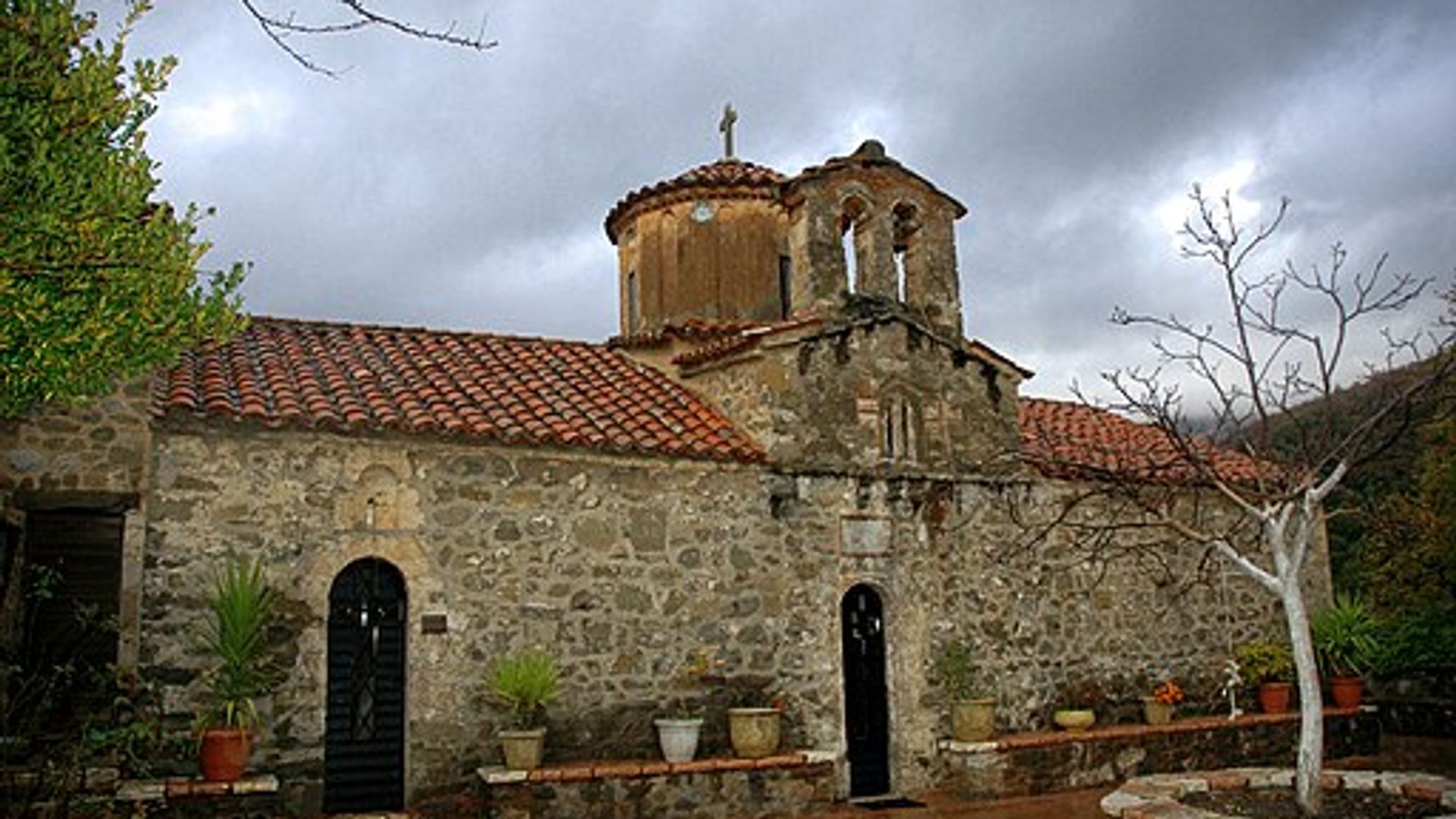
Discover the Monastery of Saint Nicholas of Sintza, a serene Byzantine sanctuary nestled in the Peloponnese mountains. This comprehensive guide covers its rich history, stunning frescoes, and practical tips for visiting this spiritual haven.
Perched on the verdant slopes of Mount Parnon in the heart of the Peloponnese, the Monastery of Saint Nicholas of Sintza stands as a testament to centuries of Byzantine spirituality and architectural mastery. This hidden sanctuary, far from the tourist crowds that flock to more famous Greece monasteries, offers visitors an authentic glimpse into the contemplative life that has flourished here since medieval times.
The journey to this remarkable monastery is as rewarding as the destination itself, winding through ancient olive groves and traditional villages where time seems to have stood still. Few travelers who explore the Peloponnese discover this gem, making it a perfect destination for those seeking spiritual solace and historical depth beyond the typical tourist trail.
The Historical Legacy of Saint Nicholas of Sintza
The monastery's origins trace back to the 13th century, during a period when Byzantine culture flourished even as the empire faced political challenges. Historical records suggest that the monastery was founded by monks fleeing the Latin occupation of Constantinople, seeking refuge in the remote mountains of Laconia.
The complex grew significantly during the 15th and 16th centuries, becoming a vital center of Orthodox learning and manuscript preservation. During the Ottoman occupation, the monastery served as a secret school where Greek language and culture were preserved, playing a crucial role in maintaining Hellenic identity through centuries of foreign rule.
Key Historical Periods:
- 13th century: Initial foundation by Byzantine monks
- 15th-16th centuries: Golden age of expansion and cultural influence
- Ottoman period: Secret school and cultural preservation center
- 1821: Support base for Greek War of Independence fighters
- 20th century: Restoration and revival of monastic life
Architectural Marvels and Sacred Spaces
The monastery's architecture reflects the classic Byzantine style adapted to the mountainous terrain of the Peloponnese. The main katholikon (church) features a cross-in-square design with a central dome supported by four columns, creating an intimate space perfect for contemplative prayer.
The exterior walls, built from local stone, have weathered centuries of wind and rain while maintaining their structural integrity. The bell tower, added in the 18th century, rises gracefully above the complex, its bells still calling the faithful to prayer as they have for generations.
Architectural Highlights:
- Cross-in-square katholikon with central dome
- 18th-century bell tower with traditional bronze bells
- Fortified walls reflecting medieval defensive needs
- Monastic cells arranged around a central courtyard
- Ancient refectory with original stone tables
- Underground chapel dedicated to early Christian martyrs
The monastery's Greek architecture showcases the practical adaptations Byzantine builders made to mountainous environments. The thick walls provide insulation against harsh winters, while small windows minimize heat loss while still allowing natural light to illuminate the sacred spaces.
The Breathtaking Frescoes and Icons
Inside the katholikon, visitors encounter a treasure trove of Byzantine art that has survived remarkably intact. The frescoes, dating primarily from the 16th century, cover nearly every surface with vivid depictions of biblical scenes and saints.
The most striking feature is the Pantocrator (Christ Almighty) gazing down from the central dome, surrounded by angels and prophets in concentric circles. The intensity of the eyes and the rich gold leaf backgrounds create an atmosphere of divine presence that has moved pilgrims for centuries.
Notable Artistic Features:
- 16th-century Pantocrator in the central dome
- Complete cycle of Christ's life on the nave walls
- Portraits of local saints and monastery founders
- Rare depictions of Mount Parnon hermits
- Miracle-working icon of Saint Nicholas
- Preserved medieval iconostasis with original carvings
The icon of Saint Nicholas, after whom the monastery is named, is said to possess miraculous healing properties. Pilgrims from across the Peloponnese visit specifically to pray before this icon, particularly on the saint's feast day in December.
The Natural Setting and Spiritual Atmosphere
The monastery's location on Mount Parnon provides more than just scenic beauty—it creates an environment conducive to spiritual contemplation. The surrounding forest of oak and chestnut trees shelters the complex from the modern world, while mountain springs provide crystal-clear water that the monks have channeled through ancient stone aqueducts.
Bird songs and the rustling of leaves replace the noise of contemporary life, creating a natural symphony that enhances the meditative quality of the space. Many visitors report feeling an immediate sense of peace upon entering the monastery grounds, a testament to centuries of prayer and contemplation that seem to have sanctified the very air.
Natural Features:
- Ancient oak and chestnut forest surrounding the complex
- Natural springs with stone aqueducts built by monks
- Panoramic views of the Laconian plain
- Hiking trails to nearby hermit caves
- Herb gardens maintained by the monastic community
- Wildlife including rare bird species and mountain flora
Quick Facts About the Monastery
Essential Information:
- Founded: 13th century
- Location: Mount Parnon, Laconia, Peloponnese
- Elevation: Approximately 850 meters above sea level
- Active Monastery: Yes, with resident monks
- Architectural Style: Byzantine with later additions
- Main Feast Day: December 6th (Saint Nicholas)
- Dress Code: Modest clothing required (covered shoulders and knees)
- Photography: Permitted outside, ask permission inside
- Admission: Free, donations welcome
- Accessibility: Limited (mountain location with stairs)
Planning Your Visit to Saint Nicholas of Sintza
Reaching the monastery requires some planning, as it sits well off the main tourist routes. The nearest substantial town is Sparta, approximately 30 kilometers to the west, making it an excellent day trip for those exploring the region's historical sites.
The drive from Sparta takes about 45 minutes along winding mountain roads that offer spectacular views but require careful navigation. Renting a car provides the most flexibility, though organized tours from Nafplio or Sparta are available for those who prefer guided experiences.
Getting There:
- From Athens: Drive via Corinth and Tripoli to Sparta (approximately 3 hours)
- From Nafplio: Head south through Argos to Sparta, then east to the monastery (2 hours)
- From Sparta: Take the road toward Geraki, following signs to Sintza village (45 minutes)
- From Monemvasia: Drive north along the coast then west through the mountains (1.5 hours)
- Public transport: Limited bus service to Sintza village, then 3km walk uphill
Best Times to Visit
The monastery welcomes visitors year-round, but each season offers distinct experiences. Spring (April-May) brings wildflowers and mild temperatures perfect for combining your monastery visit with hiking in the surrounding mountains.
Autumn (September-October) provides comfortable weather and fewer visitors, while the changing leaves create a spectacular backdrop for photography. The Greece weather in October is particularly pleasant for exploring the Peloponnese region.
Seasonal Considerations:
- Spring (April-May): Wildflowers, mild weather, Easter celebrations
- Summer (June-August): Warm but cooler than coastal areas, longer daylight hours
- Autumn (September-October): Comfortable temperatures, fall colors, harvest season
- Winter (November-March): Possible snow, fewer visitors, authentic monastic atmosphere
What to See and Experience
Beyond the main katholikon and its frescoes, the monastery complex offers numerous points of interest for curious visitors. The old library, though not always accessible, houses rare manuscripts and early printed books that document the intellectual life of the monastery through the centuries.
The monastic cells, arranged around the central courtyard, provide insight into the simple, disciplined life of the monks. Some cells are open for viewing, showing the sparse furnishings and icons that constitute a monk's entire worldly possessions.
Must-See Features:
- Main katholikon with 16th-century frescoes
- Miracle-working icon of Saint Nicholas
- Ancient bell tower and bronze bells
- Monastic refectory with original stone furnishings
- Herb and vegetable gardens tended by monks
- Small museum with liturgical objects and manuscripts
- Chapel of the Holy Apostles (underground)
- Stone fountain in the central courtyard
- Panoramic viewing point behind the monastery
Respectful Visiting Guidelines
As an active monastery, Saint Nicholas of Sintza maintains strict guidelines to preserve its spiritual atmosphere. Visitors should approach the monastery with respect for its religious function, remembering that this is first and foremost a place of prayer and contemplation.
Silence is appreciated throughout the complex, and conversations should be kept to whispers inside the katholikon. Mobile phones should be silenced, and photography, while generally permitted in outdoor areas, requires permission inside the church.
Visitor Etiquette:
- Dress modestly: covered shoulders, long pants or skirts below the knee
- Maintain silence or speak in whispers inside sacred spaces
- Turn off mobile phones before entering
- Ask permission before photographing inside buildings
- Avoid visiting during services unless participating respectfully
- Do not touch frescoes, icons, or liturgical objects
- Make a small donation to support monastery maintenance
- Follow any additional guidelines provided by monks
Combining Your Visit with Nearby Attractions
The monastery's location in eastern Laconia places it within reach of several other significant sites worth exploring. The medieval town of Geraki, just 15 kilometers away, features impressive Byzantine churches and a Frankish castle perched on a dramatic hilltop.
For those interested in monastic sites, the Holy Monastery of Malevis lies about 60 kilometers to the north, offering another perspective on Peloponnesian monastic traditions. The ancient theater at Epidaurus is also within a reasonable driving distance for those with more time.
Nearby Attractions:
- Geraki medieval town and castle (15 km)
- Sintza village traditional architecture (3 km)
- Mount Parnon hiking trails (immediate area)
- Sparta archaeological museum (30 km)
- Mystras Byzantine city (40 km)
- Monemvasia fortress town (60 km)
Consider booking a cultural tour from Nafplio that can include the monastery along with other significant sites in the region.
The Monastic Life Today
Despite the challenges facing monastic communities across Greece, Saint Nicholas of Sintza maintains an active brotherhood of monks who continue the traditions established centuries ago. The daily rhythm of prayer, work, and study follows the ancient Byzantine pattern, with services beginning before dawn and continuing at regular intervals throughout the day.
The monks support themselves through various activities including beekeeping, olive cultivation, and icon painting. Visitors can often purchase monastery products including honey, olive oil, and hand-painted icons, with proceeds supporting the community's needs.
Monastic Activities:
- Daily cycle of Orthodox prayers and services
- Beekeeping producing renowned mountain honey
- Olive grove cultivation and oil production
- Icon painting in traditional Byzantine style
- Manuscript preservation and restoration
- Hospitality for pilgrims and visitors
- Maintenance of buildings and grounds
Travel Tips for Your Visit
Successful visits to remote monasteries require some preparation that differs from typical tourist destinations. Bringing water and snacks is advisable, as facilities near the monastery are minimal, though the monks may offer traditional hospitality including coffee or water.
The mountain roads can be challenging, particularly for those unaccustomed to narrow, winding routes. Allow extra time for the journey and avoid visiting during inclement weather when roads may become hazardous.
Practical Tips:
- Bring water and light snacks (no facilities nearby)
- Wear comfortable walking shoes with good grip
- Carry a modest shawl or covering for shoulders
- Bring cash for donations (no card facilities)
- Fill your gas tank in Sparta before heading to the monastery
- Download offline maps as cell service is unreliable
- Visit during morning hours for best light and cooler temperatures
- Allow 1-2 hours for a thorough visit
- Bring a flashlight for viewing darker areas of the church
- Pack layers as mountain weather can change quickly
Experiencing Local Culture and Traditions
The villages surrounding the monastery preserve traditional Peloponnesian culture that has largely disappeared from more touristic areas. Sintza village, a short walk from the monastery, features stone houses and narrow lanes that have changed little over the past century.
Local residents maintain strong connections to the monastery, attending feast day celebrations and supporting its continued operation. Visitors who take time to explore these villages gain insight into rural Greek life and the deep Orthodox faith that continues to shape community identity.
Cultural Experiences:
- Visit Sintza village traditional architecture
- Attend feast day celebrations (December 6th)
- Purchase local products from village shops
- Sample traditional Laconian cuisine in nearby tavernas
- Learn about Greek phrases used in religious contexts
- Observe traditional crafts still practiced in the area
Photography Opportunities
The monastery and its surroundings offer exceptional photography opportunities for those interested in architecture, nature, or spiritual subjects. The play of light through the katholikon's small windows creates dramatic effects on the frescoes, particularly in the late morning hours.
The exterior provides numerous compositional possibilities, with the stone buildings framed by ancient trees and mountain vistas. Seasonal changes dramatically alter the landscape, from spring wildflowers to autumn foliage to occasional winter snow.
Photography Tips:
- Best light for exteriors: early morning or late afternoon
- Interior photography: ask permission, no flash near frescoes
- Bring a tripod for low-light interior shots
- Wide-angle lens useful for architectural details
- Capture details: bells, icons, stone carvings, frescoes
- Include surrounding landscape for context
- Respect restrictions on photographing monks
Connecting with Broader Peloponnese Exploration
A visit to the Monastery of Saint Nicholas of Sintza fits naturally into a broader exploration of the Peloponnese's rich cultural heritage. The region offers an incredible density of historical sites, from ancient theaters and temples to Byzantine churches and Venetian fortresses.
Many travelers base themselves in Nafplio, the region's most charming town, and take day trips to various sites. The monastery can be combined with a visit to Sparta and Mystras for a full day of historical and spiritual exploration, or incorporated into a longer circuit exploring eastern Laconia.
Suggested Itineraries:
- Day Trip from Nafplio: Monastery, Geraki Castle, return via Sparta
- Monastic Circuit: Holy Monastery of Malevis, Saint Nicholas of Sintza, Monastery of Panagia Elona
- Eastern Peloponnese: Monemvasia, Monastery, Geraki, Sparta
- Byzantine Heritage: Mystras, Monastery, Geraki churches
Consider booking a comprehensive Peloponnese tour that includes lesser-known sites like this monastery alongside more famous destinations.
Spiritual and Contemplative Aspects
Beyond its historical and architectural significance, the monastery offers something increasingly rare in our connected world: genuine silence and space for contemplation. Many visitors report that the monastery's atmosphere facilitates reflection and provides a welcome respite from the constant stimulation of modern life.
The monks welcome those who wish to spend time in quiet prayer or meditation, and the surrounding forest provides additional opportunities for contemplative walks. Some visitors choose to attend services, experiencing the haunting beauty of Byzantine chant in its proper liturgical context.
Spiritual Opportunities:
- Attend Orthodox services (inquire about times)
- Light candles before icons
- Spend time in silent meditation in the katholikon
- Walk contemplative paths in the surrounding forest
- Speak with monks (if they are available and willing)
- Experience Byzantine chant during services
- Participate in feast day celebrations
Practical Information and Services
The monastery operates on a simple schedule, generally welcoming visitors during daylight hours except during services and meal times. Specific visiting hours can vary seasonally and according to the monastery's liturgical calendar, so calling ahead is advisable if possible.
Facilities are basic, reflecting the monastery's remote location and spiritual purpose. Restrooms are available, but there are no cafes, shops, or other commercial services within the complex itself.
Service Information:
- Visiting hours: Typically 8:00 AM - 1:00 PM and 4:00 PM - 7:00 PM
- Closed during services (inquire about times)
- Restroom facilities available
- No café or restaurant on site
- Small shop with monastery products (limited hours)
- Parking available near the entrance
- No entrance fee (donations appreciated)
- Limited accessibility for mobility-impaired visitors
The Monastery's Role in Regional History
Throughout its long history, Saint Nicholas of Sintza played significant roles beyond its religious functions. During the Ottoman occupation, the monastery served as a secret school where Greek language, history, and Orthodox faith were taught to children from surrounding villages.
During the Greek War of Independence in 1821, the monastery provided shelter and support to fighters, though its remote location spared it from the worst of the conflict. Local tradition holds that important strategy meetings were held within its walls, though historical documentation of such events remains limited.
Historical Significance:
- Center of Greek education during Ottoman period
- Preservation of manuscripts and Byzantine culture
- Support for Greek independence fighters
- Maintenance of Orthodox traditions through difficult periods
- Cultural anchor for surrounding villages
- Preservation of traditional crafts and practices
Accommodation Options Near the Monastery
While the monastery itself does not offer overnight accommodation to casual visitors, several options exist in nearby towns. Sparta, the largest nearby city, offers hotels ranging from budget to boutique, along with restaurants and services.
For a more atmospheric experience, consider staying in Geraki or one of the small mountain villages, where traditional guesthouses provide authentic hospitality. The coastal town of Gytheio, about an hour's drive away, offers seaside accommodation for those combining mountain and coastal exploration.
Accommodation Areas:
- Sparta: Full range of hotels and services (30 km)
- Geraki: Traditional guesthouses and tavernas (15 km)
- Sintza village: Limited rooms in private homes (3 km)
- Monemvasia: Boutique hotels in medieval town (60 km)
- Gytheio: Seaside accommodation and restaurants (55 km)
Frequently Asked Questions
How do I get to the Monastery of Saint Nicholas of Sintza?
The monastery is located approximately 30 kilometers east of Sparta in the Peloponnese. From Sparta, drive toward Geraki and follow signs to Sintza village, then continue 3 kilometers uphill to the monastery. The journey takes about 45 minutes from Sparta on mountain roads. Public transportation is limited, so renting a car or joining an organized tour is recommended for most visitors.
What are the visiting hours for the monastery?
The monastery typically welcomes visitors from 8:00 AM to 1:00 PM and 4:00 PM to 7:00 PM, though these hours can vary seasonally and according to the liturgical calendar. The monastery closes during services and meal times. It's advisable to call ahead or arrive during mid-morning or late afternoon to ensure access, particularly if traveling a significant distance.
Is there a dress code for visiting the monastery?
Yes, as an active monastery, modest dress is required for all visitors. Men should wear long pants and shirts with sleeves, while women must wear skirts or dresses that cover the knees and tops that cover the shoulders. Some monasteries provide wraps for visitors who arrive unprepared, but it's best to dress appropriately from the start out of respect for the monastic community.
Can I attend services at the monastery?
Visitors are welcome to attend Orthodox services at the monastery, which provide an authentic experience of Byzantine liturgical tradition. Services typically include evening vespers and morning orthros and divine liturgy, though schedules vary. Visitors should arrive early, dress modestly, remain standing throughout (as is Orthodox custom), and maintain respectful silence. Photography during services is generally not permitted.
Are there any facilities or refreshments available at the monastery?
The monastery has basic restroom facilities but no café, restaurant, or commercial services. The monks may offer traditional hospitality such as coffee or water to visitors, but you should not expect or rely on this. Bring your own water and snacks, particularly if visiting during warm weather, as the nearest shops are in Sintza village (3 km) or Geraki (15 km).
What is the best time of year to visit?
The monastery can be visited year-round, with each season offering distinct advantages. Spring (April-May) brings wildflowers and pleasant temperatures, while autumn (September-October) offers comfortable weather and beautiful fall colors. Summer provides long daylight hours but can be warm, while winter may bring occasional snow and fewer visitors. The monastery's feast day of December 6th features special celebrations worth experiencing if you're in the area.
Can I take photographs inside the monastery?
Photography is generally permitted in the monastery's outdoor areas without special permission. Inside the katholikon and other buildings, you should ask permission from a monk before taking photographs. Flash photography is typically prohibited near frescoes and icons, as it can cause damage over time. Always respect any restrictions and remember that this is an active place of worship, not a museum.
How long should I plan for a visit to the monastery?
A thorough visit to the monastery typically takes 1-2 hours, depending on your level of interest in the frescoes, architecture, and surroundings. This allows time to visit the katholikon, explore the courtyard and other accessible areas, and perhaps take a short walk in the surrounding forest. If you plan to attend a service, add the service duration (usually 1-2 hours for major services). Consider allowing extra time for the scenic drive and possible stops in nearby villages.
Conclusion: A Journey Worth Taking
The Monastery of Saint Nicholas of Sintza represents everything that makes Peloponnesian travel rewarding: rich history, stunning art, spiritual depth, and authentic connection to living traditions. Unlike more famous sites that can feel like open-air museums, this monastery pulses with the same religious life that has animated it for centuries.
The journey to reach it—winding through mountains and traditional villages—is itself part of the experience, offering glimpses of a Greece that exists far from tourist brochures. For travelers willing to venture beyond the well-worn paths, the monastery provides rewards that no crowded attraction can match: genuine tranquility, artistic treasures viewed in their intended context, and the rare opportunity to witness a way of life that has remained essentially unchanged for generations.
Whether you approach as a pilgrim, a history enthusiast, an art lover, or simply a curious traveler, the Monastery of Saint Nicholas of Sintza offers an experience that will enrich your understanding of Greece's Byzantine heritage and its continuing spiritual traditions. The memories of its frescoed walls, mountain setting, and profound atmosphere will linger long after you've returned to the modern world below.