
Discover everything you need to know about transportation in Greece, from island ferries to Athens metro. Learn how to navigate Greek public transport, rent cars, and travel between destinations efficiently.
Getting around Greece is an adventure in itself, offering everything from scenic ferry rides between sun-drenched islands to efficient metro systems in major cities. Whether you're planning to explore ancient ruins in the Peloponnese or island-hop through the Cyclades, understanding your transportation options will transform your Greek journey from stressful to seamless.
The beauty of Greek transportation lies in its diversity—each method offers unique perspectives on this stunning Mediterranean country. From the moment you land at Athens International Airport to your final destination, you'll discover that moving around Greece combines modern efficiency with traditional charm.
Quick Facts About Transportation in Greece
Essential Information:
- Greece has 15 international airports with Athens being the main hub
- Ferry network connects over 200 inhabited islands
- Athens metro operates from 5:30 AM to midnight on weekdays
- Driving is on the right side of the road
- Public transport tickets must be validated before boarding
- Inter-city buses (KTEL) reach virtually every destination
- Domestic flights connect major cities in under an hour
- Taxis are relatively affordable compared to other European countries
Getting to Greece: International Arrival Options
Most international visitors arrive through Athens International Airport (Eleftherios Venizelos), one of Europe's most modern and efficient aviation hubs. The airport offers excellent connections to the city center via metro, express buses, and taxis, making your transition from plane to destination remarkably smooth.
Alternative entry points include Thessaloniki Airport in northern Greece and seasonal flights to island destinations like Santorini, Mykonos, Rhodes, and Corfu. Ferry connections from Italy provide another romantic option for those combining Greece with broader European travel.
Athens Public Transportation: Navigating the Capital
Metro System
The Athens metro stands as one of the cleanest and most efficient underground systems in Europe. Three main lines (blue, red, and green) connect the airport, port, and major neighborhoods with archaeological sites displayed in several stations.
Tickets cost €1.40 for 90 minutes of travel across all public transport modes, while a three-day tourist ticket offers unlimited rides for €22. The airport express line (Line 3) reaches the city center in just 40 minutes, providing an economical alternative to taxis.
Buses and Trolleys
Athens operates an extensive network of buses and electric trolleys covering areas not served by metro. Night buses run on major routes when the metro closes, ensuring you're never stranded after an evening exploring the vibrant Greek cities.
The same tickets work across metro, buses, trolleys, and trams, making the system remarkably user-friendly. Express buses to the airport (X95, X96, X93, X97) operate 24/7 and cost €5.50 per person.
Trams
The modern tram system connects central Athens with coastal suburbs, offering scenic rides along the Saronic Gulf. Three lines serve beaches, marinas, and the port of Piraeus, making it perfect for combining sightseeing with seaside relaxation.
Trams run frequently from 5:00 AM to 1:00 AM on weekends, with reduced service on weekdays. The air-conditioned carriages provide welcome relief during hot summer months.
Inter-City Bus Travel: KTEL Network
KTEL buses represent the backbone of Greek mainland transportation, connecting cities, villages, and archaeological sites with remarkable efficiency. These regional bus cooperatives operate modern, air-conditioned coaches on fixed schedules, making them ideal for budget-conscious travelers.
Routes from Athens reach destinations like Nafplio in two hours, Delphi in three, and Thessaloniki in six. Booking online in advance is recommended during summer months and holidays, though walk-up tickets are usually available.
Major KTEL Routes:
- Athens to Nafplio: 2 hours, €14
- Athens to Thessaloniki: 6 hours, €35
- Athens to Kalamata: 3.5 hours, €22
- Athens to Delphi: 3 hours, €17
- Athens to Meteora: 4.5 hours, €28
Ferry Travel: Island Hopping Made Easy
Ferry travel embodies the quintessential Greek experience, offering breathtaking Aegean views while connecting hundreds of islands. Multiple ferry companies operate routes from Athens' port of Piraeus and other mainland ports to island destinations across the archipelago.
High-speed ferries cut travel times significantly but cost more than conventional ferries. The choice between speed and economy depends on your schedule, budget, and desire to enjoy the journey itself.
Types of Ferries
Conventional Ferries:
- Slower but more economical option
- Offer deck seating, airplane-style seats, and cabins
- Include restaurants, shops, and outdoor viewing areas
- Better for overnight journeys
- More stable in rough weather
High-Speed Ferries:
- Cut travel time by 30-50%
- Airplane-style seating only
- Limited outdoor space
- Higher ticket prices
- More affected by weather conditions
Booking Ferry Tickets
Book ferry tickets online weeks in advance during peak season (July-August) when routes fill quickly. Last-minute tickets are usually available during shoulder seasons, though popular routes like Athens to Santorini should be booked early regardless of timing.
E-tickets can be printed or shown on mobile devices, eliminating the need to visit physical ticket offices. Arrive at the port at least 45 minutes before departure, as gates close 10 minutes prior to sailing.
Domestic Flights: Fast-Track Your Journey
Domestic flights offer the fastest way to cover Greece's considerable distances, particularly when traveling from Athens to Crete, Rhodes, or northern destinations. Olympic Air and Aegean Airlines operate frequent flights between major cities and islands.
Flights from Athens to Thessaloniki take just 55 minutes compared to six hours by bus. Island destinations like Santorini, Mykonos, and Crete are reached in 40-50 minutes, making day trips theoretically possible though not recommended.

Popular Domestic Routes:
- Athens to Thessaloniki: 55 minutes, from €40
- Athens to Santorini: 45 minutes, from €60
- Athens to Crete: 50 minutes, from €50
- Athens to Rhodes: 1 hour, from €55
- Athens to Mykonos: 40 minutes, from €65
Car Rentals: Freedom to Explore
Renting a car provides unmatched flexibility for exploring Greece's hidden gems, mountain villages, and archaeological sites beyond public transport routes. The Peloponnese, Crete, and northern Greece particularly benefit from having your own wheels.
International rental companies operate at airports and major cities, while local agencies often offer better rates. Book in advance during summer for the best selection and prices, particularly for automatic transmissions which are less common in Greece.
Driving in Greece
What You Need to Know:
- Valid driver's license (international license recommended)
- Minimum age typically 21-23 years
- Drive on the right side of the road
- Seat belts mandatory for all passengers
- Speed limits: 50 km/h urban, 90 km/h rural, 130 km/h highways
- Blood alcohol limit: 0.05% (0.02% for new drivers)
- Mobile phone use requires hands-free system
- Toll roads on major highways (cash or card accepted)
Best Regions for Self-Drive Tours
The Peloponnese offers spectacular driving routes connecting ancient sites like Mycenae, Epidaurus, and Olympia with charming coastal towns. Mountain roads wind through villages where time seems to have stopped, perfect for discovering authentic Greek culture away from tourist crowds.
Crete's diverse landscape from beaches to gorges makes it ideal for road trips, while northern Greece's less-visited regions reward adventurous drivers with stunning scenery. Consider joining organized tours for sites requiring local knowledge—explore Nafplio and surrounding ancient sites with expert guides who handle navigation while you enjoy the views.
Taxis and Ride-Sharing Services
Greek taxis are relatively affordable and widely available in cities and tourist areas. Official taxis are yellow in Athens and vary by region elsewhere, with meters that must be used for all rides.
Uber operates only in Athens with limited availability, while local app-based services like Beat offer convenient booking and payment. Taxis can be hailed on the street, found at designated stands, or called by phone.
Taxi Tips:
- Ensure the meter is running and set to correct tariff
- Tariff 1 (day rate): 5:00 AM to midnight
- Tariff 2 (night rate): midnight to 5:00 AM
- Airport surcharge: €3.84 from Athens Airport
- Port/station surcharge: €1.07
- Luggage over 10kg: €0.40 per item
- Tipping not obligatory but rounding up appreciated
Train Travel: Limited but Scenic
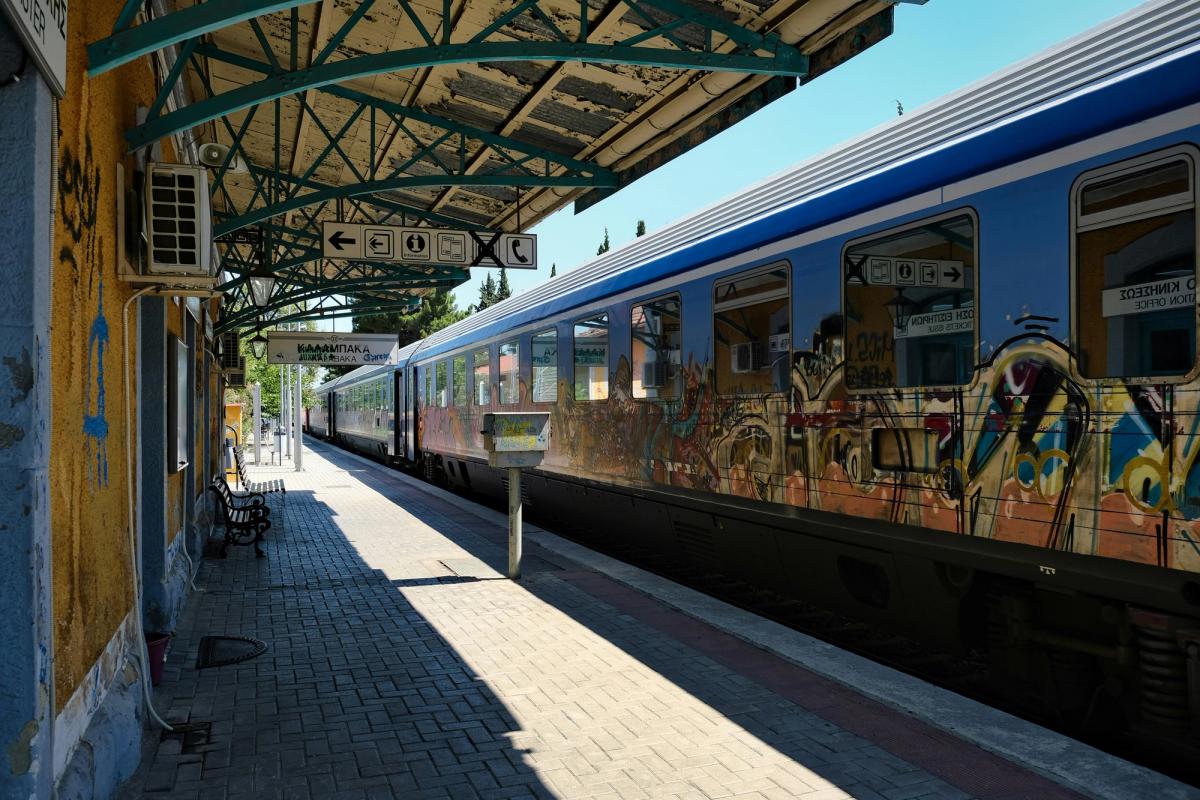
Greece's rail network is limited compared to other European countries but offers scenic routes worth experiencing. The main line connects Athens with Thessaloniki, passing through historically significant regions like Thermopylae.
Suburban rail (Proastiakos) connects Athens Airport with the city center and reaches Corinth, offering an alternative to buses for some destinations. The network is gradually modernizing, though buses remain more comprehensive for most routes.
Getting Around Greek Islands
Once you reach your island destination, local transportation varies significantly by island size and tourism development. Larger islands like Crete and Rhodes have comprehensive bus networks, while smaller islands rely on taxis, rental vehicles, and occasional buses.
Many islands are best explored by rented car, scooter, or ATV, giving you freedom to discover secluded beaches and mountain villages. Always check your insurance coverage and wear helmets when riding two-wheelers.
Island Transportation Options:
- Local buses: Economical but limited schedules
- Taxis: Available but can be scarce in peak season
- Car rentals: Ideal for larger islands
- Scooters/ATVs: Popular for smaller islands
- Water taxis: Connect beaches and nearby islands
- Organized tours: Hassle-free sightseeing
Transportation Apps and Resources
Modern technology makes navigating Greek transportation remarkably easier than even a few years ago. Essential apps provide real-time information, booking capabilities, and navigation assistance for stress-free travel.
Must-Have Transportation Apps:
- Google Maps: Reliable for routes and public transport schedules
- Beat: Taxi booking in Athens and major cities
- Ferry Hopper: Compare ferry routes and book tickets
- KTEL Apps: Regional bus schedules and booking
- Athens Transport: Official app for Athens public transport
- TrainOSE: Greek railway schedules and tickets
- Moovit: Public transport navigation in major cities
- Aegean/Olympic Air: Domestic flight booking and management
Travel Tips for Greek Transportation
Planning and Booking:
- Book ferries and flights weeks in advance for summer travel
- Download transportation apps before arriving
- Save offline maps for areas with limited connectivity
- Check strike schedules (more common in autumn/spring)
- Allow buffer time between connections
- Validate all public transport tickets before boarding
- Keep small change for ticket machines and tolls
- Screenshot booking confirmations as backup
Money-Saving Strategies:
- Purchase multi-day public transport passes in Athens
- Book ferries as foot passengers (without vehicle)
- Travel during shoulder season for better deals
- Compare bus versus flight costs (buses often cheaper)
- Use airport express buses instead of taxis
- Book rental cars online in advance
- Consider slow ferries for overnight journeys (saves accommodation)
- Join organized tours that include transportation
Accessibility and Special Needs
Greece continues improving accessibility across its transportation network, though challenges remain particularly on islands and in historic areas. Athens metro stations built for the 2004 Olympics feature elevators and wheelchair access, while older stations have limited facilities.
Modern ferries and buses increasingly accommodate wheelchair users, though advance notification helps ensure appropriate arrangements. Many archaeological sites now feature accessible paths, and organizations like guided tours through historic regions can arrange specialized transportation for visitors with mobility challenges.
Seasonal Transportation Considerations
Greek transportation operates on distinctly different schedules between high season (June-September) and low season (November-March). Ferry routes multiply during summer with daily connections to popular islands, while winter sees reduced service and some routes suspended entirely.
Weather affects transportation more than visitors expect, particularly ferry services which cancel during strong winds (meltemi in summer). Always have backup plans when tight connections are involved, and consider exploring the Peloponnese where mainland transportation proves more reliable year-round.
Summer Season (June-September):
- Maximum ferry routes and frequency
- Higher prices across all transport modes
- Advance booking essential
- Extended operating hours
- More domestic flights
- Crowded public transport in tourist areas
Winter Season (November-March):
- Reduced ferry schedules
- Lower prices and last-minute availability
- Some island routes suspended
- Shorter operating hours
- Fewer domestic flights
- Weather-related delays more common
Combining Transportation Modes Effectively
The most successful Greek itineraries strategically combine multiple transportation modes for optimal efficiency and experience. Flying to Crete or Rhodes saves a full day compared to ferry travel, leaving more time for exploration.
Consider starting with flights to distant destinations, then using ferries for island hopping before returning to Athens by ferry. This approach maximizes time while still enjoying scenic sea journeys between islands.
Sample Multi-Modal Itinerary:
- Arrive Athens Airport → Metro to city center
- Explore Athens → Metro and walking
- Bus to Nafplio → Explore Peloponnese by rental car
- Return to Athens → Ferry to islands
- Island hop by ferry → Return ferry or flight to Athens
- Athens → Airport metro for departure
Safety and Security on Greek Transportation
Greek transportation is generally very safe, with low crime rates and well-maintained vehicles. Pickpocketing can occur on crowded Athens metro and buses, so keep valuables secure and remain aware of surroundings.
Ferry safety standards are high following past incidents, with regular inspections and modern vessels. Follow crew instructions during boarding and note emergency exits when you board.
Safety Guidelines:
- Keep valuables in front pockets or secure bags
- Watch belongings on overnight ferries
- Use official taxi stands at airports and ports
- Verify taxi meters are running
- Avoid unlicensed tour operators
- Check vehicle rental insurance coverage
- Follow ferry safety announcements
- Keep emergency numbers saved: 112 (general), 100 (police)
Environmental Considerations
Greece increasingly focuses on sustainable transportation, with Athens expanding its metro network and introducing electric buses. Ferry companies gradually update fleets with more efficient vessels, though maritime travel remains carbon-intensive.
Choose slower ferries over flights when time permits, as sea travel produces significantly less CO2 per passenger. Public transportation in cities creates minimal environmental impact while providing authentic cultural experiences impossible from rental car windows.
Transportation Etiquette and Cultural Notes
Greek transportation culture blends Mediterranean spontaneity with surprising efficiency. Buses may not arrive precisely on schedule, but they generally run close to posted times—the relaxed attitude extends to boarding procedures where orderly queues sometimes give way to friendly chaos.
Greeks often help tourists navigate transportation systems, offering directions and advice. Learning basic Greek phrases like "efcharistó" (thank you) and "parakaló" (please) goes far in creating positive interactions with drivers and fellow passengers.
Cultural Tips:
- Greeks often smoke at outdoor transport stops
- Loud conversations on phones are common and acceptable
- Offering seats to elderly passengers is expected
- Ferry departures may delay slightly without announcement
- Drivers appreciate exact change when possible
- Tipping taxi drivers by rounding up is courteous
- Strike actions typically announced days in advance
Frequently Asked Questions
How much does transportation cost in Greece?
Transportation in Greece is reasonably priced compared to other European destinations. Athens metro tickets cost €1.40 for 90 minutes, inter-city buses range from €10-40 depending on distance, and ferries vary from €25-80 for passenger tickets. Domestic flights typically cost €40-100 when booked in advance, while taxi rides in Athens average €5-15 for city center trips. Budget €30-50 daily for comprehensive transportation needs including occasional taxis and ferry rides.
Do I need to book ferries in advance?
Advance booking is essential during peak season (July-August) for popular routes like Athens to Santorini, Mykonos, or Crete, as ferries often sell out weeks ahead. Shoulder season (May-June, September-October) usually allows booking 3-7 days in advance, while winter travel typically permits last-minute tickets. Always book ahead for vehicles, cabins, or when traveling with specific time constraints. E-tickets can be purchased online through ferry company websites or booking platforms, making advance planning convenient.
Can I use public transportation to reach archaeological sites?
Many major archaeological sites connect via public transportation, though schedules may be limited. KTEL buses reach Delphi, Olympia, Mycenae, and Epidaurus from Athens or regional hubs, though return times may restrict your visit duration. The Athens metro serves the Acropolis directly, while suburban trains reach Ancient Corinth. Remote sites like Mystras or Ancient Messini are more challenging without rental cars or organized tours. Consider guided tours that include transportation for hassle-free access to multiple sites in one day.
What's the best way to travel between Athens and the islands?
The optimal choice depends on your destination, budget, and time constraints. Flights to distant islands like Crete, Rhodes, or Santorini save 6-8 hours compared to ferries and cost only €20-40 more when booked in advance. Closer islands like Aegina, Hydra, or Poros are best reached by ferry from Piraeus port, offering scenic journeys under two hours. High-speed ferries to Cyclades islands (Mykonos, Santorini, Paros) take 3-5 hours versus 45-minute flights—choose based on whether you value the journey itself or simply want to arrive quickly.
Is renting a car in Greece difficult for foreigners?
Renting and driving in Greece is straightforward for most visitors, with road signs in both Greek and Latin alphabets. Major highways are well-maintained and clearly marked, though mountain roads can be narrow and winding. Greek drivers tend to be assertive but generally courteous, and traffic rules follow standard European conventions. Automatic transmissions cost more and require advance booking, while parking in historic centers can be challenging. International driving permits are recommended though not always required. Most visitors adapt quickly, finding the freedom of a rental car invaluable for exploring regions like the Peloponnese at their own pace.
How reliable is public transportation in Greece?
Greek public transportation is generally reliable, particularly in Athens where metro trains run every 5-10 minutes and buses follow posted schedules closely. Inter-city KTEL buses maintain good punctuality, typically departing and arriving within 15 minutes of scheduled times. Ferries face occasional weather-related delays or cancellations, particularly during strong winds—always allow buffer time for critical connections. Strikes (usually announced days in advance) can disrupt services 2-3 times yearly, typically in spring and autumn. Overall, Greek transportation proves dependable enough for confident trip planning while maintaining the flexibility characteristic of Mediterranean culture.
What transportation options work best for families with children?
Families traveling with children benefit from Greece's family-friendly transportation culture. Athens metro provides elevators at most stations and spacious carriages for strollers, while ferries offer deck space for children to move around during longer journeys. Rental cars with child seats (book in advance) provide maximum flexibility for nap schedules and bathroom breaks. Many ferry companies offer family cabins for overnight journeys, and children under 5 typically travel free on most public transport. Organized tours accommodate families with private vehicles and flexible pacing—family-friendly cultural tours eliminate transportation stress while ensuring age-appropriate experiences.
Are Greek transportation apps available in English?
Most major Greek transportation apps offer English interfaces, including Beat (taxis), Ferry Hopper (ferries), Athens Transport (public transit), and airline apps. Google Maps provides excellent English navigation throughout Greece with accurate public transport directions and real-time updates. KTEL bus websites typically include English sections, though some regional operators may be Greek-only—screenshots of schedules or asking hotel staff for assistance solves this easily. Ferry and flight booking platforms universally support English, and Athens metro ticket machines include English language options. The combination of international apps and English-capable Greek services makes navigation accessible for non-Greek speakers.
Planning Your Greek Transportation Journey
Successful Greek travel requires balancing advance planning with flexibility for spontaneous discoveries. Book major transportation (flights, summer ferries, car rentals) weeks ahead while leaving daily schedules loose enough to follow local recommendations.
The most memorable Greek experiences often happen between destinations—conversations with fellow ferry passengers, roadside stops at family tavernas, or unexpected village festivals discovered while driving. Embrace transportation as part of your adventure rather than merely the means to reach it, and you'll discover why the journey through Greece rivals the destinations themselves.
Whether you're navigating Athens' efficient metro, island-hopping through the Aegean, or driving mountain roads through the Peloponnese, Greek transportation offers something for every travel style and budget. With proper planning and an open mind, getting around Greece transforms from logistical necessity into an integral part of your Mediterranean adventure.